Trump Says Tariffs Saved the U.S. Auto Industry. The Data Tells a Different Story
U.S.
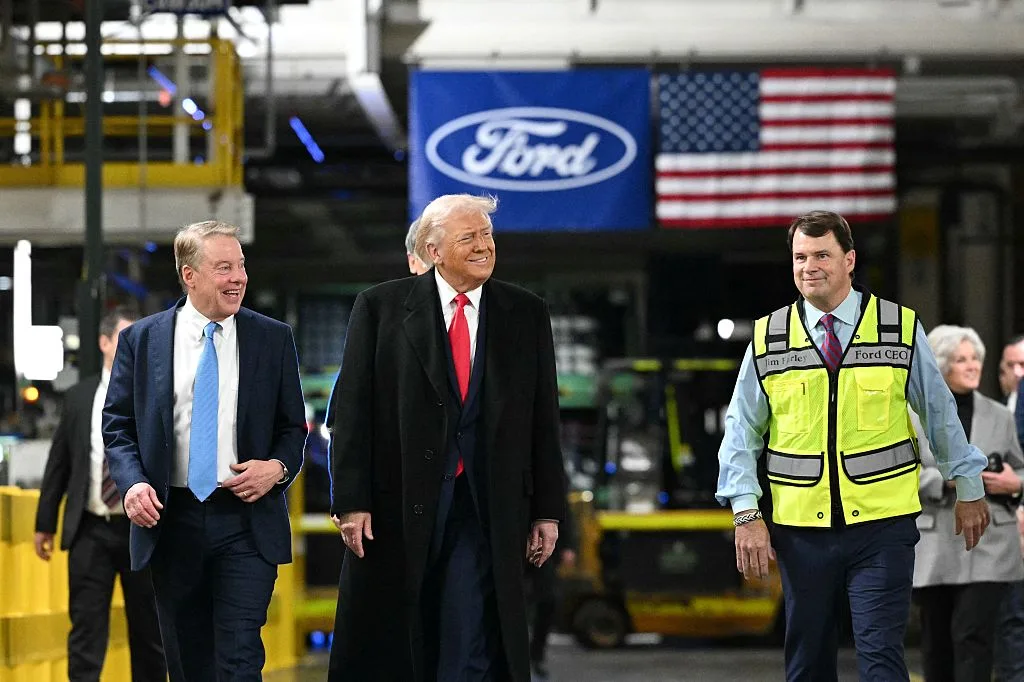
President Donald Trump, alongside Ford Executive Chairman Bill Ford and Ford CEO Jim Farley, tours Ford Motor Company's River Rouge complex in Dearborn, Michigan, on Jan.
13, 2026. —Mandel NGAN—AFP/Getty President Donald Trump said that he “revived” and “saved” America’s auto industry through tariffs .
But industry data and experts on both sides of the U.S.-Canada border suggest a different version of events.
“I’ve revived, and indeed saved, the Automobile Business in our America,” Trump wrote Sunday on Truth Social .
“That’s because of what I’ve done with TARIFFS.” Manufacturers, however, have reported substantial tariff-related costs, and the auto industry’s production, sales, and employment have all declined since Trump returned to the White House.
Experts tell TIME that Trump’s escalating trade war with Canada could put further pressure on a $1.2 trillion industry, weakening its global competitiveness.
Read More: ‘We Don’t Need Canada’: Trump Escalates Trade War With Threat of 50% Auto Tariffs Trump’s claim highlights a fundamental tension within his trade policy: Tariffs intended to protect American automakers increasingly target Canada, whose factories and suppliers have for decades been deeply integrated with the U.S.
Trump now plans to double existing tariffs, despite warnings that doing so could drive up production costs and undercut a vital American industry.
“The U.S. auto industry didn’t need saving in 2024.
Americans bought roughly 16 million vehicles and the industry was profitable,” says Flavio Volpe, the president of the Automotive Parts Manufacturers’ Association, which is based in Canada.
“Since then, tariffs and uncertainty have increased costs and disrupted investment, and 2027 now carries substantially more risk than it did before this trade war.” Will the new auto tariffs on Canada help or hurt the U.S.? When Trump introduced 25% tariffs on imported automobiles and parts in March 2025, the news immediately sent global markets roiling .
But qualifying auto parts were exempt in accordance with the trilateral United States-Mexico-Canada Agreement (USMCA).
This month, he rescinded that exemption as part of a trade war with Ottawa, raising automobile and auto parts tariffs to 50%—a move that is expected to be consequential to both nations’ economies when it goes into effect Jan.
5News aggregated this summary from the outlet’s public feed. The full article, with all the context, is on time.com — the content belongs to TIME.