Using AI Shopping Carts Could Lead You to Spend More Money, Study Says
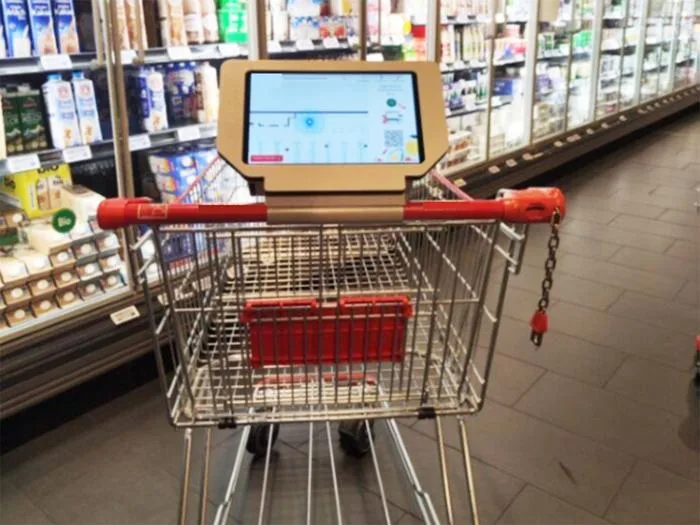
When you make a grocery run to the supermarket in the future, your shopping cart might talk to you, offering tips on recipes and directions for navigating the store. But using “smart” shopping carts equipped with AI devices may also cause you to spend more money at the store, according to new research from Bayes Business School at City St. George’s, University of London.
The researchers found that shoppers who used the AI-equipped carts spent 32% more on average than those who just used regular shopping carts. People using the smart shopping carts bought 25% more items and spent 23% more time shopping in the store.
However helpful the technology might be for shoppers, the findings suggested it could also lead to significant revenue gains for retailers if done right. Shoppers, meanwhile, should be wary of relying too heavily on technology that could create new advertising platforms and steer them toward specific promotions and products, the researchers said .
“Smart cart users in our data spent more, bought more, and stayed longer than non-users,” lead author Sabrina Gottschalk of Bayes Business School told CNET via email.
Large supermarkets have been using AI algorithms to figure out supply chains and predict customers’ demands for years now. Using algorithms in shopping-cart smart screens is still rare in US grocery stores, but that might be changing soon.
Online grocery delivery company Instacart and Pennsylvania supermarket chain Weis Markets announced in June that they were starting to roll out AI-driven “caper carts” to select stores and planned to bring them to more stores this year.
Smart shopping carts could make buying groceries easier or faster for millions of Americans, but e-commerce isn’t always set up to benefit the consumer.
If grocery stores begin to introduce people to digital shopping experiences through screens on shopping carts, consumers may also face issues that plague shopping online, like digital nudging and dark patterns , which are sophisticated techniques in software design used to manipulate people into buying products or giving up their privacy.
Examples of these design patterns would be making the “buy” button bigger than the “cancel” button in an online store or making it hard to check out and purchase items unless you share personal information with the company for marketing purposes.
The research team gathered data for the Bayes Business School study from a German supermarket chain. They tracked 12,418 shopping visits over a month. People could decide if they wanted to rely on the screen or just use the cart the traditional way. Shoppers chose to interact with AI-equipped carts in 9,422 instances.
“Having access to detailed data on thousands of real shopping trips allowed us to observe patterns of smart cart use and shopping behaviors that are difficult to study in more traditional research settings,” Gottschalk said.
The team tracked the number of items purchased, money spent and shopping time across all visits.
5News aggregated this summary from the outlet’s public feed. The full article, with all the context, is on www.cnet.com — the content belongs to CNET.