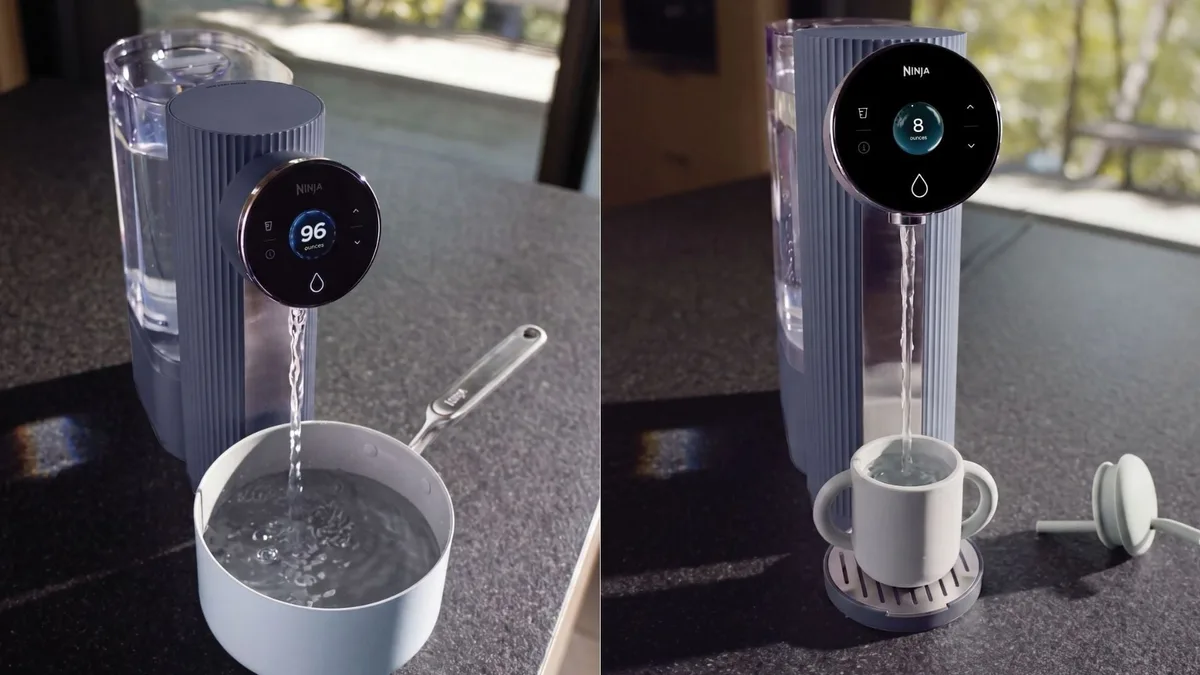
Is the Ninja HydraSense a miracle water filter? The internet seems to think so.
Another week, another Ninja product gone viral.
This time, however, the viral videos are spurring awe rather than abject horror (please clean your Creami correctly , folks).
Following the release earlier this month of the Ninja HydraSense — the brand's first ever water filter — the internet has done what it does best and stress tested the product with liquids that are definitively not water.
In goes pickle juice and Sunny D, out goes clear water that users swear tastes like the real deal.
Our sister site CNET (also owned by Ziff Davis) posted their own HydraSense transformation on TikTok after a rep from Ninja poured red Kool-Aid mix into the HydraSense.
Clear water came out of the dispenser, and CNET Managing Editor David Watsky confirmed the result tasted like clean water.
TikTok user Michael DiCostanzo used the HydraSense to create a spin on the blind soda guessing game.
In his version, he guessed which non-water drink (a word used generously here) yielded which water, featuring everything from fruit punch to hot dog water.
Spoiler: He was able to correctly identify four out of six of the beverages, but he did maintain that the taste got awfully close to water, especially considering the source material.
I reached out to SharkNinja for their official guidance on pouring anything that's not water into the filter, and will update this article once I hear back.
That said, they aren't exactly discouraging it in their own promo materials.
A TikTok on the official SharkNinja page shows a product developer pouring green soda into the filter and dispensing clear water out of it.
So what makes this filter so effective? According to Ninja, the HydraSense uses its Precision Pressure Technology, which removes up to 80 contaminants (compared to eight by other brands), while preserving minerals like calcium, magnesium, and potassium.
And yes, Shark does have the certification from the National Sanitation Foundation to prove these claims.
5News aggregated this summary from the outlet’s public feed. The full article, with all the context, is on mashable.com — the content belongs to Mashable.