Ukraine says Russia used its upgraded, longer-range 'Iskander-1000' missile in a bombardment of Kyiv
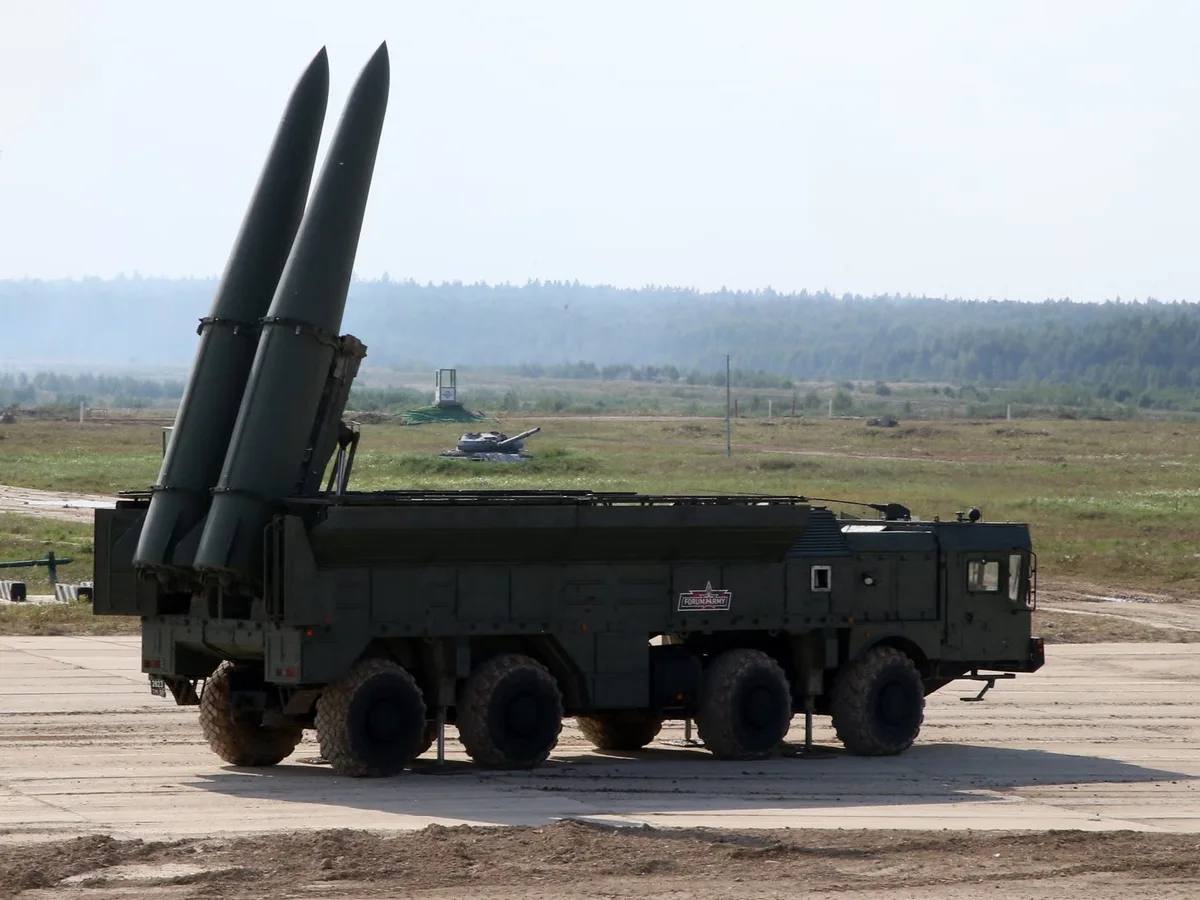
Russia's been upgrading its ballistic missile arsenal, making the weapons more difficult for Ukrainian air defenses to intercept.
Contributors/Getty Images Russia fired a new ballistic missile during a recent strike on Ukraine.
The Iskander-1000 has a larger engine and longer range than its predecessor.
Russia has been upgrading its ballistic missile arsenal, threatening Ukraine's already strained air defenses.
Russia fired an upgraded version of its Iskander short-range ballistic missile for the first time in a summer strike on the Ukrainian capital city, the country's military intelligence agency shared this week.
Russian forces have significantly ramped up their ballistic missile attacks on Ukraine this year.
These strikes come as Russia upgrades its arsenal and Ukraine struggles to procure sufficient numbers of critical air-defense interceptors.
On Thursday, Ukraine's GUR, the country's military and defense intelligence agency, said that Russia had used an upgraded ballistic missile , the 9M723-2 or "Iskander-1000," against Ukraine for the first time during a complex bombardment of Kyiv this summer.
The Iskander-1000 is an upgraded variant of the 9M723-1, a ballistic missile fired by Russia's Iskander system, with a larger engine and launcher that extend its range.
Ukraine has assessed that these modifications have increased its maximum range to about 340 miles, about 100 miles farther than its predecessor.
It added that most other components remain the same.
The first combat use of the Iskander-1000 highlights Russia's ongoing investments in expanding and improving its ballistic missile arsenal.
Ukrainian officials have said such weapons are becoming an increasingly prominent part of Moscow's strike campaign .
The additional range on the upgraded 9M723-2 missile allows Russian Iskander launchers to operate from farther back while still threatening Kyiv and other Ukrainian cities.
5News aggregated this summary from the outlet’s public feed. The full article, with all the context, is on www.businessinsider.com — the content belongs to Business Insider.