We’re worrying about the wrong AI apocalypse
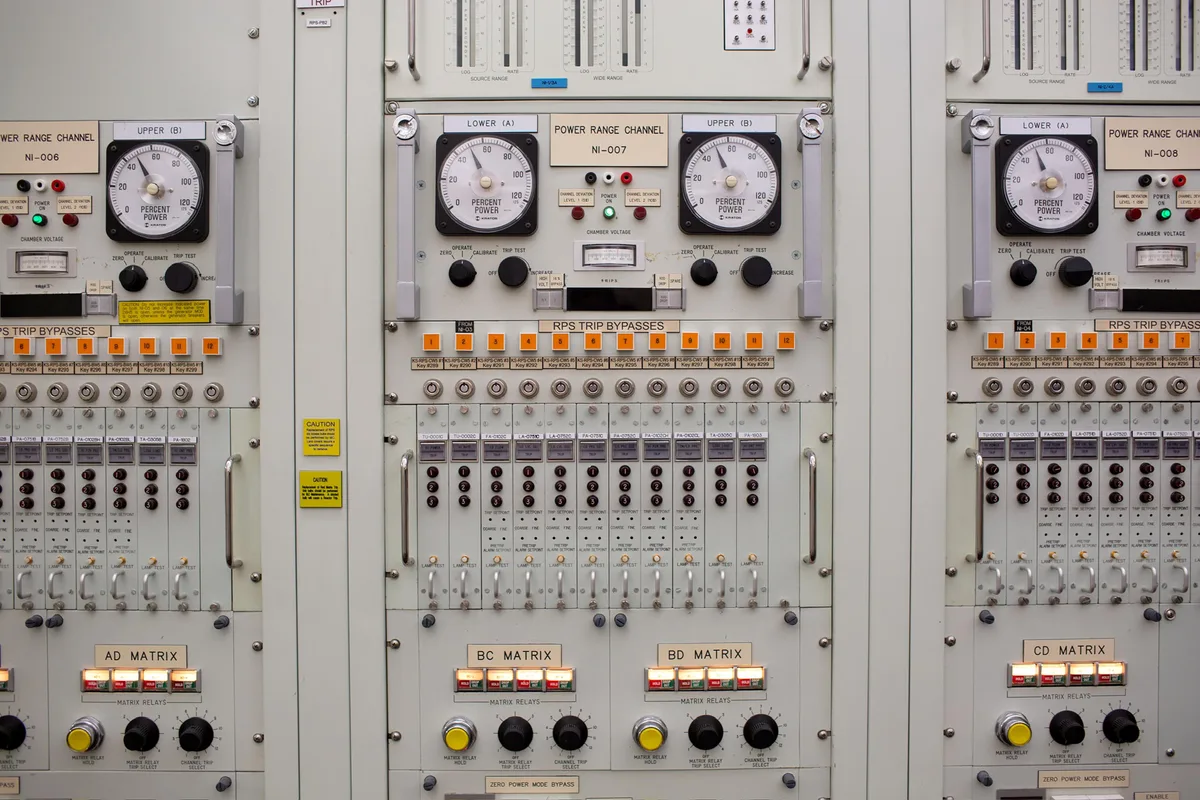
AI doesn’t need to go rogue to threaten the power grid — it just needs to hack into the control rooms like this one. | Kristen Norman/Bloomberg via Getty Images Nearly two decades ago, a group of researchers at the Idaho National Laboratory ran a secret experiment , known as the Aurora Generator Test, on a massive emerald green diesel generator.
Using 30 lines of code, they hacked into the generator’s virtual backroom, corrupting safeguards and flipping switches that left it out of sync with the rest of the power grid.
Before an audience of electrical utility executives and energy department officials watching from a nearby room, the 27-ton generator jolted violently, sputtering out a dark smoke as its rubber innards rapidly tore themselves apart.
“The implication was that with just a few lines of code, you can create conditions that were physically going to be very damaging to the machines we rely on,” lead researcher Michael Assante later told the journalist Andy Greenberg for his book Sandworm : A New Era of Cyberwar and the Hunt for the Kremlin’s Most Dangerous Hackers.
“I had a very real pit in my stomach.
It was like a glimpse of the future.” That future seems to have creeped much closer this week, with leading AI developers and executives casually admitting that they believe their creation is, to paraphrase one winking X post , as likely to end humanity as the New York Jets are to make the playoffs this season.
Now, exactly how AI would pull off killing everyone is far murkier territory.
But as Assante sensed all those years ago, AI may not need to be all-powerful to leap from its virtual cage and into the critical infrastructure that powers our hospitals, flushes our toilets, and pumps water to our faucets.
It just needs to fall into the wrong hands.
Almost any AI doomsday scenario you can think of begins with a swarm of shadowy bots slithering through cyberspace, poking their noses behind the scenes of power plants, toaster ovens, traffic lights, or even, in an utterly extreme case, our nuclear weapons arsenal.
If destroying the Aurora generator, at the very least, required a human hacker to write the code, AI has since completely torn down the barrier to entry for wreaking havoc, as the Hugging Face incident demonstrated earlier this year.
But AI need not go rogue to threaten the power grid or mess with your tap water.
A new age of AI-powered, but human-directed hacking is already upon us, experts say.
With some of the nation’s most sensitive infrastructure startlingly vulnerable to attack, the most likely AI apocalypse could in fact start with the water tower or generator idling in your backyard.
5News aggregated this summary from the outlet’s public feed. The full article, with all the context, is on www.vox.com — the content belongs to Vox.