NASAs Nancy Grace Roman Space Telescope launches in historic moment
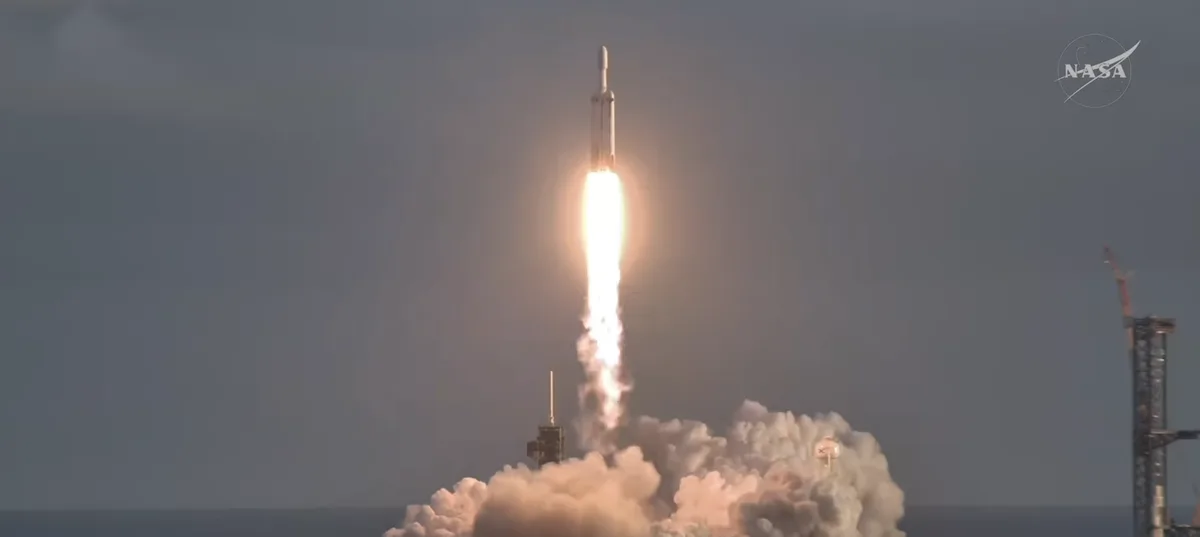
NASA 's latest flagship telescope is on its way to a million‑mile‑distant orbit to map the universe and hunt for distant planets.
The Nancy Grace Roman Space Telescope lifted off at 7:26 a.m.
ET on Sunday from Cape Canaveral, Florida.
Riding a SpaceX Falcon Heavy, the spacecraft separated from its rocket and began its space journey.
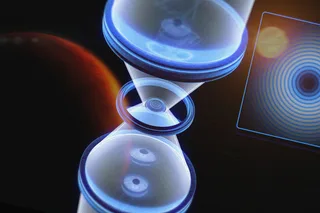
Mission leaders say Roman will reshape astronomy by pairing a wide, sharp view of the universe with powerful tools to probe dark matter , dark energy, and distant exoplanets .
Play our Big Guessing Game: Make your predictions now for a chance to win a new Apple Watch.
Time's running out! The observatory, with a lifecycle cost of about $4.3 billion, will make its data public as soon as it's processed.
And what a firehose of data it's expected to collect.
Hubble gathered 172 terabytes of science data in its first 30 years; Roman will downlink about 1.4 terabytes every day , said Nicky Fox, associate administrator for science at NASA.
What Roman can do in a single month to survey the Milky Way would take Hubble about 100 years .
"The Nancy Grace Roman Space Telescope is a sheer powerhouse," Fox said.
"It is literally a speed machine.
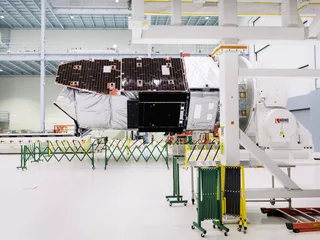
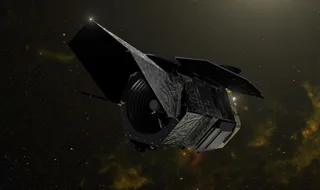
The speed at which we'll be scanning the sky, delivering vast amounts of data, and returning results will be at an unprecedented rate never done before." SEE ALSO: NASA's Roman telescope is built to find what Hubble and Webb miss Under the hood, Roman is about the size of a tour bus and as heavy as a male killer whale.
Its nearly 8-foot primary mirror matches Hubble's in size but is less than a quarter of the weight, thanks to newer technology.
5News aggregated this summary from the outlet’s public feed. The full article, with all the context, is on mashable.com — the content belongs to Mashable.