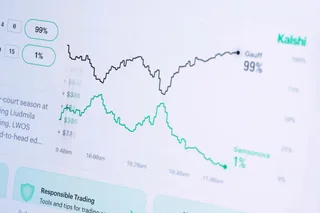
Public brings AI trading agents to prediction markets with Kalshi tie-up

Agentic commerce and prediction markets are two of tech’s biggest narratives this year.
Now, New York-based investing app Public is bringing them together with a product that lets AI agents execute automated strategies tied to real-world events.
On Wednesday, Public announced that users can deploy the agents to trade those events directly or use prediction market data as a signal for their broader portfolios.
It works like this: Public users decide on a strategy, and instruct the platform’s AI what they want it to do.
The agent turns that request into fixed rules, which can range from sending an alert when the odds change to automatically buying or selling an investment.
The product is aimed at investors who want to use prediction-market data to track events that could affect their portfolios, such as Federal Reserve rate decisions, regulatory approvals or company metrics like quarterly shipments.
Investors must approve the rules before the agent can act.
Public partnered with Kalshi, one of the largest prediction markets, to launch the product.
Kalshi will provide the event contracts and handle the trades, while giving Public users access to its markets through Public’s platform.
“AI agents can do work for you, and in investing, that means they can monitor markets when you’re not looking at a screen.
They can execute strategies that you might have not been physically even able to execute yourself,” Leif Abraham, Public’s cofounder and co-CEO, told Fortune .
The launch fits into Public’s effort to position itself as an “agentic brokerage.” Founded in 2019, the company is backed by major venture firms including Accel and Tiger Global, and manages billions in assets across millions of users.
Public is focused on active, self-directed investors, rather than people who rely on wealth managers to oversee their portfolios.
The strategy is a bid to distinguish the platform from discount brokerages that compete largely on price.
5News aggregated this summary from the outlet’s public feed. The full article, with all the context, is on fortune.com — the content belongs to Fortune.