So much solar: Digging into the list of every US power plant that went online this year
It’s been a wild first half of the year in the US power sector, with announcements of gigantic natural gas power plants and some long-awaited renewable energy projects coming online.
At times of rapid change, forecasting is difficult. So I feel a measure of comfort focusing on something concrete like the list of 368 utility-scale plants that began operation from January to June, according to data from the US Energy Information Administration . The group is dominated by utility-scale solar.
This is a top-heavy list, led by SunZia Wind South and SunZia Wind North in New Mexico , which went online this spring and are the largest wind farms in the country, with a combined generating capacity of 3,650 megawatts. SunZia has been in the works for about a decade and arrives at a time when US onshore wind power development has dwindled for a host of reasons related to regulations and public opinion.
In other words, the SunZia is not indicative of an onshore wind-energy boom. It is more like an echo from a past boom.
Next is Trumbull Energy Center in Ohio , a 900-megawatt combined-cycle natural gas plant that is part of an expansion of natural gas power in the PJM Interconnection grid region, which covers parts of the Mid-Atlantic, Midwest and South.
The fourth-largest new power plant—if we’re counting SunZia as two—is Vineyard Wind , the offshore wind project near Massachusetts, which, much like SunZia, has been in development for a long time and whose completion doesn’t reveal much about future trends.
It isn’t until the fifth-largest new plant that we see one that is connected to the broader trend in the data: Green River Energy Center in Utah , with 800 megawatts that includes 400 megawatts of solar and 400 megawatts of batteries.
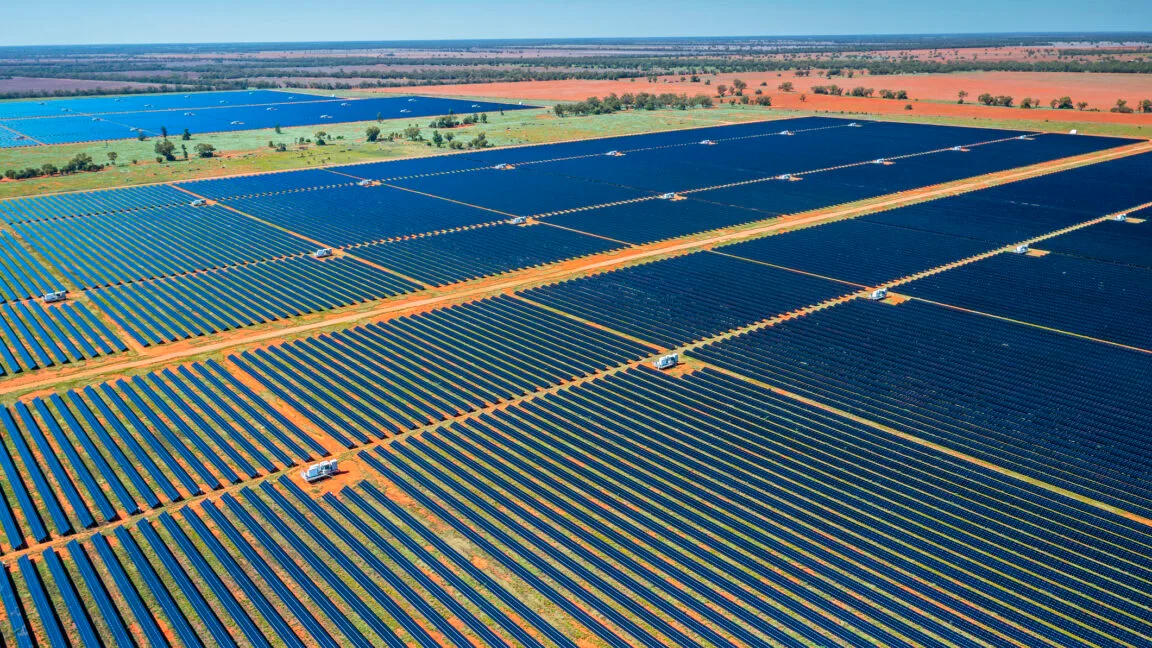
Indeed, the story of power plant completions in the first half of 2026 was mainly about utility-scale solar and batteries.
Utility-scale solar led in the number of projects coming online, with 207, followed by batteries, with 95.
Next were natural gas combustion turbines, with 22, and natural gas internal combustion engines, with 21.
Combined-cycle natural gas, despite having massive amounts of announced capacity in development, had just 3 projects that went online. The high tide of new gas plants won’t arrive for another few years.
If we look at projects in terms of generating capacity, utility-scale solar led with 11,458 megawatts, followed by batteries, 8,207 megawatts, and then onshore wind, mostly because of the SunZia projects, with 5,473 megawatts.
The three largest types of natural gas plants added a total of 2,707 megawatts of new capacity.
Small-scale solar, including rooftop solar, is not part of this database.
5News aggregated this summary from the outlet’s public feed. The full article, with all the context, is on arstechnica.com — the content belongs to Ars Technica.