Sunday, October 11, 2026 SourcesAbout🌓
🇺🇸 US ▾
BREAKING
› Dominion still has pending lawsuits against election deniers such as Rudy Giuliani and Sidney Powell› Russia is 'going backwards' in equipment and deploying post WWII-era tanks, according to Western officials› Podcast: One country musician is calling for other artists to oppose assault rifles› Bidets save you money and reduce waste — we tested the best options out there› 50+ products to make your life easier and our planet cleaner› Mother's Day is around the corner. Here are 50+ thoughtful gifts she'll love› A head-to-toe guide of how men should dress this spring, and where they should shop› 42 of the most useful travel products you can buy on Amazon› The 7 best high-yield savings accounts of April 2023› Taxes are due tomorrow. Here's how to file for an extension› Dominion still has pending lawsuits against election deniers such as Rudy Giuliani and Sidney Powell› Russia is 'going backwards' in equipment and deploying post WWII-era tanks, according to Western officials› Podcast: One country musician is calling for other artists to oppose assault rifles› Bidets save you money and reduce waste — we tested the best options out there› 50+ products to make your life easier and our planet cleaner› Mother's Day is around the corner. Here are 50+ thoughtful gifts she'll love› A head-to-toe guide of how men should dress this spring, and where they should shop› 42 of the most useful travel products you can buy on Amazon› The 7 best high-yield savings accounts of April 2023› Taxes are due tomorrow. Here's how to file for an extension
Technology

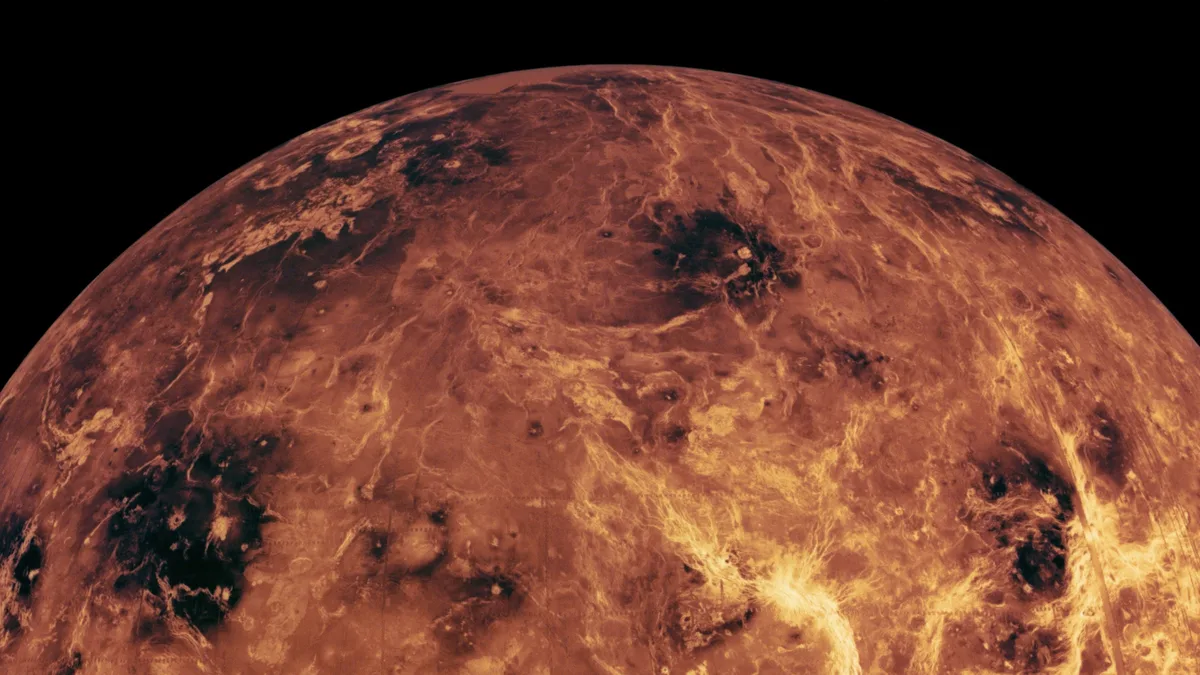
Scientists say if Venus ever had a moon like ours, it was doomed
Mashable ·
Scientists say if Venus ever had a moon like ours, it was doomed

Venus ' sluggish spin may be the key to why it doesn't have a moon — anymore , at least, new research says.

The study , led by University of California, Riverside astrophysicist Stephen Kane, appears in The Astrophysical Journal .

Kane's team built computer simulations of how gravity ties a planet to a moon in space , then ran Venus through them again and again.

Nearly every run ended the same way.

An ancient Venusian moon crashed onto its host planet — sometimes within 30 million years, sometimes after 1.7 billion.

At any rate, it was destined for demise.

That may crack one of the solar system's oldest cases: why Earth and Venus, near-twins in size, weight class, and composition, turned out nothing alike.

Though scientists don't yet know whether a world needs a moon to be habitable, they do know that our moon plays many crucial roles for Earth, such as steadying its tilt and controlling ocean tides.

It's not far-fetched to suppose the moon may also help keep the planet geologically active .

If Venus once had a moon but lost it, its absence could have bent the arc of that scorched world's history.

"Venus didn't require a catastrophe to arrive at what we can see today," Kane said in a statement .

SEE ALSO: Scientists knew Mercury was shrinking.

They didn't know the true extent.

The physics comes down to spin.

Read the full article on Mashable ›

5News aggregated this summary from the outlet’s public feed. The full article, with all the context, is on mashable.com — the content belongs to Mashable.

More from Mashable

See all ›

More in Technology

See all ›