Cyclospora spreads through human waste — so how did it get on food?
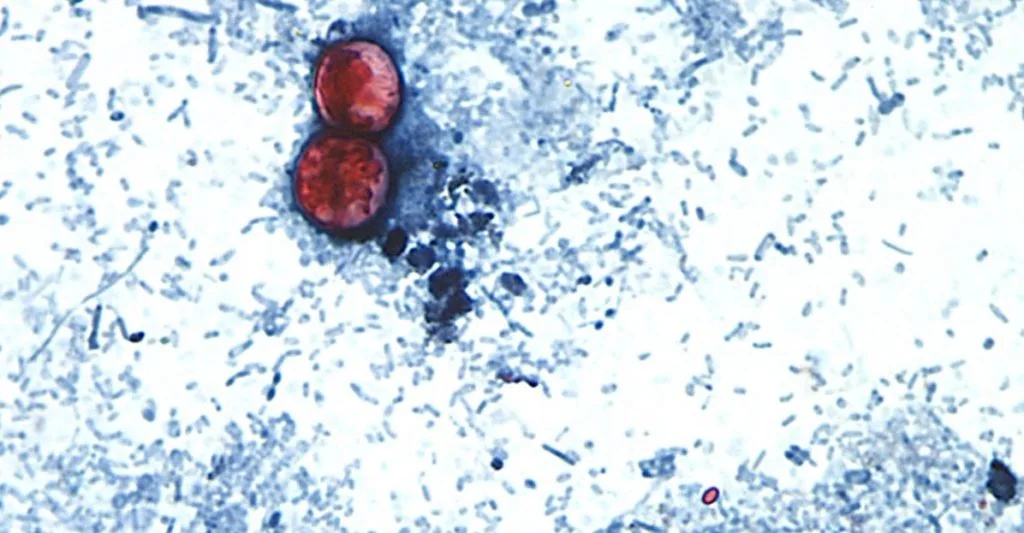
The nationwide cyclospora outbreak is very likely a result of sewage contamination in the food supply, according to scientific researchers and public health officials .
The parasite's spread can become a self-perpetuating cycle. Cyclospora is found only in humans, where it replicates in the intestinal tract, causing severe diarrhea. The organism reproduces by releasing oocysts, which are excreted in those human feces . In the U.S., feces usually end up in sewage systems.
In many states, sewage water is treated — though not always in ways that remove or kill the oocysts — and then released into waterways and can be used to irrigate crops . The oocysts mature in the environment with warm temperatures in about a week. Then a human comes along and eats the irrigated food or drinks the water and gets sick, releasing more oocysts into sewage systems.
READ MORE: Can you eat lettuce safely during the cyclospora outbreak? Advice from an infectious disease expert
I am a public health water microbiologist who collects sewage water and tests it for evidence of harmful pathogens, such as cyclospora. The first time I studied cyclospora was in the first outbreak ever documented in the U.S., a small, 45-case outbreak in Florida in 1995.
The cause was initially suspected to be strawberries grown in California, but later it was determined it was more likely due to imported contaminated raspberries from Guatemala . That country's raspberries were also associated with much larger outbreaks in 1996 and 1997. At the time, little was known about this single-celled protozoan pathogen .
More than 30 years later, the largest outbreak ever recorded in the U.S. has sickened more than 22,000 people , and contributed to the deaths of two in Michigan , where I live and work. Using treated sewage to irrigate crops is common in many places, especially where groundwater and surface water are in short supply.
There are two reasons researchers like me collect sewage and monitor what's in it.
The first is to evaluate levels of disease in a community. Measuring viruses such as SARS-CoV-2 in untreated sewage helped paint a picture of the spread of COVID-19 and the emergence of variants as the pandemic continued.
The second reason is to determine whether and how sewage treatment removes, inactivates or kills pathogens.
It is not easy to measure cyclospora oocysts in sewage, contaminated water or food. Even modern laboratory methods have trouble reliably detecting low levels of oocysts, which can still cause disease.
WATCH: Cyclospora and salmonella outbreaks raise concerns about U.S. food safety
Cyclospora oocysts have been found in sewage around the world. A range of studies across the world shows that they can be detected in up to 25% of sewage samples – but not all studies report how high or low the concentrations of the oocysts were. So it can be hard to say exactly how widespread it is.
A person who is infected with cyclospora excretes somewhere between 100 and 10,000 oocysts per gram of feces for as long as 60 days.
5News aggregated this summary from the outlet’s public feed. The full article, with all the context, is on www.pbs.org — the content belongs to PBS NewsHour.