Moderna’s Bob Langer and AI pioneer Yann LeCun join board of Cellular Intelligence, bringing AI into medicine via a Parkinson’s drug
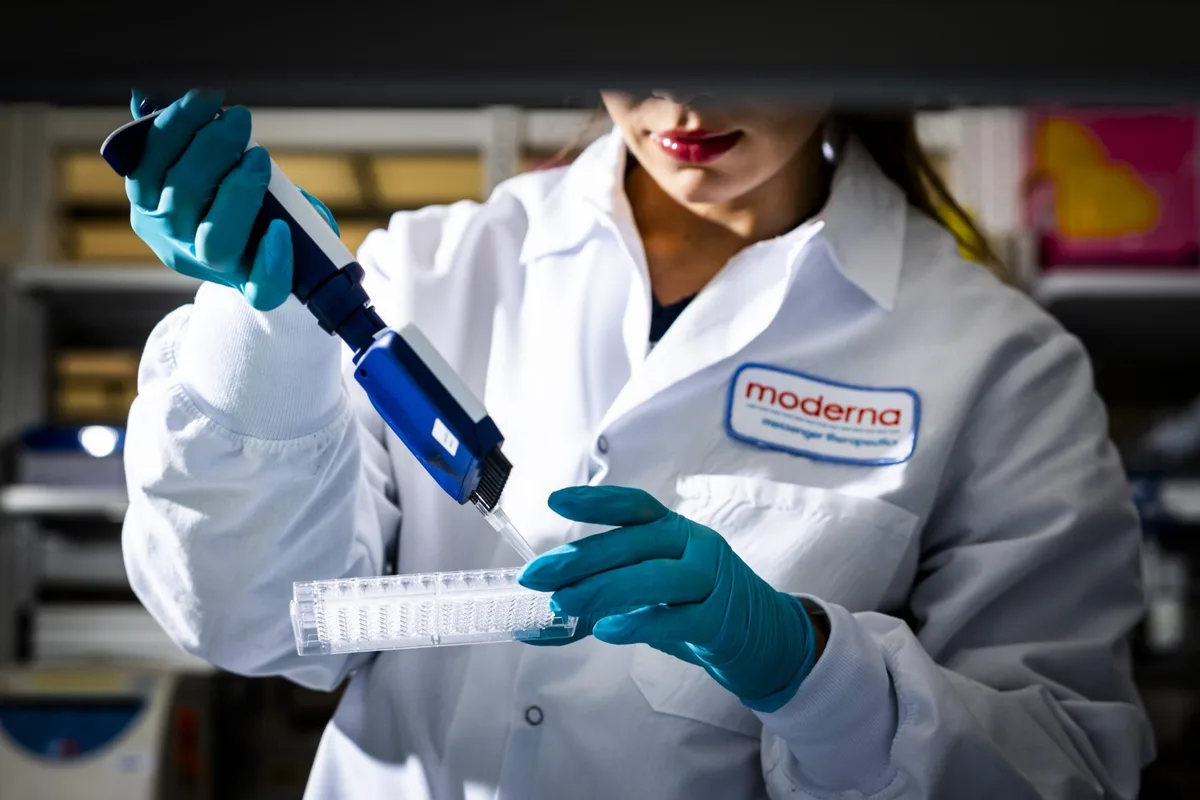
Cellular Intelligence is trying to build an AI model that can predict and eventually control how living cells behave, the same way AI models predict text or images, in hopes of making new medicines faster and cheaper to develop.
The company took a step toward that goal Monday, announcing that Moderna co-founder Robert “Bob” Langer and Turing Award-winning AI researcher Yann LeCun have joined its scientific advisory board, along with Jens Nielsen, chief executive of the Novo Nordisk Foundation’s BioInnovation Institute, and Fabian Theis, a computational biologist who directs the Computational Health Center at Helmholtz Munich.
Langer is also joining the company’s board of directors as an observer.
For decades, developing new medicines, especially cell therapies that use living cells rather than chemical compounds, has depended on slow, expensive trial-and-error lab work.
The Boston-based Cellular Intelligence (CI) is trying to apply the same kind of pattern-recognition that powers modern AI systems to biology: feed a model enough data on how cells respond to different signals, and it may be able to predict how to make a cell do what you want, without testing every possibility by hand first.
Putting LeCun, an AI researcher with no biology background, on the same board as Langer, a medical researcher with no AI background, is the company’s way of showing it has real expertise on both sides.
“What matters to me is whether the science can lead to something that makes a difference for patients, and whether the people involved can carry it through,” Langer told Fortune .
“I have been doing this for over 50 years, and [CI’s CEO] Micha and the scientific team he has brought together are among the very best I have seen.” Micha Breakstone, the CEO of CI, said the addition of the four new members precisely cater to the company’s foundation as “a marriage of three disciplines: genomics, developmental biology and AI.” “A world model learns how a system behaves and predicts what happens when you act on it,” he told Fortune.
“For us, the system is a living cell: the basic computational unit of life, receiving signals, processing information and changing its behavior in response.” Combining AI with medicine The board brings a special mix of medical and technology expertise.
LeCun won the 2018 ACM A.M.
Turing Award for his foundational work on deep learning and led Meta’s Fundamental AI Research lab as the company’s chief AI scientist from 2013 to 2025.
He left the company last December to launch AMI Labs , a company built around “world models”—AI systems designed to learn how a physical system behaves and predict what happens when it’s acted on—where he now serves as executive chairman.
5News aggregated this summary from the outlet’s public feed. The full article, with all the context, is on fortune.com — the content belongs to Fortune.