We learned 5 important things about the economy this week
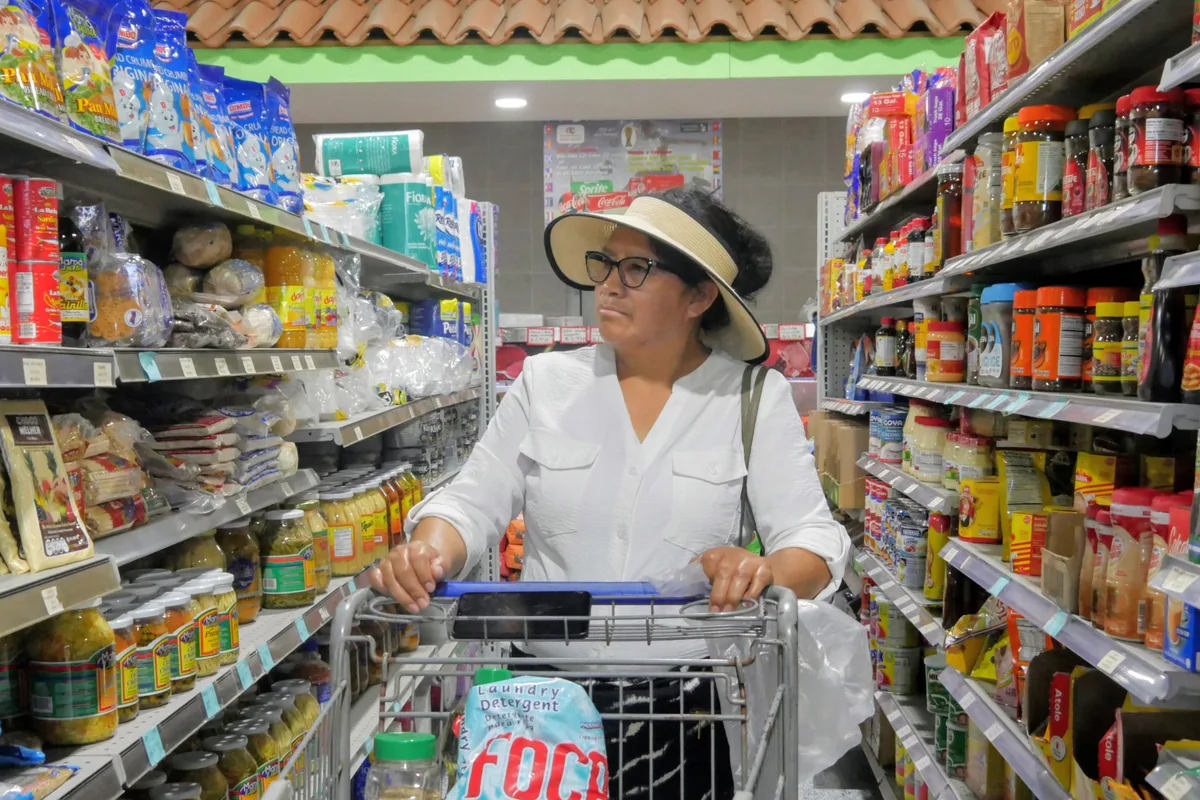
A shopper pushes a cart through a grocery store aisle in Cleveland, Texas. Sandy Guatibonza/La Esquina TX via AP hide caption
How is inflation showing up on supermarket shelves and at the gas pump? How are families coping? What are they splurging on? These were among some of the insights delivered this week about the economy.
What's Eating America It's not shameful, it's savvy: The shoppers redefining how to save money on groceries For example, a government report on Wednesday showed us prices are climbing more slowly than they were a few months ago — but as American households know all too well, inflation is still high, with the cost of living up 3.4% from a year ago.
Here are the key takeaways about the economy we've gleaned this week from government and industry reports covering everything from debt to housing.
From June to July, consumer prices rose just 0.1%, according to new federal data . Prices are still climbing, but annual inflation slowed down for the second month in a row after a sharp jump in April and May sparked by the U.S. war in Iran.
Economy Inflation eases in July as gasoline and grocery prices fall The cost of groceries actually dipped slightly between June and July, but is still up 2.7% compared to a year ago. The price of beef is still climbing , but chicken and eggs are cheaper. And lettuce prices took a dive as supermarkets offered discounts to shoppers scared by the recent cyclosporiasis outbreak .
Gasoline prices fell a bit in July, as they did in June. But they're still up nearly 25% from a year ago, federal data shows. Average fuel prices tracked by AAA have ticked up again in recent days, given the lack of progress in getting oil tankers moving through the important Strait of Hormuz.
While inflation has cooled in recent months, so have workers' pay raises. The job market is stuck in a rut , so employers aren't having to pay as much to attract and keep workers.
Economy Employers unexpectedly cut 23,000 jobs in a sign of a wilting labor market Average wages rose 3.2% in the past year, according to the Labor Department's July report. That's slower than the growth reported for June, and also means that wages are once again not keeping pace with inflation.
This is a turnaround from the recent years, from about mid-2023 to early 2026, when wages grew faster than prices and workers' real buying power improved.
Retail sales declined in July for the first time in months, down 0.6% from June, according to Friday's report from the Commerce Department. People spent a bit less on electronics, autos and auto parts, as well as gasoline thanks to gas prices dipping month-to-month.
But the big factor was Prime Day. This big sales event led by Amazon took place in June, and so spending at online stores dropped 2.2% from June to July.
Now, comparing retail sales in July to last year still shows spending grew almost across the board: People bought more clothes, sporting goods, gardening supplies; spending at restaurants and bars increased 5%.
5News aggregated this summary from the outlet’s public feed. The full article, with all the context, is on www.npr.org — the content belongs to NPR Business.