PHOTOS: The precarious life of fisherfolk
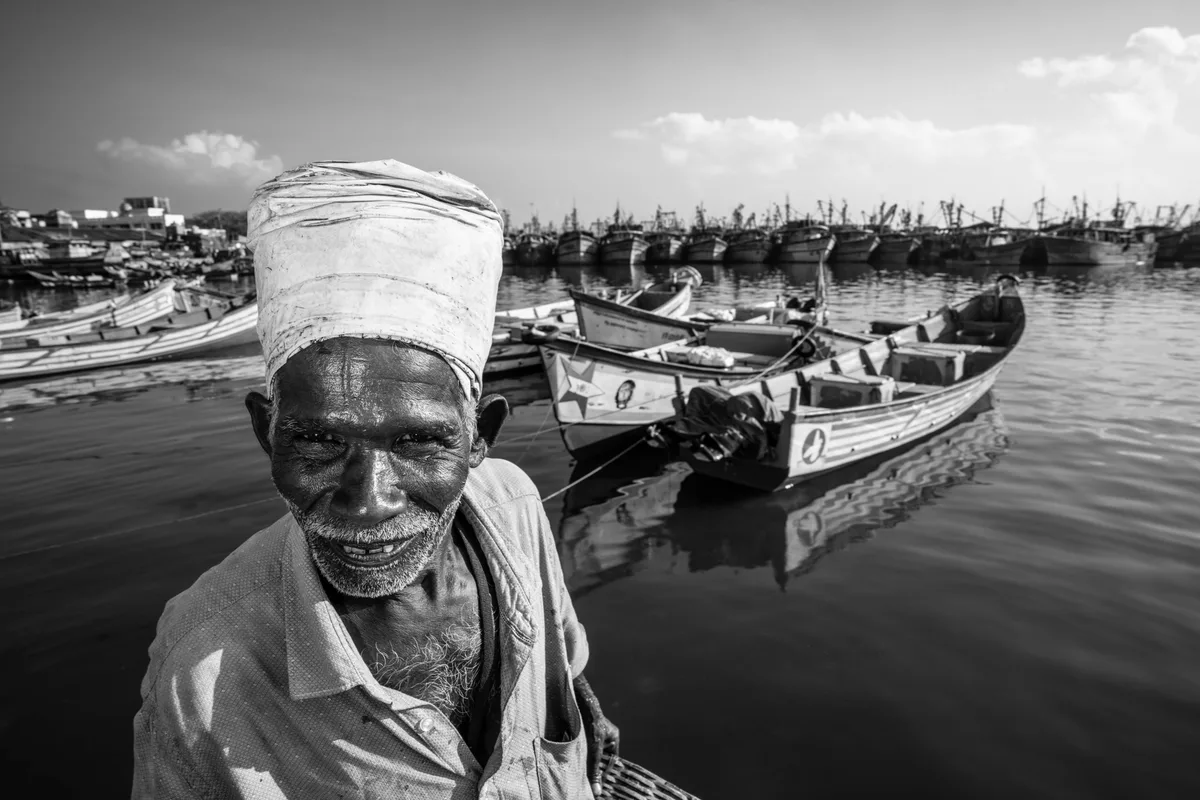
Pavadairayan, 60, a migrant laborer known as a "basket man," carries fish in a basket on his head from boats to the auction house at Kasimedu Fishing Harbour in Chennai, India. Viraj Nayar hide caption
He works from 2 a.m. to 7 a.m. every day. In pitch darkness, he carries baskets of fish on his head from boats in Kasimedu harbor to the auction house, navigating slimy and damp pathways littered with fish scales and wet with seawater. It's a third of a mile each way. He makes the trip 40 or 50 times during his shift for the daily auction, which begins at 4 a.m.
Pavadairayan, who is 60 years old and goes by one name, is one of hundreds of workers known as basket men. It's a tough job. Each basket weighs about 35 pounds. Their bosses don't trust them: "If supervisors think that fish are missing, they can dock your pay and fine you several thousands of rupees. Basket men have few rights," he says.
Despite the hardships, Pavadairayan says he loves the job because the rest of the day is his own. He spends his mornings sleeping and lounging.
"Many other basket men go out and do other odd jobs," he says. "But I always refuse. This money is enough for me. Sleeping with a full belly under open skies, a salt sea breeze fanning your face: that's what I call heaven."
Global Health 'People are still afraid of those three letters': Fighting the stigma of HIV A smuggler's story Pavadairayan is one of around 30,000 people who are part of the bustling scene at the Kasimedu harbor in the southern Indian city of Chennai. In addition to basket men, there are fishermen, auctioneers, fish hawkers and wholesalers, transport workers, ice suppliers. The harbor itself is overcrowded, built for fewer than 600 boats and now estimated to be serving over 1,000.
They have stories to tell about their labors and their lives. Their experiences testify to the struggles they face — and to their undying love for the sea.
Nandu Kumar, 65, sits among fishing boats at Kasimedu Fishing Harbour in Chennai, India. A former fisherman who now sells fish on shore, Kumar says he once smuggled imported alcohol and cigarettes to make a living. Viraj Nayar hide caption
Dressed in a grey shirt and a checkered lungi (a traditional garment men wear, made of light cotton and wrapped around the waist), Kumar is seated on an overturned boat on the harbor's sandy shores. In the pale light of early dawn, he looks vulnerable, almost fragile, with a wispy white beard and contemplative eyes.
He's always worked as a fisherman. But in the early '80s, desperate to make a living, he says he'd help smuggle in imported alcohol and cigarettes on his boat. This was the time when India imposed steep customs duties and limits on consumer-goods imports. Smuggling was profitable until 1991, when economic reforms began taking effect.
So Kumar gave up on his illegal cargo and went back to battling the sea for fish.
Years later, in December 2010, tragedy struck., Kumar says. His daughter's husband, who drank heavily, toppled off his boat and drowned. "This fishing life — it's harshest on the body," Kumar says. "Your shoulders ache all the time.
5News aggregated this summary from the outlet’s public feed. The full article, with all the context, is on www.npr.org — the content belongs to NPR Health.