The Supreme Court Recognizes the Danger of Trump’s Election Plan
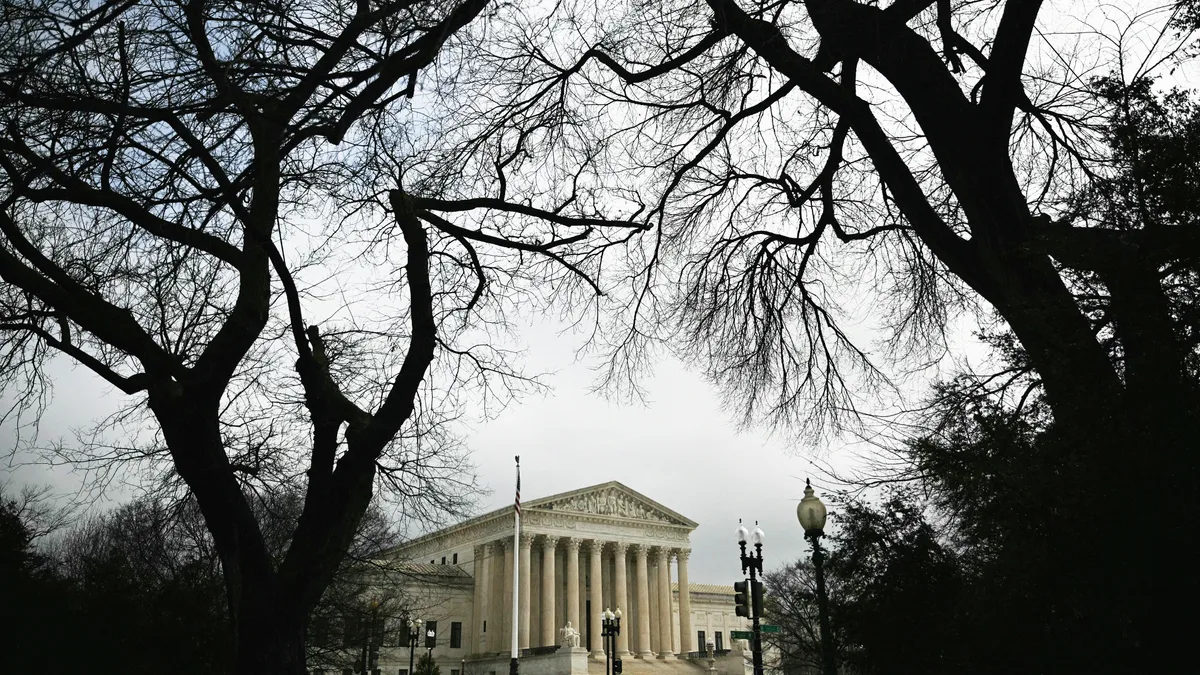
Neither snow, nor rain, nor heat, nor gloom of night, nor Donald Trump will stop the United States Postal Service from delivering mail-in ballots in the coming midterm elections.
Tonight, the Supreme Court handed down an emergency ruling blocking the Trump administration from implementing a new policy that would have made mail-in voting so onerous as to be effectively impossible for election officials to administer.
The Court’s decision spares those officials from pointless chaos —and voters from potentially widespread disenfranchisement.
In the United States, election administration is carried out by a patchwork of local officials, working state-by-state across over roughly 10,000 different jurisdictions.
Usually, USPS’s role in elections is clear: The Postal Service transports mail ballots to voters from state and local election offices; if voters return their ballots by mail, USPS takes care of that, too.
The nature of this responsibility has evolved in recent years, particularly during the pandemic, as many states shifted toward encouraging voting by mail.
The Trump administration looked at this system, which has been popular among voters, and decided to cause havoc by imposing new and arduous criteria for election officials to meet before the USPS would commit to mailing ballots.
A number of states and several nonprofits, along with the Democratic Party, quickly brought legal challenges.
Before the Court resolved the matter tonight, the cases zagged madly among district and appellate courts, then up to the Supreme Court and back down again.
Many judges were skeptical both of the legal basis for the rule and of the speed at which the administration was attempting to implement it, with less than two months to go before the election.
But despite this broad agreement in the lower courts, experts were uncertain how the Supreme Court would handle the case.
The Court’s past friendliness toward even the most legally dubious of Trump’s policies cast into doubt whether the justices would stand against his efforts here, especially after the Court rejected an earlier iteration of the challenge on the grounds that it had been premature.
“The Supreme Court has made law totally unpredictable,” the election-law expert Justin Levitt told me last week, while the country waited for the justices to rule.
“In a normal world, there would be a zero percent chance” that the Court would allow the USPS rule to go into effect.
5News aggregated this summary from the outlet’s public feed. The full article, with all the context, is on www.theatlantic.com — the content belongs to The Atlantic.