How Close Are We to Superconductors That Are Actually Practical?
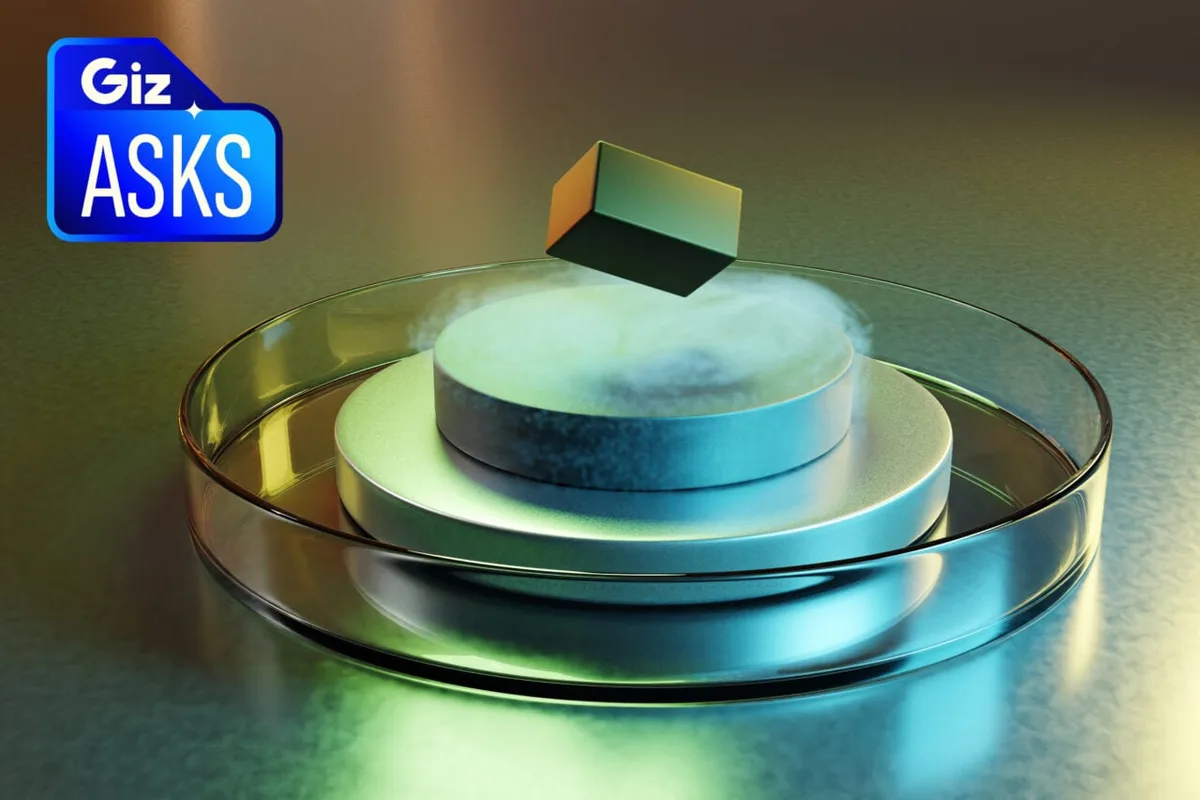
In 1911, Dutch physicist Heike Kamerlingh Onnes made a paradigm-shifting discovery : at a few degrees above absolute zero, mercury completely lost its electrical resistance. This meant that with the right conditions, electrical currents could travel indefinitely without losing power as it passed through matter.
Scientists soon realized that this feature, dubbed superconductivity , wasn’t just limited to mercury. Specific quantum mechanical effects enable superconductivity, so other elements could exhibit these properties under the right conditions. Eventually, physicists found a way to bring superconducting materials into wires and magnets, which opened up entirely new avenues for testing and utilizing weird quantum phenomena . For instance, our best quantum computers and particle accelerators rely on superconducting materials to operate. You don’t even have to be a physicist to have been close to one if you’ve ever taken an MRI.
Unfortunately, superconductors still require incredibly low temperatures to function, which complicates things. For example, in the case of quantum computers, noise reduction and error correction remain a major hurdle requiring near-zero Kelvin temperatures for their qubits.
Naturally, scientists want to ramp up the temperature threshold for superconductors—to develop “room-temperature” superconductors, so to speak. The jury’s still out on whether that’s at all feasible. But researchers have been hard at work finding new combinations and designs to coax superconductors into warmer and warmer conditions. And, they’ve made some progress to that end.
For this Giz Asks, we asked researchers for a breakdown of the status quo. What kind of progress has the community made in recent times? What are some promising candidates for room-temperature (or somewhere in that regime) superconductors? What are some remaining challenges for researchers, and how are they addressing them? The following responses may have been slightly edited for length and clarity.
Physicist , Key Laboratory of Material Simulation Methods and Software of Ministry of Education; Jilin University, China.
Over the past decade, superconductor research has seen major progress, mostly driven by the booming study of hydride superconductors under high pressure. Even so, practical room-temperature superconductors are still far from reality. Most of these hydride materials only work under enormous pressure, way higher than normal atmospheric pressure, which makes them for everyday use unlikely.
There are also some promising but less well-known candidates, including boron-based compounds and newly discovered hydrides that work at relatively lower pressures. We are unlikely to get an ambient-pressure, room-temperature superconductor for consumer electronics in the next 10 to 15 years. What we will probably see sooner is wider use of nitrogen-cooled high-temperature superconductors for power grids and specialized equipment, not home appliances.
Physicists, University of Houston (UH).
5News aggregated this summary from the outlet’s public feed. The full article, with all the context, is on gizmodo.com — the content belongs to Gizmodo.