Who pays for a shadow fleet oil spill? No one
In March, I wrote in Fortune that the shadow fleet exists because the rules of the sea are fundamentally voluntary.
Ships can opt out.
They can switch off transponders, fly flags bought from registries that never inspected anything, and hold insurance nobody can trace.
I noted that when one of them has an accident, there may be no one standing behind the policy.
Which is happening right now off the coast of Oman.
The dark fleet vessel in question is the Caroline Bezengi: a Suezmax built in 2001 carrying roughly 800,000 barrels of Russian Urals crude .
The ship loaded at Novorossiysk on May 11 and was destined for Sikka, in Gujarat.
On June 8 an explosion flooded her engine room off southern Yemen and left her adrift.
No group has yet claimed responsibility and no government has stated a conclusion about the cause.
Security sources and Greenpeace have both pointed to a limpet mine , but that is not yet confirmed.
Her crew abandoned ship three days later, and on June 30 she hit the rocks of Al Qibliyah , in the Hallaniyat archipelago, and grounded.
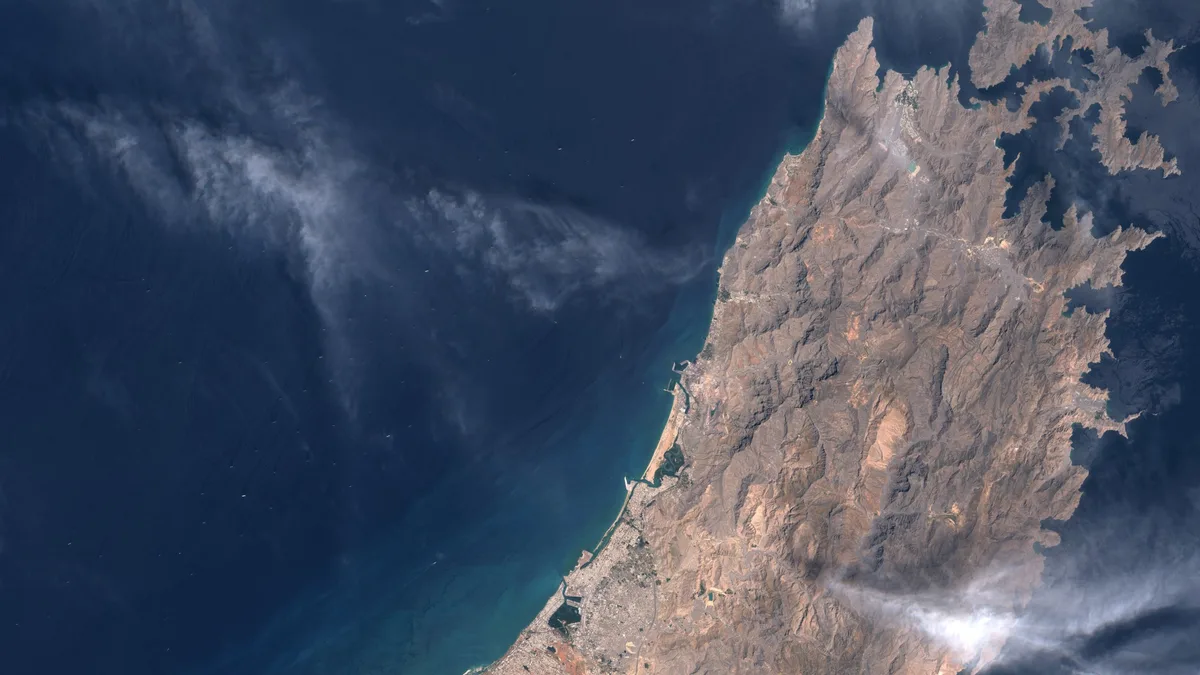
Adding insult to injury, she now sits — leaking oil — inside a 667-square-kilometer marine reserve Sultan Haitham had created by royal decree nearly eight months before , to protect an endangered population of Arabian Sea humpbacks .
Oil reached the mainland at Ras Madrakah .
Oman’s Environment Authority assessed the affected area at 390 square kilometers on August 10 ; satellite analysis by SkyTruth’s John Amos suggested a figure of more than 2,000 square kilometers two days later.
5News aggregated this summary from the outlet’s public feed. The full article, with all the context, is on fortune.com — the content belongs to Fortune.