A Genetic Mutation May Help Explain Lung Cancer in Nonsmokers
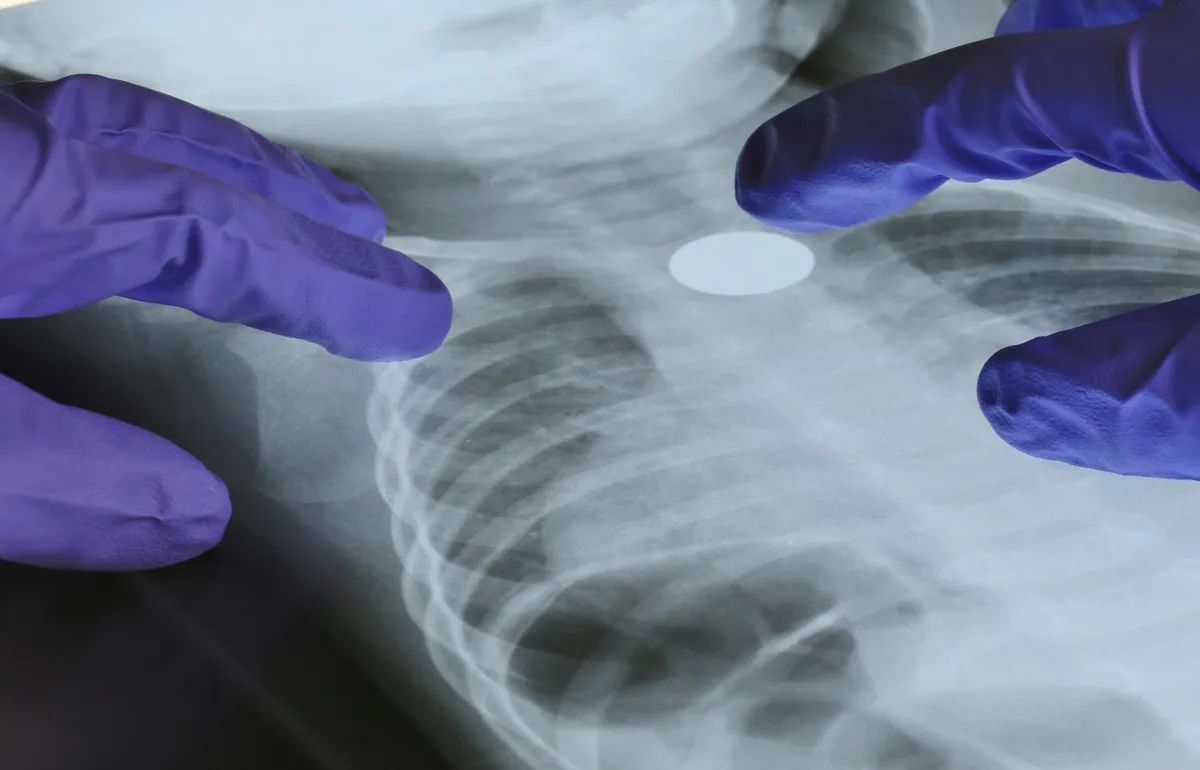
—Douglas Sacha—Getty Images Smoking is one of the biggest contributors to lung cancer, but anywhere from 10-20% of cases in the U.S. each year are diagnosed in people who never smoked.
In a new study published in Science , researchers report that for some of those cases, an inherited genetic mutation might be involved.
Scientists co-led by Dr.
Jaclyn LoPiccolo, an attending physician and lung-cancer researcher at Dana Farber Cancer Institute, found that people with a mutation in the EGFR gene had a 25-fold higher risk of developing lung cancer compared to people without the mutation, regardless of whether they smoked.
When the researchers looked just at nonsmokers, the risk was even higher: carriers of the mutation had a 60-fold higher risk compared to nonsmokers who didn't have the mutation.
Since nonsmokers have a lower chance of developing lung cancer than smokers, this jump in risk reflects how strongly this genetic mutation might impact risk, LoPiccolo says.
The findings add to growing knowledge about what is driving lung cancer in people who don’t smoke .
A handful of genetic mutations have been linked to lung cancer in nonsmokers, including some that appear to be more prevalent in Asian people who get lung cancer, as well as inherited mutations like BRCA2, but they aren't well understood.
While the specific EGFR mutation in question, called T790M, was first discovered in a European family in 2005 with members who hadn't smoked but had developed lung cancer, it wasn’t clear how much the mutation, which is rare, actually contributed to lung cancer.
LoPiccolo and her team used a large data set of genetic samples from the genetics company 23andMe to determine how much of an impact the mutation has on lung cancer.
“While we knew that T790M was associated with lung cancer, we didn’t have a population large enough to determine how common the variant was, how strong its effect, and how the risk varies in different groups,” says LoPiccolo.
“This mutation is so rare that we weren’t able to get population-level risk estimates without the size of a database like that from 23andMe.” About one in 15,000 people in the U.S. carry the mutation, but rates are higher—about one in 2,000—in Southern Appalachia, where scientists believe the first carrier brought the mutation to the U.S. from England or Ireland more than 200 years ago.
The findings open to door to considering how genetic testing might fit into lung-cancer screening.
Currently, screening—in which people receive a low-dose radiation CT scan to look for lung cancer—is only recommended for people with a heavy smoking history who are above a certain age.
5News aggregated this summary from the outlet’s public feed. The full article, with all the context, is on time.com — the content belongs to TIME.