HBO’s Great New Show Takes a Character With an Embarrassing History and Makes Him Fascinating
Sign up for the Slatest to get the most insightful analysis, criticism, and advice out there, delivered to your inbox daily.
Has there ever been a sillier comic-book hero than Green Lantern? Yes, of course there has. Without even changing the color, there’s the Green Lama and the Green Falcon . But for some reason, each time DC Entertainment tries to expand its TV and film offerings beyond its more dependable Golden Age characters—Superman, Batman, Wonder Woman—he is usually the first major hero of the comics’ goofy, fun Silver Age of Cold War–inflected characters to get a face-lift. (Sometimes it’s the Flash .) As the new and much-improved universe of DC Comics adaptations shifts into gear, the challenge facing HBO’s Lanterns is a daunting one: How can it introduce Green Lantern without inviting the suspicion that in short order we will all have to do a lot of extra homework in order to watch various embarrassed-looking Oscar winners in the roles of Bee-Man, Matter-Eater Lad, and the Gay Ghost?
At the core of it all, of course, is the idea of the ring. The ring is good. Everybody at Warner Bros. knows how much an ordinary person with a TV likes a magic ring .
But so much demands explanation when a moviegoer or a TV watcher is faced with a supercop in a green jumpsuit, empowered by the Guardians of the Universe to keep Earth safe from alien invasion using a magic ring powered by will, which is in turn charged using a special lantern-shaped battery. Why is the uniform green? Why a lantern? If it runs on will, why does the ring need to charge up? Is law enforcement really the best career for a superhero? Did artist Gil Kane mean to put founding Prime Minister of Israel David Ben-Gurion’s face on the Guardians of the Universe, a race of aliens who look like blue Oompa Loompas? Or was it an accident? ( It was intentional .)
The same era that produced Superman had a Green Lantern too, but he is even weirder and gets his powers from a mysterious portable lamp that was A) from China, B) powered by a meteor, C) foretold in an ancient book, and D) granted to him after a railroad crash. In 1959 Kane and writer John Broome tossed out most of the window dressing, keeping little more than the powerful ring, and added bells and whistles from their own era, which have now aged out of relevance just as the original conceit did. Today the makers of Lanterns —TV god Damon Lindelof, police procedural vet Chris Mundy, and comics writer Tom King—have to figure out which pieces to keep and which to toss away.
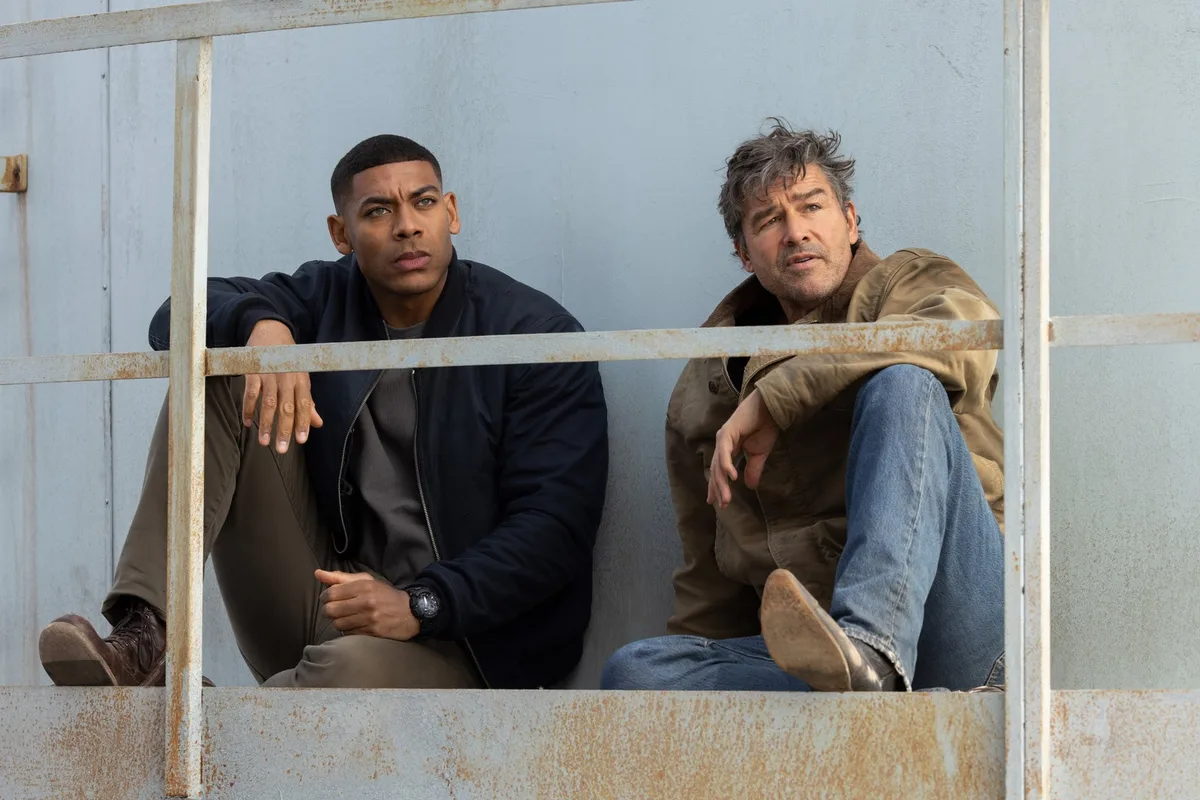
Accordingly, Lanterns is firmly rooted in today’s idea of the ordinary, rather than yesterday’s. (It might also be a budget thing.) It’s a clever conceit: a small-town noir like True Detective or Ozark (Mundy worked on both of those) in which the FBI-equivalent detectives are the DC Comics space police, and local Sheriff Kerry Kane (the amazing Kelly Macdonald) is just as formidable as her superpowered peers.
In the second episode of Lanterns , the series begins to follow a familiar film-noir path, albeit one with a science-fiction twist: The killings that brought our heroes to town are of greater importance than they first appeared.
5News aggregated this summary from the outlet’s public feed. The full article, with all the context, is on slate.com — the content belongs to Slate.