How School Violence Catalyzed Philippine Lawmakers to Crack Down on Kids’ Social Media Use
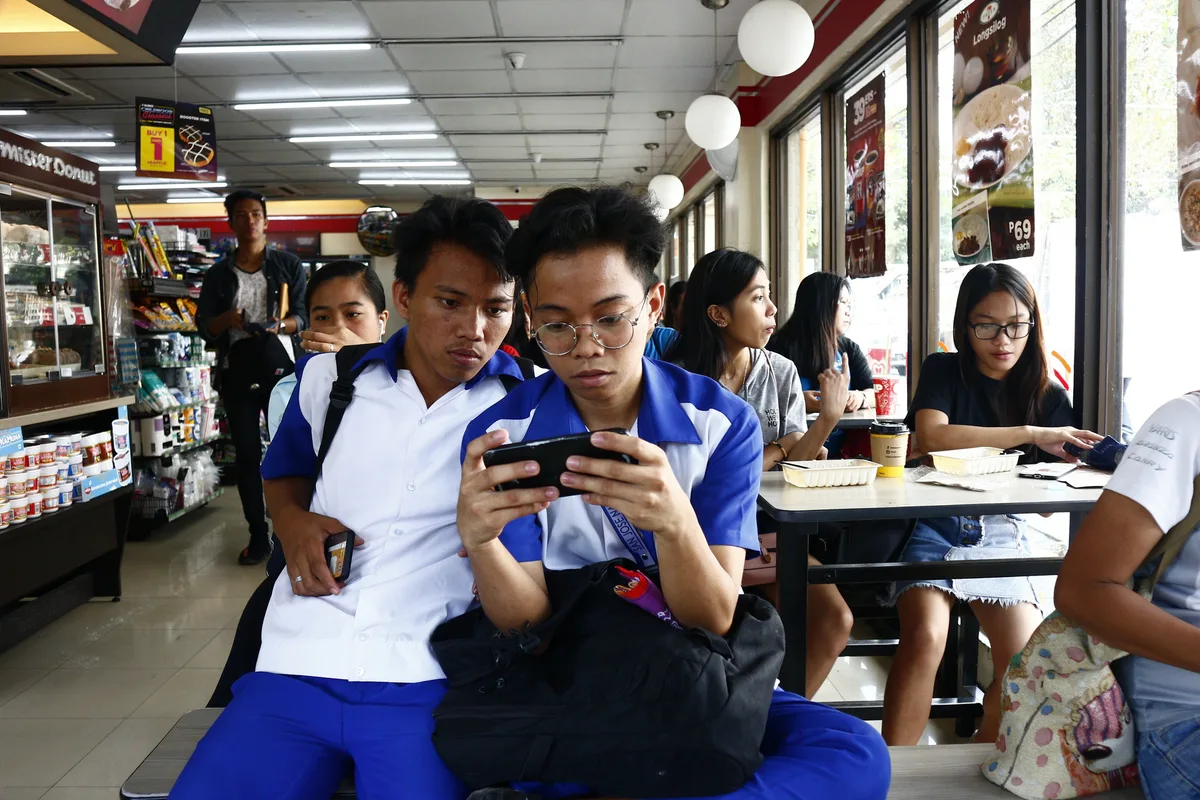
Filipino teenagers rest at convenient store and play video game on smartphone in Antipolo City, Philippines, on Oct.
3, 2019. —Jun Pinzon—Getty Images School shootings used to be rare in the Philippines.
But a spate of incidents involving students this year seems to have catalyzed the Southeast Asian nation’s lawmakers to swiftly pass bills cracking down on what they deem to be a cause of the deadly trend: social media.
On Monday, the Philippines House of Representatives passed a bill banning children under 13 from social media platforms, while those between 13 and 17 would have limited access, with 287 members voting in favor and only three against the measure.
The latest bill follows its Senate counterpart , which passed last week but has a higher age threshold, barring people under 18 from social media platforms and services classified as “high-risk.” The bills must first reconcile their differences before they head to the President for signature.
But their passage already follows steps taken by other countries such as Australia , the U.K. , and more in introducing age-based restrictions on social media amid concerns over these platforms’ impact on children’s mental health and safety.
Philippine President Ferdinand “Bongbong” Marcos Jr . said that it was not “surprising at all” that Congress took action amid concerns that social media is believed to have influenced children to take part in violent acts.
However, Marcos said his Administration would still study whether such a ban could work in the Southeast Asian nation of more than 110 million people.
“That’s also something that we’re studying really hard,” Marcos told reporters in Singapore on Sunday.
“It has its advantages,” he said, but he warned it could also “simply make children hide their use.” Age-specific social media bans have been up for debate in the Philippines since at least 2019 , but it gained momentum earlier this year, following reports of a foiled mass shooting plot by students in February as well as shootings and stabbings in other regions in the months that followed.
Education Secretary Juan Edgardo Angara said harmful online influences were a possible factor behind those incidents, saying in July that experts have pointed to “exposure of young people to damaging social media sites, negative influences, groomers, and terrorist groups online actively recruiting (children).” A ban, however, is an escalatory approach in one of the countries from which users spend the most time online .
Critics have also questioned whether such bans are effective.
5News aggregated this summary from the outlet’s public feed. The full article, with all the context, is on time.com — the content belongs to TIME.