Cancer vaccine prevents deadly melanoma from returning or spreading in landmark trial
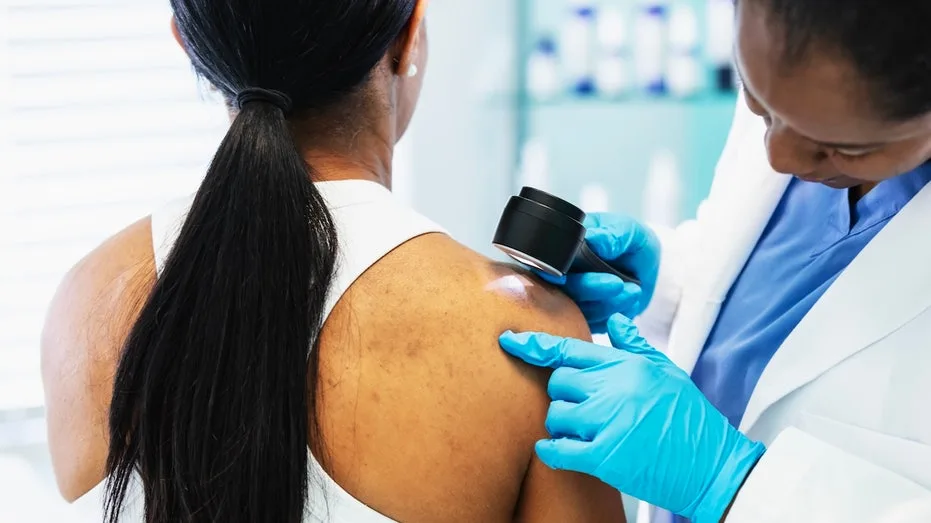
An experimental skin cancer vaccine significantly reduced the risk of melanoma returning or spreading in a late-stage clinical trial from Merck and Moderna.
The results mark the first positive Phase 3 trial of an mRNA-based personalized cancer therapy , according to the companies.
Known as INTerpath-001, the study evaluated 1,137 patients globally who had surgery to remove high-risk (Stage IIB through Stage IV) melanoma.
Patients were randomly assigned to receive either Keytruda, plus the personalized vaccine, or Keytruda, plus placebo. 'TANMAXXING' TREND COULD COME AT A DANGEROUS COST, SKIN CANCER EXPERTS WARN Patients who received the combination experienced significantly better "recurrence-free survival," meaning their cancer was less likely to return than in those who received Keytruda alone.
The combination also significantly improved "distant metastasis-free survival," a measure of how long patients remained alive without the cancer spreading to distant parts of the body.
"These phase 3 findings represent a pivotal moment for the field of cancer research," Stéphane Bancel, CEO of Moderna, said in the press release.
"For many years, the idea of creating an mRNA treatment designed specifically for an individual patient's cancer was aspirational.
We are now helping turn that vision into a reality." Unlike traditional vaccines that protect against external viruses, the custom-tailored mRNA vaccine (intismeran autogene) is a therapeutic vaccine given after surgery to train the body to hunt leftover cancer cells.
After a patient undergoes surgery to remove a tumor, doctors sample both the cancerous tissue and healthy cells.
Then, advanced algorithms analyze the tumor's genetic sequence to select up to 34 tumor-specific neoantigens to encode in the personalized treatment.
PANCREATIC CANCER VACCINE SHOWS PROMISE IN FIRST HUMAN TRIAL, PREVENTING DISEASE IN HIGH-RISK PATIENTS Dr.
Murad Alam, chief of dermatology at Northwestern Medicine in Chicago, noted that not all melanomas are the same.
"They're slightly different in every patient, which is why traditional chemotherapies often stop working or don't work in a particular patient," he told Fox News Digital.
"This is almost individualized immunotherapy, where you're finding specific issues in a particular patient." The individualized approach is designed to direct the immune system toward tumor-specific targets, Alam noted.
5News aggregated this summary from the outlet’s public feed. The full article, with all the context, is on www.foxnews.com — the content belongs to Fox News Health.