“We’re not doing 30 bets a year”: Vijay Pande on betting small after running $4 billion at a16z
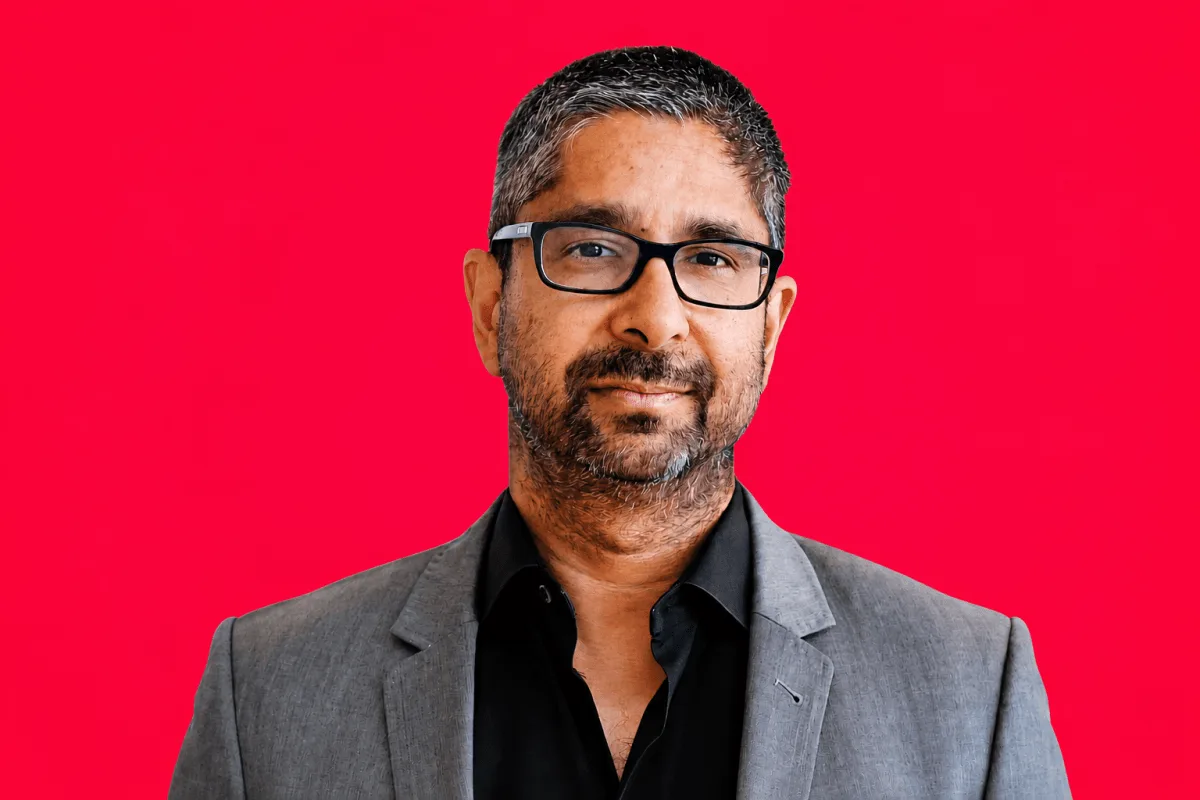
It used to be that Vijay Pande was better known in academic circles than investor circles. That changed pretty abruptly a dozen years ago, when Marc Andreessen and Ben Horowitz — who’d spent their firm’s first five years explicitly avoiding healthcare and life sciences — decided the category was worth betting on after all and handed the keys to Pande. At the time, he was a Stanford chemistry professor who was best known for building Folding@home, the distributed-computing project that turned millions of home PCs into a supercomputer for disease research. Over the next decade-plus, he grew a16z’s bet into a practice managing close to $4 billion.
So it was somewhat unexpected when in June of last year, Pande walked away from it all to start something much smaller. In fact, his new firm, VZVC , co-founded with longtime investor Zach Werner, is built around a handful of concentrated bets a year rather than dozens, it has no associates, and it relies heavily on AI for its day-to-day operations.
To learn more about Pande’s hard pivot, we talked with him this week about why he’s making just a handful of concentrated bets rather than spreading himself thin in the current market — and about one of the more interesting conundrums in AI-driven biotech: unlike text, biological data can’t be scraped off the internet, so nearly every company ends up building its own walled-off dataset. What does that mean for all the advances AI in medicine has promised, and who actually gets access to them?
This conversation has been edited for length and clarity. You can also listen to the fuller conversation (below).
You’ve said biology is moving from a “science of discovery” to something you can engineer. What does that mean?
For a lot of the way drugs have been developed, there was very much a fortuitous aspect to it. I think what’s shifted is that AI and machine learning allow computers to wrap their type of understanding around something very, very complicated… to try to figure out what targets you want your drugs to hit, for specific diseases, to be able to make those drugs, and now even to help in the clinical trials — which are the most expensive part of the process.
I thought clinical trials were getting cheaper because drug developers are using more synthetic data, so not as many people are needed for these trials.
The cost and time to get to clinical trials has been shrinking, especially with AI, but it could still cost hundreds of millions of dollars to run a trial, which is why drugs are very expensive. The probability of a drug going successfully from the first trial to the end of the third trial is just 20%. If 8 out of 10 fail, and these things cost hundreds of millions of dollars, the amortized cost gets really high. The reason they fail typically is not that the biologist did something wrong; it’s that all the experiments these drugs were designed on were on animal models like mice, and in the end, animal models are just not very predictive of humans.
5News aggregated this summary from the outlet’s public feed. The full article, with all the context, is on techcrunch.com — the content belongs to TechCrunch.