Why the U.S. grid's extreme heat problem is changing
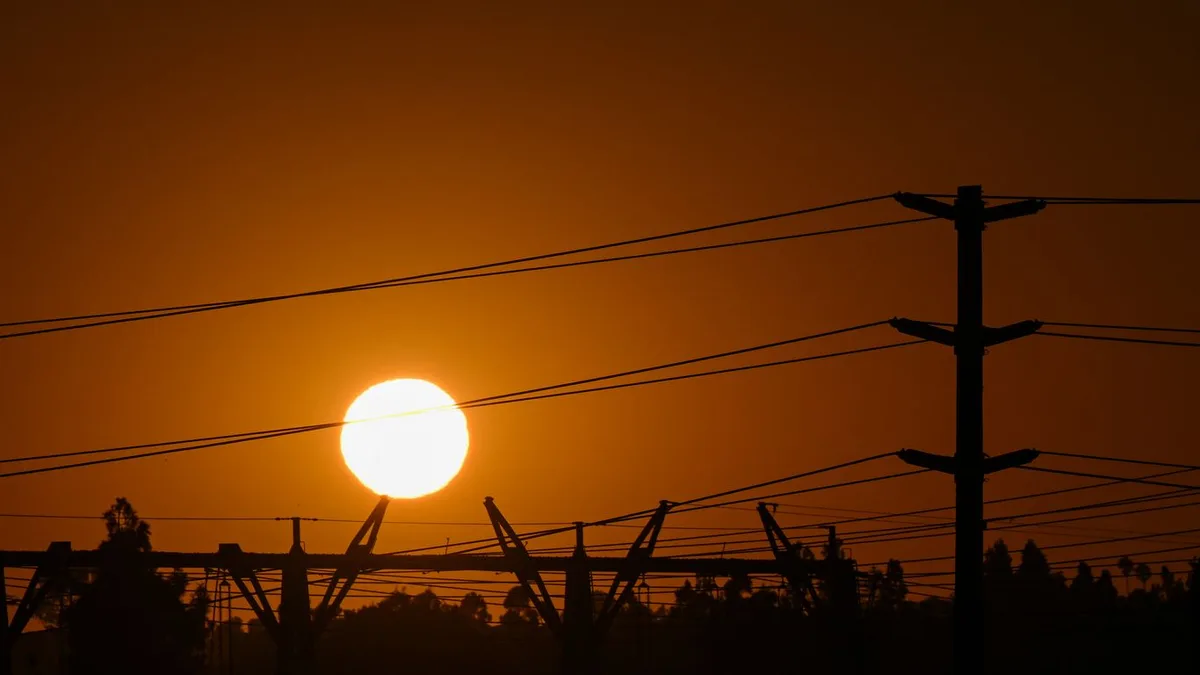
Solar energy and batteries are making it easier for utilities to meet surging electricity demand during extreme heat , but prolonged high temperatures are exposing other vulnerabilities in the grid.
Why it matters: Electricity demand rises as air conditioners work harder in extreme heat, while high temperatures can make parts of the system less efficient and put additional stress on equipment.
The big picture: Climate change is extending periods of extreme heat just as electrification and data centers add new loads, leaving parts of the grid working harder for longer.
Between the lines: Michael Webber, a mechanical engineering professor at the University of Texas at Austin, tells Axios that grid operators face a "triple whammy" under extreme heat, as air conditioners, transmission lines and power plants all become less efficient.
"At the times we need the grid the most is when every single component in the grid is less efficient ... but also more fragile, and then we run it more," says Webber, who's also CTO of Energy Impact Partners, a clean-tech venture capital firm.
A 2018 study Webber co-authored found that power plants, air conditioners and transmission systems tend to operate more efficiently at cooler temperatures.
Zoom in: It's not just hotter days that matter.
Webber says hot nights can prevent equipment from getting a chance to cool down.
In Texas, "it's not so much that it's 105°F during the day; it's that it only cools to 78°F at night," he says.
"The equipment never gets a break." Rob Gramlich, president of Grid Strategies, a consulting firm focused on electric transmission, says that problem is particularly acute for local distribution systems — including transformers — which need time to cool overnight.
Utilities may need more redundancy in local distribution networks, as well as backup transformers that can be deployed when equipment fails, Gramlich says.
"They're going to have to build in more procurement and storage, which costs money," he adds.
What we're watching: Longer hot seasons could also squeeze the spring and fall windows when power plants traditionally go offline for maintenance.
A 2024 study Webber co-authored found the period of mild spring weather associated with lower electricity demand in Texas shifted earlier by 2.4 days per decade from 1959–2022, while the corresponding fall period shifted later by 1.1 days per decade.
5News aggregated this summary from the outlet’s public feed. The full article, with all the context, is on www.axios.com — the content belongs to Axios.