Reducing the Number of Generals Isn’t the Problem
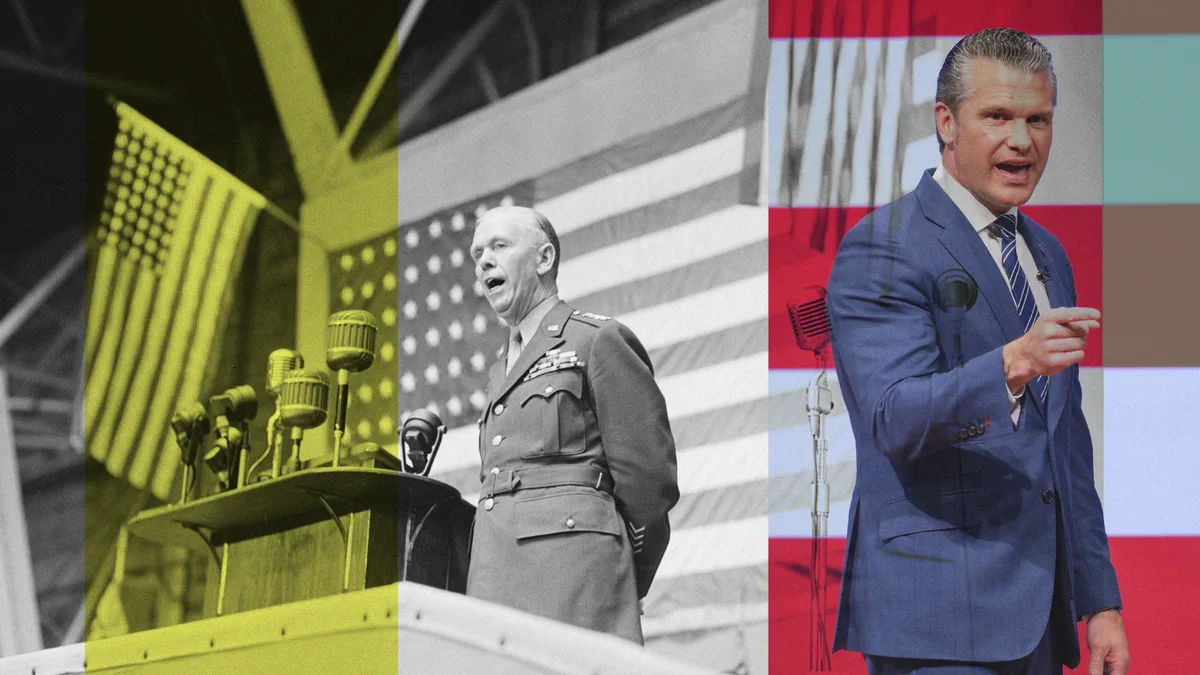
The self-styled secretary of war strode confidently across the stage as he outlined his vision for America’s armed forces.
He spoke of establishing an autonomous warfare command and an office of religious affairs, of developing preferred relationships with select universities, of reducing the number of senior officers by 20 percent, and of creating an external team of civilians to chart the future of warfare.
Unlike last year, when the senior officers Pete Hegseth called to order in Quantico responded with silent stoicism, this year the junior officers and enlisted troops he addressed gave him a standing ovation.
Some of Hegseth’s supporters have compared him to George Marshall, the legendary U.S.
Army chief of staff who reshaped that service before World War II, because Marshall relieved at least 600 senior officers of their positions.
He defended the choice on the grounds that “most of our senior officers on such duty are deadwood and should be eliminated from the service as rapidly as possible.” Only 11 of 42 generals retained their commands for combat; only one was given a top command during the war.
But the taciturn, disciplined Marshall would never have crowed that “the ideological clowns are out.
The patriotic cowboys are in, with testosterone testing on top,” or suggested that journalists who criticized a military mission were guilty of treason, both of which Hegseth did in his speech.
And this is just the beginning of what makes the comparison both ridiculous and patently self-serving for Hegseth.
Marshall had to create a wartime military from an Army that hadn’t fought in 20 years.
Hegseth is leading a military that has been at war for more than 25 years.
Marshall’s judgments were trained on his long experience in important positions inside the military hierarchy.
Hegseth sits in judgment of an officer corps that found his performance wanting at a fairly junior level of leadership.
Marshall evaluated combat capabilities through rigorous field experiments known as the Louisiana Maneuvers, in which officers tested new technology, such as tanks, and were assessed by experienced officers.
5News aggregated this summary from the outlet’s public feed. The full article, with all the context, is on www.theatlantic.com — the content belongs to The Atlantic.