Apollo Atomics wants to make nuclear power cheaper by shrinking an overlooked part
The nuclear power industry is undergoing something of a renaissance, with startups raking in funding to develop advanced reactors in a quest to lower costs. But based on recent projections , it’s unlikely those reactors will be cost-competitive anytime soon.
Assil Halimi and Drew Walker, the founders of Apollo Atomics , think that’s because companies have been chasing the wrong problem. So instead of designing a new reactor, Apollo is rethinking the way thermal energy is converted into electricity.
“We focus on the largest component, the steam generator,” Halimi, the startup’s CEO, told TechCrunch. “We have been able to shrink that component and make the whole system way more compact than any other reactor in the market.”
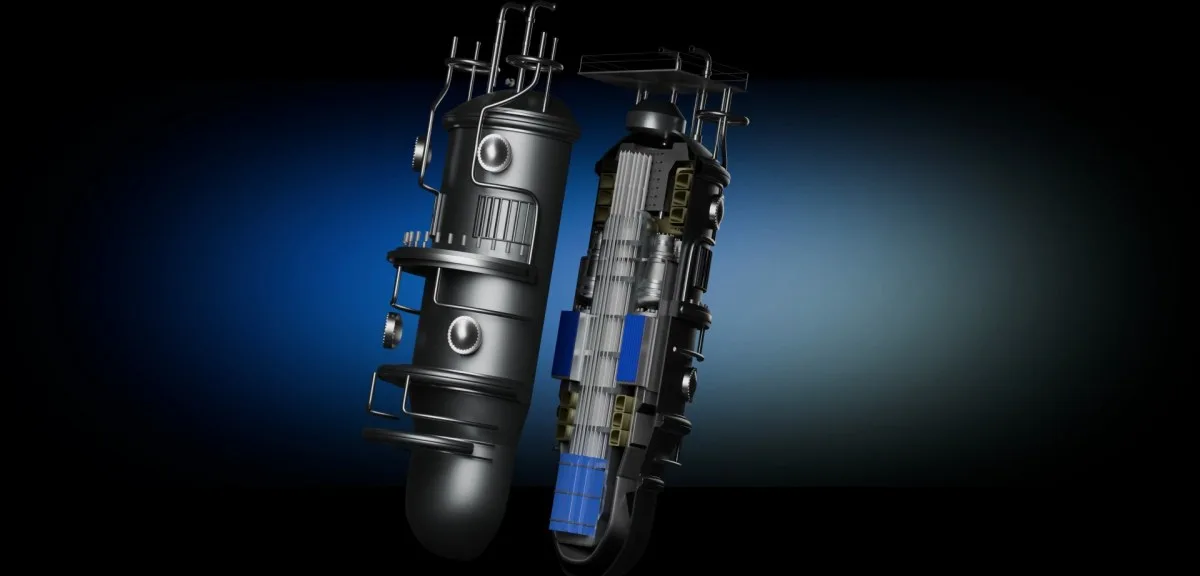
A necessary but unsexy part of a power plant, these generators produce steam from the reactor’s coolant loop to drive a turbine. While most steam generators are hand-built and several stories tall, Apollo says its version can be mass-manufactured and is about the size of a person. That has allowed the startup to build a reactor that’s 40-times smaller than one that uses a conventional steam generator.
To build a demonstration reactor ahead of a planned commercial deployment in 2028, Apollo recently closed a $26 million seed round that included $5 million in debt, the company exclusively told TechCrunch. Apollo’s design is based on research from MIT.
Halimi projects an Apollo power plant can generate electricity at a rate of 3 cents per kilowatt hour. “We don’t want to be incremental in nuclear and just improve a small thing,” he said. “Our target is to beat natural gas.”
Existing steam generators have left plenty of room for improvement, Halimi said. Old designs borrow heavily from those used by coal and natural gas power plants, but both of those fossil fuels have far lower energy density than nuclear fuels like uranium. “You have this high-potential fuel, but you’re converting just a small piece of it,” he said, pointing to how current generators fail to make the most of nuclear fuel sources.
Most steam generators run reactor coolant through a series of large tubes, which are surrounded by the water used to make steam. Apollo’ generator would thread the two fluid loops through a compact block of metal that’s laced with needle-thin channels — a setup that would allow heat to be transferred more efficiently, which in turn lets the company shrink its size.
With the compactness of the generator in mind, Apollo plans on assembling the reactor and steam generator in a factory rather than on site, which is the case with nuclear power plants today. Between the labor savings and smaller size, Halimi expects Apollo will be able to build a 300-megawatt power plant in less than 24 months, and predicts the reactor itself to cost four to five times less to produce than existing designs.
Apollo has already built a small, 40-kilowatt reactor at MIT to demonstrate the technology.
5News aggregated this summary from the outlet’s public feed. The full article, with all the context, is on techcrunch.com — the content belongs to TechCrunch.