St. Louis becomes the latest battleground in fight over data centers
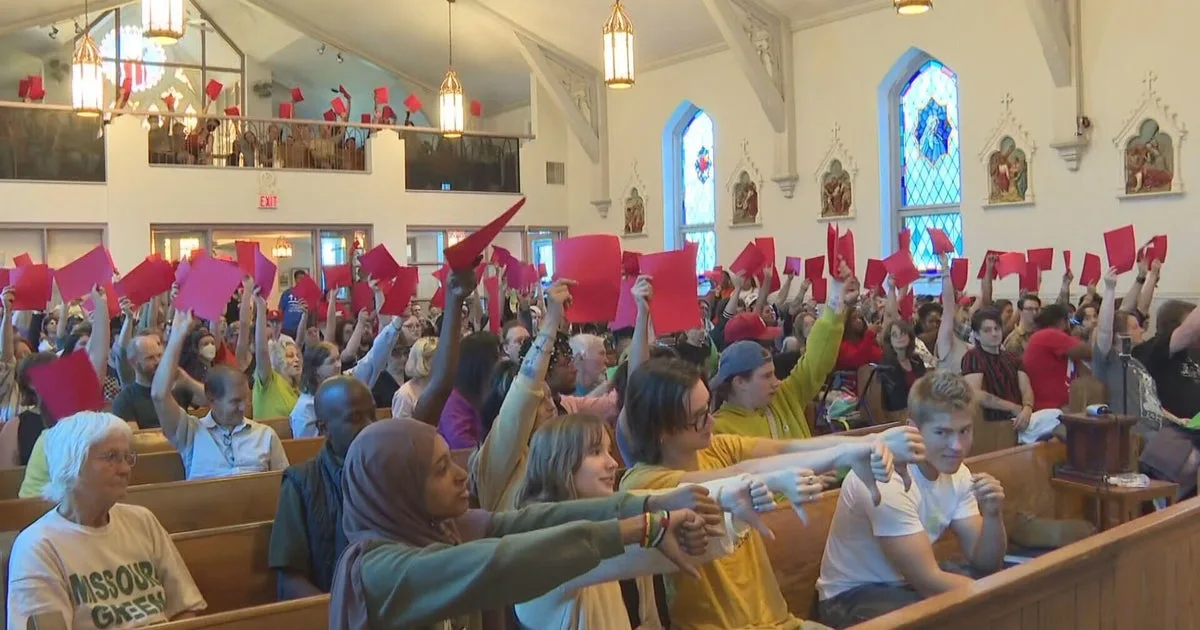
As tech companies pour trillions of dollars into new data centers as part of the ongoing AI boom sweeping the globe, communities across the U.S., including St. Louis, are finding themselves in the middle of a high-stakes fight .
A million square feet of old warehouse space in the Missouri city has turned into a mountain of controversy as David Daneshforooz, CEO of TerraWatt, plans to develop a data center there.
"St. Louis has a lot of old, kind of decaying infrastructure that's being underutilized," Daneshforooz told CBS News. "And so data centers have the opportunity, if done responsibly, to bring back industry into those communities."
But for many in the community, the sales pitch has fallen flat. And they're not alone. A recent Gallup poll found that more than 70% of Americans don't want data centers in their area.
Kasey Fowler-Finn, a biologist at Saint Louis University, is a plaintiff in a lawsuit, filed on Friday, seeking to halt the development. She's concerned about noise , water use, electricity use and more.
"There's been no environmental impact assessment and no low-frequency sound study," she told CBS News.
"A lot of claims are being made that don't actually have data to back it up," she added, saying there's "a lack of transparency about the environmental impact, about the noise impact."
Looming over the debate is the technology that data centers help support.
"The AI side of it, I think, is just really out of fear. It's the unknown," Daneshforooz said.
"It is not a baseless panic," she said. "It is a worry that's based in real scientific evidence. We have to be very careful about where and how we install these large data centers."
Daneshforooz, however, claims that not putting data centers in the U.S. could compromise Americans' data.
"Where is that information and data going to be stored? Would you rather have it be in a place like this in the middle of America, or would you rather have that information be stored in a country that we can't regulate or control?" he said.
The developers are promising to pay for their own electricity, use a closed system for water and invest hundreds of millions into the local school system. It's a playbook that's worked in other cities, but not yet in St. Louis.
5News aggregated this summary from the outlet’s public feed. The full article, with all the context, is on www.cbsnews.com — the content belongs to CBS News.