Avocado pickers in Mexico welcome restart of exports to US, but security fears remain
Authorities have lifted a U.S. security alert that halted avocado exports from Michoacán, Mexico's main avocado-producing state
SANTA ANA ZIROSTO, Mexico -- It didn't take long for Mexican avocado picker Francisco Isidro to get back to work after authorities announced the lifting of a U.S. security alert that temporarily halted avocado exports .
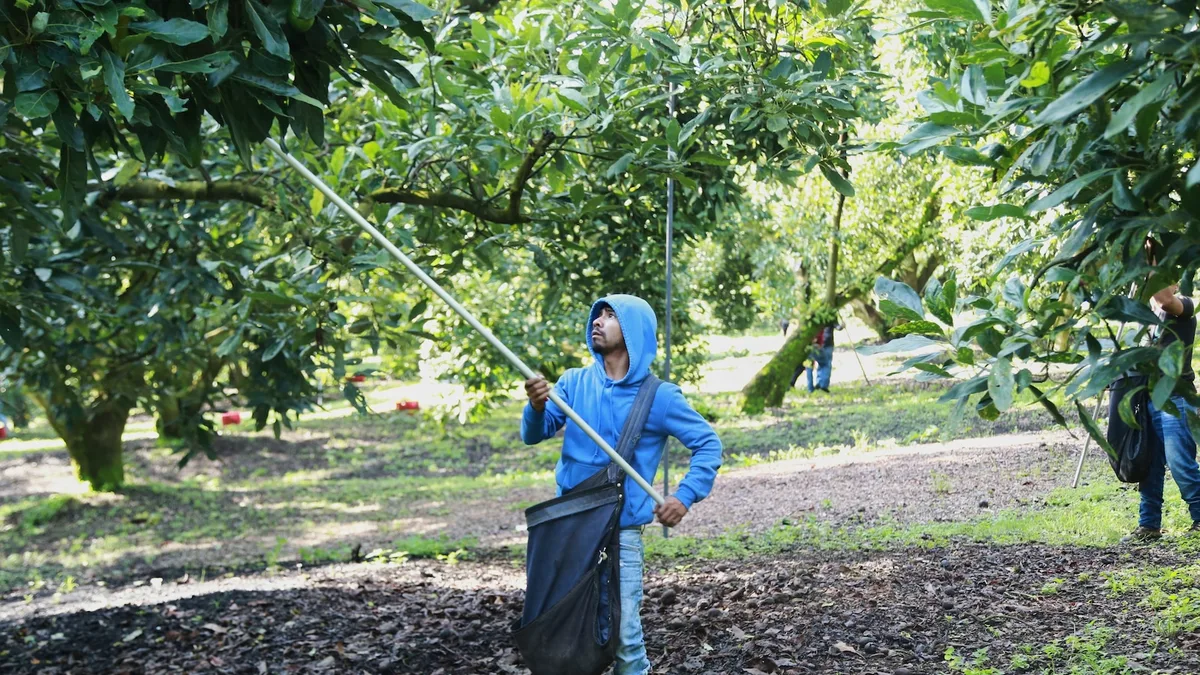
Back on the job the morning after the alert was lifted, Isidro threw a rope over an avocado tree about 20 feet (6 meters) high and climbed up. Fifteen minutes later, he had filled a box with avocados bound for the United States.
“Thank God ... and now we’re getting paid!” he shouted happily after several days without work.
Eight days after the alert affecting Michoacán state and the deployment of more Mexican troops in the region, U.S. authorities fully lifted the restrictions that spurred producers to shut down operations, and exports resumed. Michoacán is Mexico’s main avocado-producing state and a region where four cartels designated by the Trump administration as terrorist organizations operate.
By the weekend, orchards were operating again, packing plants were running at full speed and U.S. Department of Agriculture inspectors had returned to certify the fruit and ensure it was free of pests before entering the United States.
The workers were happy to get their daily wages back. Some producers hoped the increased security would reduce violence and extortion. Others feared the calm would not last long.
“We’ll be safe for a while, we’ll see what happens next,” said Valentín Rodríguez, a longtime avocado industry businessperson.
The U.S. alert caught Isidro high in a tree in an orchard in Santa Ana Zirosto, an area of green, low hills in western Michoacán where criminal groups are very active. There were no explanations, just the foreman’s shout to stop cutting.
Isidro, 39 years old and with two decades of experience as a harvester, knew that this meant either starting to look for another job until the situation returned to normal — since they’re paid by the day — or supporting his family solely on what his wife earned from a small store.
More than 90 miles (145 kilometers) away, in the town of Tacámbaro, an engineer at an avocado packing plant received the alert in the early hours of the morning: The facility should be kept sealed and under quarantine.
Some 200,000 people employed by Michoacán’s avocado industry were left in limbo.
Authorities did not say what threat triggered the alert. But in a state where numerous local cartels make money not only from drugs but also from extortion, there are plenty of possibilities.
Some growers have come to consider extortion an unavoidable production cost. A producer from Michoacán told The Associated Press recently that he pays 1 peso per kilo exported in extortion fees and exports about 90 metric tons a day, which amounts to more than $5,000 in daily payments.
5News aggregated this summary from the outlet’s public feed. The full article, with all the context, is on abcnews.go.com — the content belongs to ABC News International.