The Real Obstacle to Venezuela’s Recovery
D ays after two deadly earthquakes struck northern Venezuela on June 24, killing at least 6,000 people and injuring tens of thousands more, the Venezuelan Seismological Research Foundation, known as Funvisis, made an unusual public plea : Could whoever had taken one of its GPS sensors please give it back? For 13 years, the high-precision instrument had been bolted to a rocky outcrop in the hills of western Venezuela, quietly tracking the millimeter-scale movements of the Boconó fault, which was the likely source of the first of the two quakes.
When Funvisis technicians went to recover the readings the sensor had stored, they found that the machine had gone missing.
More than two months after the earthquakes, the organization still does not know who carried it off.
The absent sensor is but one gauge of a state that has lost the capacity to govern.
Venezuela once operated 250 to 300 seismic-monitoring stations; today, no more than five still function .
Many of the engineers, physicians, nurses, firefighters, and rescue workers a country depends on when disaster strikes have long since left Venezuela—part of a generation-long exodus of skilled professionals from state institutions.
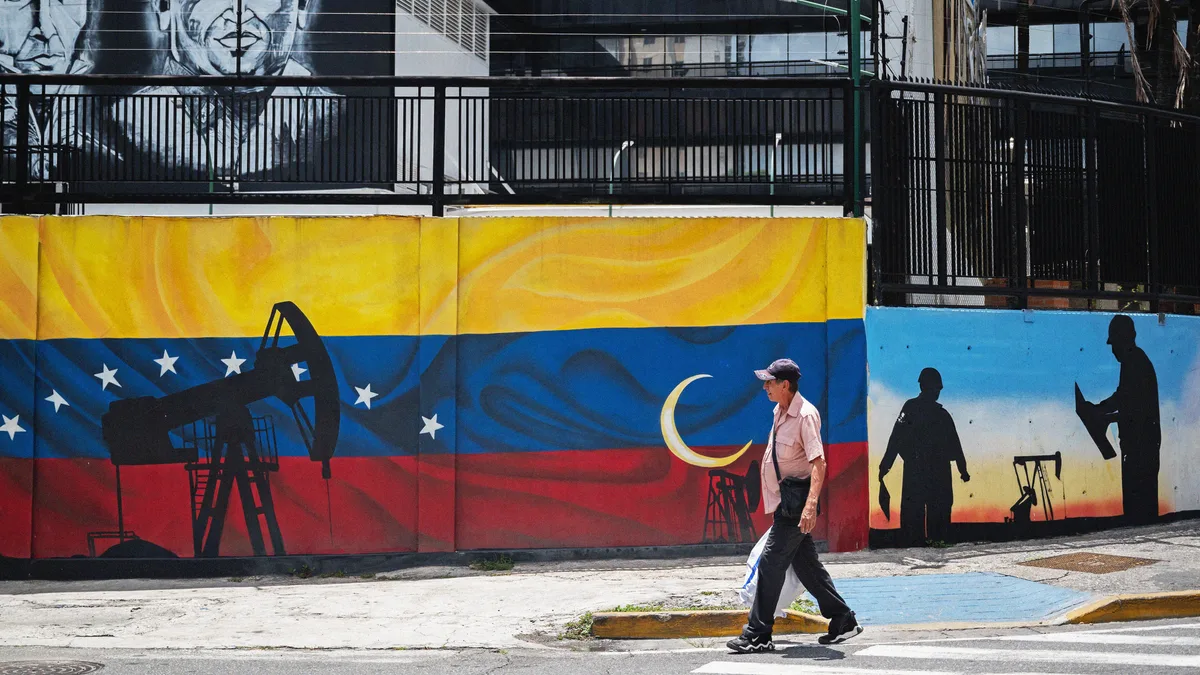
President Trump has said that the oil-rich country will be run “properly” and “professionally,” but the earthquakes exposed Venezuela’s deficits.
The highest expectations and fondest hopes—whether of Wall Street, Houston, or Caracas—will not conjure up the people needed to rebuild a country that has thoroughly hollowed out its professional classes. [ Read: The vicious cycle Trump may restart in Venezuela ] In just 20 years, Venezuela went from Latin America’s wealthiest nation to one of its poorest thanks to the mismanagement, corruption , and poor governance that began under the populist president Hugo Chávez, who served from 1999 to 2013, and continued under his successor, Nicolás Maduro.
Interim President Delcy Rodríguez, who took over Venezuela after the United States captured Maduro in January, inherited a state that cannot marshall the technical expertise to rebuild what the quakes destroyed or to reconstruct an economy that collapsed long before the ground did.
Rebuilding is a matter not merely of money and political will but of human capital.
Bureaucrats, planners, regulators, and inspectors turn plans into functioning grids, ports, and clinics.
Their absence may be the biggest obstacle facing American policy makers overseeing Venezuela’s reconstruction.
V enezuela is not the first country to suffer brain drain to the point of institutional collapse.
Afghanistan has reportedly struggled to stand up its health-care sector and civil service ever since many of its professionals fled the return of the Taliban in 2021.
5News aggregated this summary from the outlet’s public feed. The full article, with all the context, is on www.theatlantic.com — the content belongs to The Atlantic.