Trump Administration Proposes Cutting Grace Period for H-1B and Other Visas
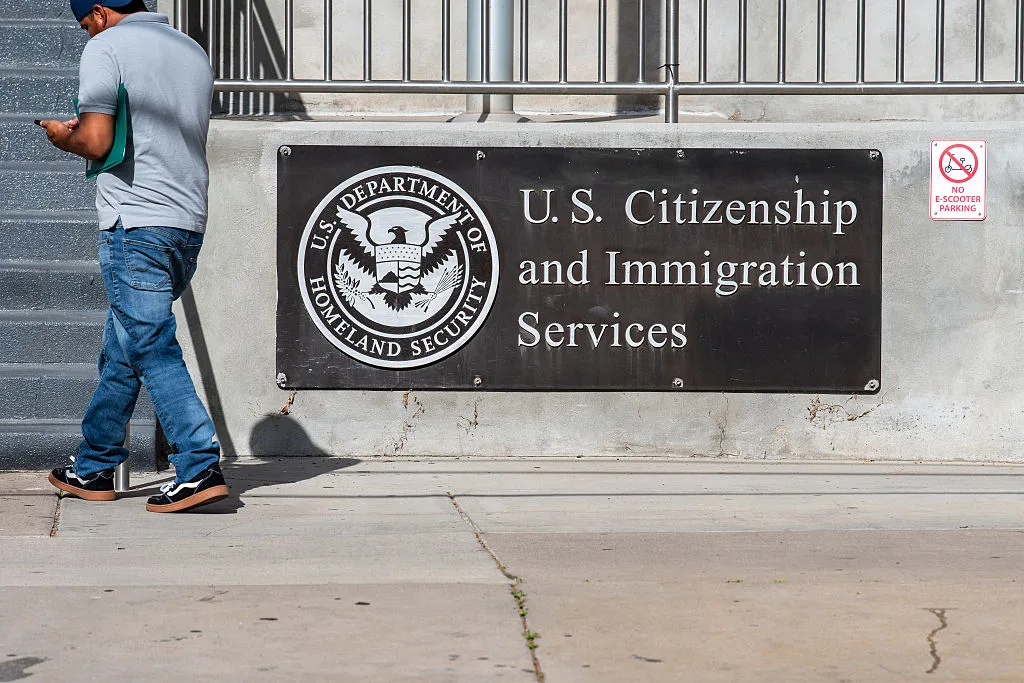
A pedestrian walks past an exterior sign and official seal identifying the U.S.
Citizenship and Immigration Services (USCIS) field office building in Salt Lake City, Utah, on Aug.
21, 2026. —Charles-McClintock Wilson—NurPhoto/Getty Images The Department of Homeland Security has proposed scrapping the policy allowing certain foreign workers—including H-1B visa holders —to remain in the U.S. for up to 60 days after losing their jobs to find a new sponsor, according to a government notice published Friday.
The White House-approved proposal is the latest disruption to the H-1B visa, which sits at the intersection of the Trump Administration’s priorities to restrict legal immigration , put an “America First” policy to work in the labor sector, and increase oversight of tech companies that rely on workers under this category .
Under the new proposal, some foreign workers would be considered immediately removable from the U.S. if they no longer work for an employer linked to their visa status.
The proposal “restores a direct relationship between an alien’s nonimmigrant status and the specific employment or activity that formed the basis of his or her admission or grant of status in the United States and reduces administrative burden,” according to the notice in the Federal Register .
Public comments on the proposal are accepted for 60 days.
If adopted, the policy would mark one of the biggest changes to immigration policy, almost a decade after the grace period was created.
Cracking down on legal immigration In early 2017, during the final days of the Obama Administration, a rule took effect stating that foreign citizens with legal immigration status under the H-1B visa, as well as several other visa categories, would have a 60-day grace period after they lose their job.
That leeway allowed these workers to look for a new job or to change their immigration status.
The other visas covered by the grace period are E-1 treaty trader visas and E-2 treaty investor visas; L-1 visas allowing short-term work for executives and managers with international firms; O-1 visas for individuals with “extraordinary ability” in science, sports, or the arts; and TN visas for qualified Canadian and Mexican professionals.
The grace period also covers H-1B1 visas for nationals of Chile or Singapore working in a specialty occupation, and E-3 visas for Australian citizens working in a specialized professional occupation.
According to DHS’s calculations, nearly 4,000 workers a year utilize the grace period to submit a new nonimmigrant worker petition after a layoff or resignation.
More than 99% of them are H-1B visa holders.
5News aggregated this summary from the outlet’s public feed. The full article, with all the context, is on time.com — the content belongs to TIME.