The Painter Who Shaped Rothko
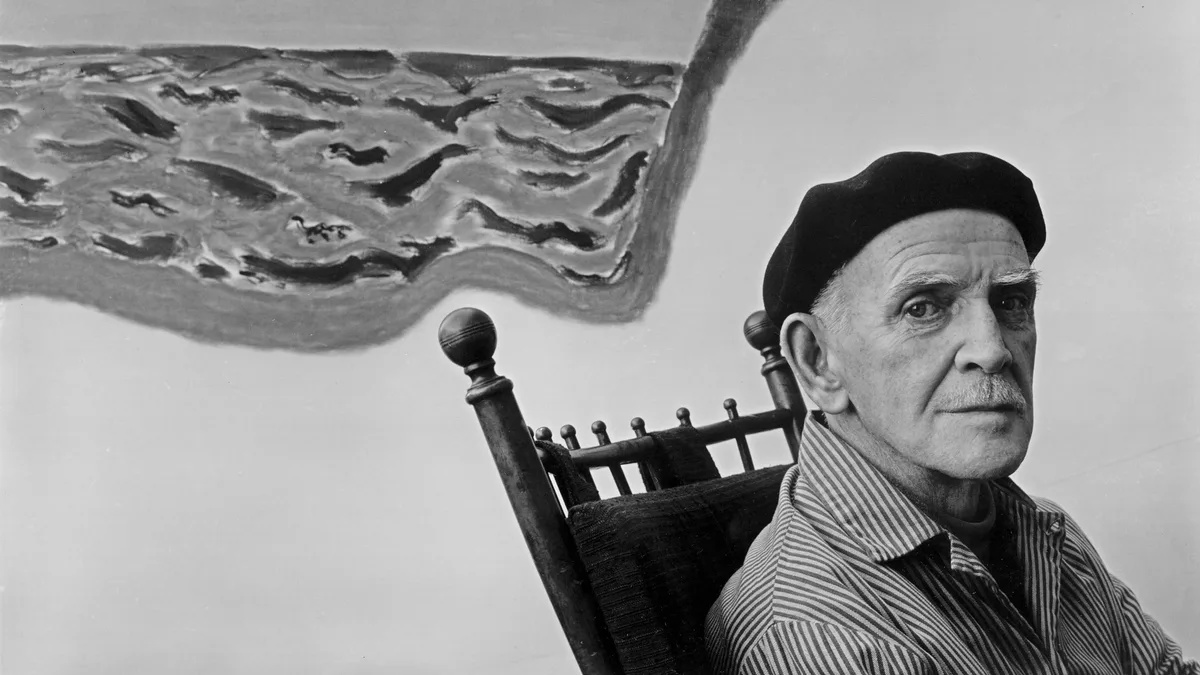
T he evolution of European modern art can be explained as a story of susceptible young people falling under others’ spells and then asking, What can I do with this? How can I convert it to my purposes? What’s remarkable is how often the main chapters of this story have unfolded in coastal or mountain retreats.
Think of Claude Monet on the Normandy coast, wrestling with the influence of his mentor Eugène Boudin.
Or Henri Matisse staying in Saint-Tropez with his mentor Paul Signac, before breaking with Signac’s neo-impressionist style and co-inventing fauvism.
Or Pablo Picasso, goaded into radicalism by the latest bizarre creations of Matisse, retreating to the Spanish mountain village of Gósol and, mere months later, beginning work on his proto-cubist masterpiece, Les Demoiselles d’Avignon .
All of these key episodes happened in agreeable resorts, seaside ports, and villages, far from the sophisticated cities assumed to have been the cauldrons of modernism.
Modern art in America is no different.
Its story can scarcely be told without reference to artists summering on the Atlantic Coast, including Winslow Homer, Marsden Hartley, and Edward Hopper in Maine and Massachusetts and Jackson Pollock, Lee Krasner , and Willem de Kooning on Long Island.
Beginning in the early 1930s, three Americans—Milton Avery, Mark Rothko, and Adolph Gottlieb—began spending summers together on Cape Ann, along the coast of northeast Massachusetts.
They loved the gritty authenticity of Gloucester, the nation’s oldest fishing port.
Cape Ann’s distinctive, undulant geography combined pungent industry and village intensity with Atlantic immensity of sea and sky.
The story of the relationships among these artists, in particular between the older Avery and the now–stratospherically famous Rothko, shows us American modernism in its moment of greatest transition.
Avery was the mentor figure, the one destined, in the usual telling of this story, to be eclipsed.
Whereas Rothko is a regular subject of museum retrospectives in Europe and North America, and his paintings can sell at auction for as much as $98 million, Avery remains relatively unknown outside of the U.S. (The most expensive Avery sold at auction was a little more than $6 million, in 2022.) But are we telling the right story about Avery if we cast him in this role? Milton Avery, Gorton’s Dock , 1931–34.
Gouache on brown paper.
5News aggregated this summary from the outlet’s public feed. The full article, with all the context, is on www.theatlantic.com — the content belongs to The Atlantic.