How wildfires are changing the U.S. electric grid
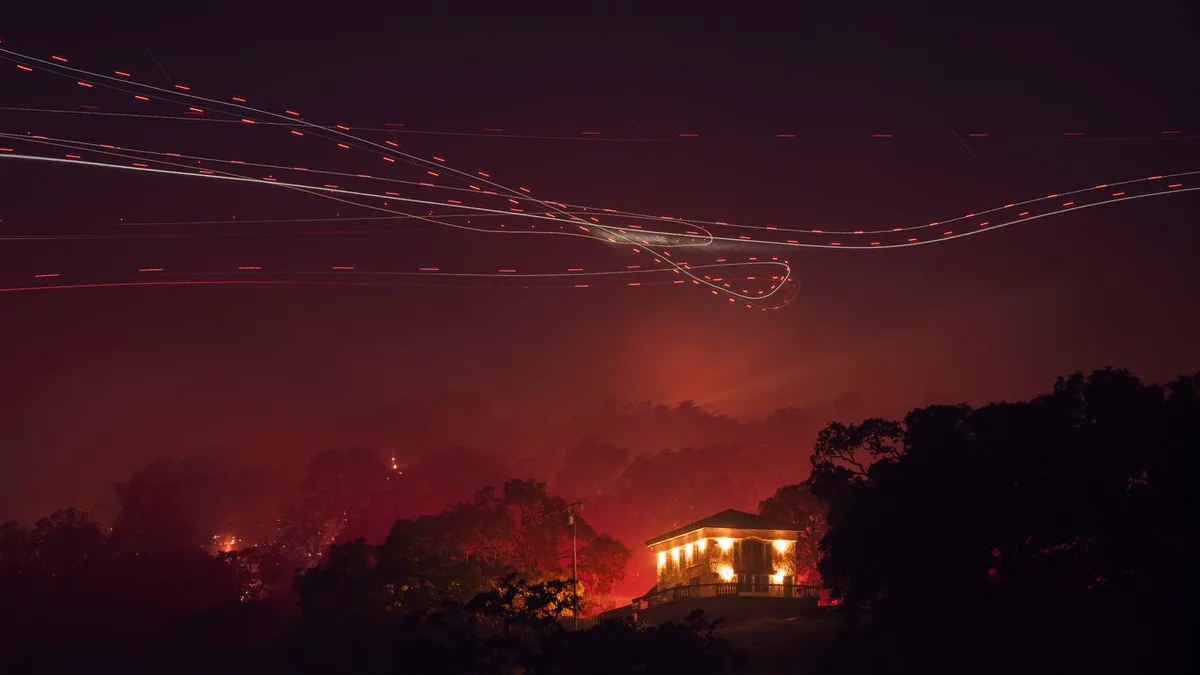
Years of destructive fires are forcing utilities to prioritize wildfire resilience as they plan the next generation of the U.S. electric grid.
Why it matters: Utilities aren't just expanding the electric grid — they're designing it to withstand a more fire-prone climate .
This year's wildfire season is exceeding the 10-year average for both the number of fires and acres burned.
The big picture: The U.S. is embarking on one of the biggest grid expansions in decades just as wildfire risk is becoming a defining challenge for utilities.
Today's planning decisions may determine how resilient tomorrow's grid becomes.
Utilities are combining weather models, wildfire behavior, infrastructure data and population impacts to help prioritize resilience investments, Nadia Panossian, an electrical engineering researcher at the National Laboratory of the Rockies, tells Axios.
Undergrounding — burying power lines underground — can also improve resilience to hurricanes, winter storms and other hazards, Seth Guikema, a University of Michigan professor of civil and environmental engineering, tells Axios.
He says utilities also have to manage aging infrastructure, which in many cases is "the bigger challenge than building new." State of play: Wildfires are already affecting how utilities operate.
They disrupt the power system by damaging equipment, forcing utilities to cut power, and reducing solar generation when smoke blocks sunlight.
Yes, but: Preventing outages is no longer enough.
Utilities now have to incorporate wildfire resilience into grid projects.
Case in point: California was one of the first states to require investor-owned utilities to publish wildfire resilience plans, Panossian says.
Other states have adopted similar approaches as wildfire risk grows.
Panossian says utilities are moving beyond "basic minimum maintenance" toward longer-term upgrades that account for future wildfire risks.
5News aggregated this summary from the outlet’s public feed. The full article, with all the context, is on www.axios.com — the content belongs to Axios.