British soldiers are figuring out where flying drones and ground robots fall short
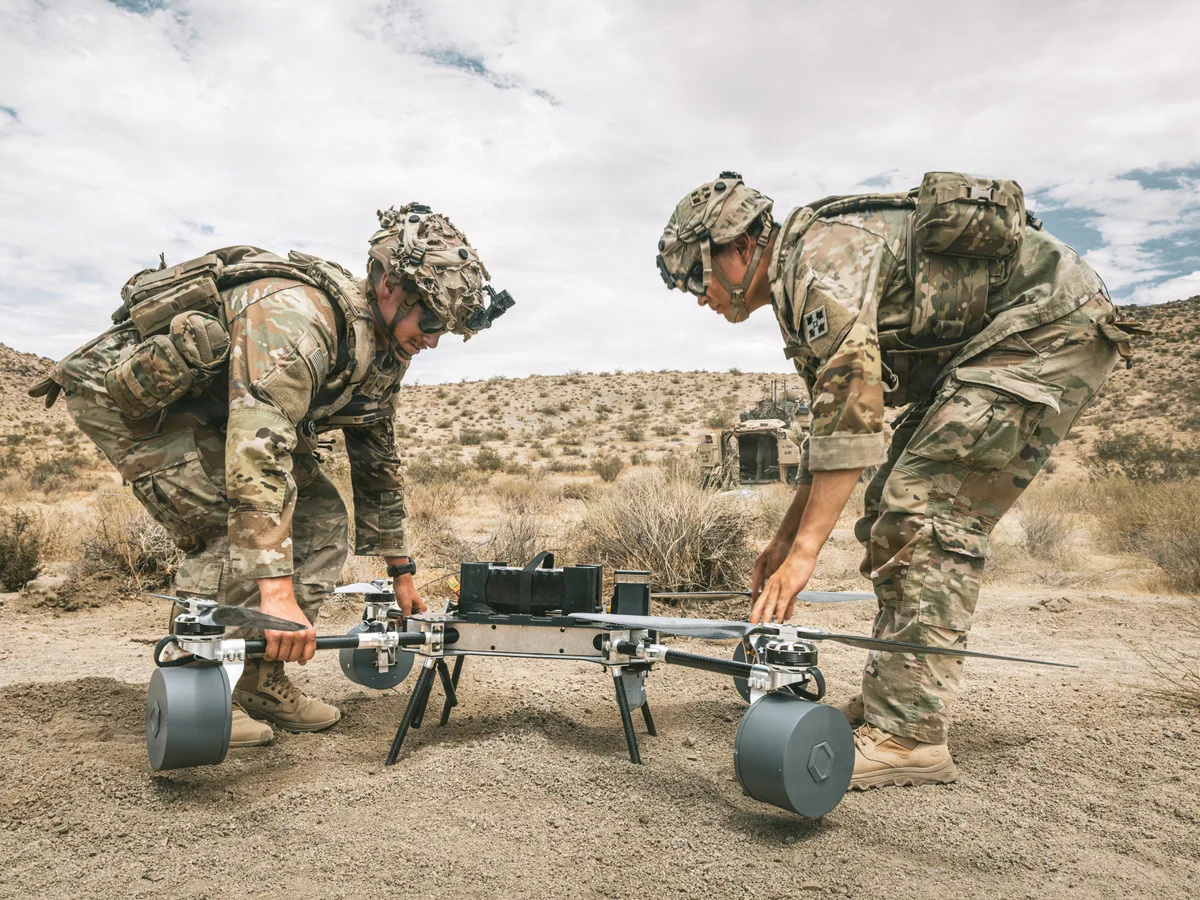
The US Army and its partners and allies recently tested drones and other emerging technologies at an exercise at Fort Irwin, California.
US Army photo by Sgt.
Nathan Arellano Tlaczani British soldiers say that different types of drones present different types of challenges.
Ground drones can be too costly, and aerial drones can have issues with power, loitering time, and range.
I was on the ground at a recent testing ground where troops put models through their paces — and told me about pros and cons.
British soldiers are testing the trade-offs of using drones both in the air and on the ground — and the challenges that come with each.
At a recent US-led exercise in the Mojave Desert , thousands of soldiers gathered to try out new technologies, including uncrewed systems.
British troops at the training were experimenting with which types of drones were best suited to specific tactics and missions, and shared what they most want from these systems.
Lessons from the exercise included how systems performed in extreme heat and on rugged desert terrain, whether soldiers had enough drones for their missions amid electronic warfare and connectivity issues, and how drones can be most useful.
The British Army's current experimentation unit, the 2nd Battalion, The Yorkshire Regiment, was present at the exercise alongside the unit that will take over their experimentation role, the 1st Battalion Irish Guards.
The latter unit also has experience with drones, including a recent exercise with Ukrainian forces.
Business Insider also attended the exercises.
Capt.
Wick Willett, a mortar platoon commander with the 1st Battalion Irish Guards, said he and his troops had seen the strengths and weaknesses of drones.
5News aggregated this summary from the outlet’s public feed. The full article, with all the context, is on www.businessinsider.com — the content belongs to Business Insider.