USPS publishes rule to block mail-in ballots from states that don't provide voter lists
The United States Postal Service (USPS) published a rule Friday that would require states to provide lists of voters who received mail-in ballots to the agency.
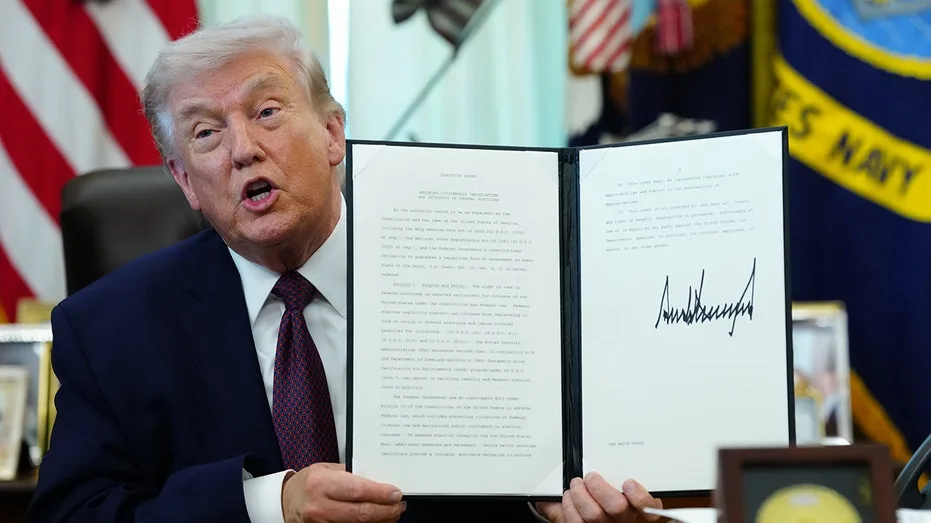
The USPS rule , first proposed on June 2, moves to align the agency with President Donald Trump's March 31 executive order, which, among other things, ordered the agency to mandate that all states that plan to use USPS to send mail-in ballots notify the agency at least 90 days before an election and to send USPS a list of eligible voters the state plans on providing a mail-in ballot to at least 60 days before the election.
"Any state that intends to receive mail-in or absentee ballots from individual voters through the Postal Service must ensure that such individuals have been enrolled with the Postal Service for inclusion on the state's Mail-In and Absentee Participation List," the new rule reads.
In order for an individual to be included on the list, their state must submit to the USPS the individual's name and address and include a "uniquely serialized Intelligent Mail barcode (IMb)" on both the outbound federal ballot and the return ballot sent to the individual.
DHS PLANS COSTLY CRACKDOWN ON STATES THAT DON’T COOPERATE ON ELECTION SECURITY The finalized rule, however, cannot go into effect under an outstanding federal injunction against Trump's March executive order.
U.S.
District Court Judge Indira Talwani, who was nominated by former President Barack Obama, issued an initial preliminary injunction against the executive order in June, ruling that two sections – including the section pertaining to USPS and mail-in ballots – were unconstitutional.
In July, siding with the plaintiffs in League of Women Voters of Massachusetts v.
Trump, Talwani renewed the injunction, barring the USPS from enacting the rule.
DHS APPROVES PLAN TO VERIFY VOTER CITIZENSHIP, MONITOR MAIL BALLOTS AS TRUMP PUSH INTENSIFIES The rule, which USPS will officially publish on Aug.
26, would only take effect for the upcoming midterm elections if a federal court lifted its injunction on Trump's executive order.
In a filed opposition to the renewal of the injunction, the Trump administration argued that the judicial review was premature under the ripeness doctrine, claiming that the plaintiffs cannot demonstrate any harm from the proposed law until it takes effect.
"Plaintiffs cannot demonstrate they suffer any particularized injury from ongoing policymaking deliberations within the Executive Branch.
Instead, their concern is with possible 'action that the [government] might take in the future,' the objection, filed by the U.S.
5News aggregated this summary from the outlet’s public feed. The full article, with all the context, is on www.foxnews.com — the content belongs to Fox News Politics.