The Sailors on the USS Abraham Lincoln Deserve Better
W hen I was deployed at sea as a junior officer , I used milestones to track the passage of time.
Each day counted toward something: a port call, when you get a break on land from the monotony at sea; the “crossing the line ceremony” when a ship crosses the equator (unfortunately, canceled at the last minute for my ship); and, eventually, the date I knew that, no matter what, I would be going home.
Even on my worst days, that end point helped me stay focused on the mission and gave me something to be hopeful for.
The USS Abraham Lincoln left its home port of San Diego in November and was scheduled to return home in May.
That did not happen.
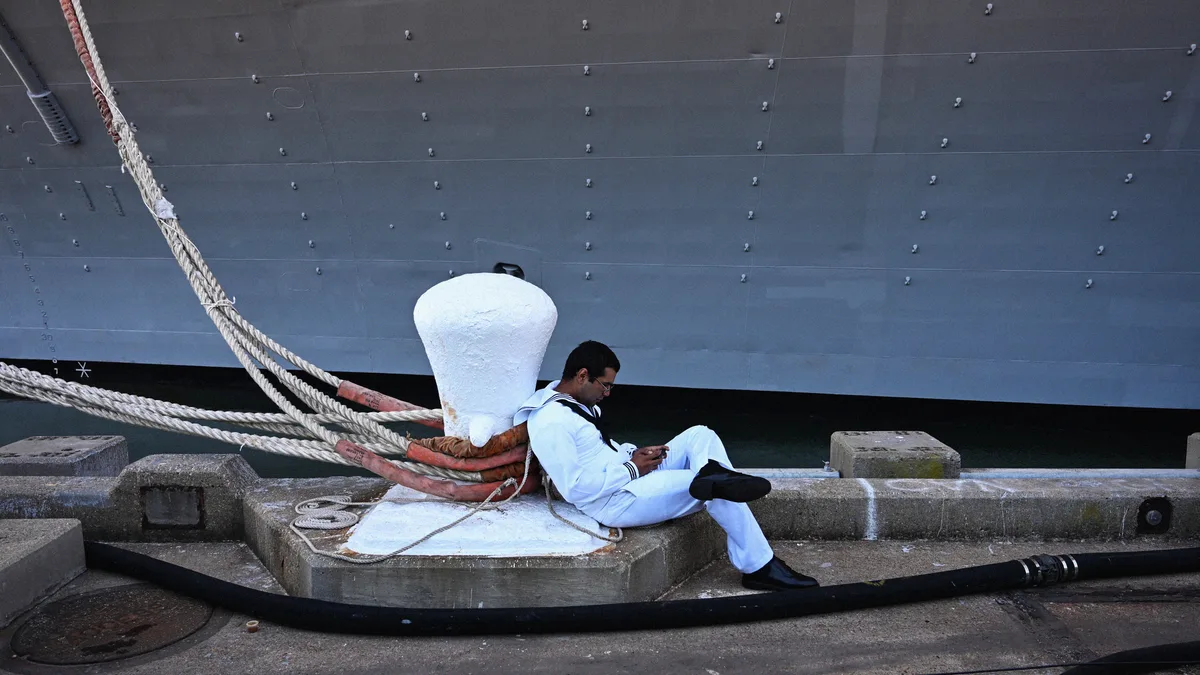
In the middle of this month, it surpassed more than 240 consecutive days at sea—one of the longest deployments on record—and had only a brief working port call early last month, where it appears sailors did not disembark, leaving them still at sea with land in sight.
The 5,000 sailors and Marines on board have been working sustained combat operations, dealing with extension after extension and unreliable access to food, basic hygiene supplies, and mail.
The ship carries the name of a president who made a promise in his second inaugural address to care for people who have “borne the battle” and for their families.
The treatment of those on board betrays that promise—and it is not limited to just this one ship on this one very long deployment.
Rather, the crisis of the Lincoln has illuminated a pattern of callousness and cruelty toward military personnel, people who have sworn an oath to support and defend the Constitution of the United States of America.
They have committed to going in harm’s way, but not to being neglected or treated with disrespect by the top of their chain of command. [ Read: The timidity of America’s top generals ] The military used to understand that troops’ well-being was central to their ability to perform—and that improving the quality of life for those in the armed forces was not just a nicety, but a necessity.
From 2021 to 2023, I served as acting director of force resiliency at the Department of the Navy, where I worked as part of an effort to support sailors’ and Marines’ mental health and reduce their suicide risk.
Across administrations, both military leaders and career civilians have sought to foster a culture of respect throughout the armed forces.
Some of that work was already ongoing during the first Trump administration: a shift toward prevention, building healthy command climates so that problems did not happen in the first place rather than being responded to only after the fact.
5News aggregated this summary from the outlet’s public feed. The full article, with all the context, is on www.theatlantic.com — the content belongs to The Atlantic.