By This Point, We Should All Be Able to Accept Abdul El-Sayed’s Characterization of 9/11
Sign up for the Slatest to get the most insightful analysis, criticism, and advice out there, delivered to your inbox daily.
Abdul El-Sayed, the Democratic candidate for Senate from Michigan, was always going to be controversial. If elected, he would be the first Muslim to hold a U.S. Senate seat in a country where Muslims make up just over 1 percent of the population and remain an often-discriminated-against and vilified minority. He’s a progressive whose policy positions put him firmly in the camp of the Democratic Party’s leftmost flank, running in a swing state that went for Donald Trump in 2016 and again in 2024. His decision to campaign with the divisive podcaster Hasan Piker has been the subject of seemingly endless takes and tweets (including from supporters who question why Piker is so toxic to El-Sayed even as Trump and the rest of the GOP aren’t forced to answer for the likes of vitriolic racist Laura Loomer, but I digress). And in what is now a predictable election-cycle ritual, El-Sayed’s old tweets are being republished, some badly out of context, in an effort to reveal who the candidate “really” is.
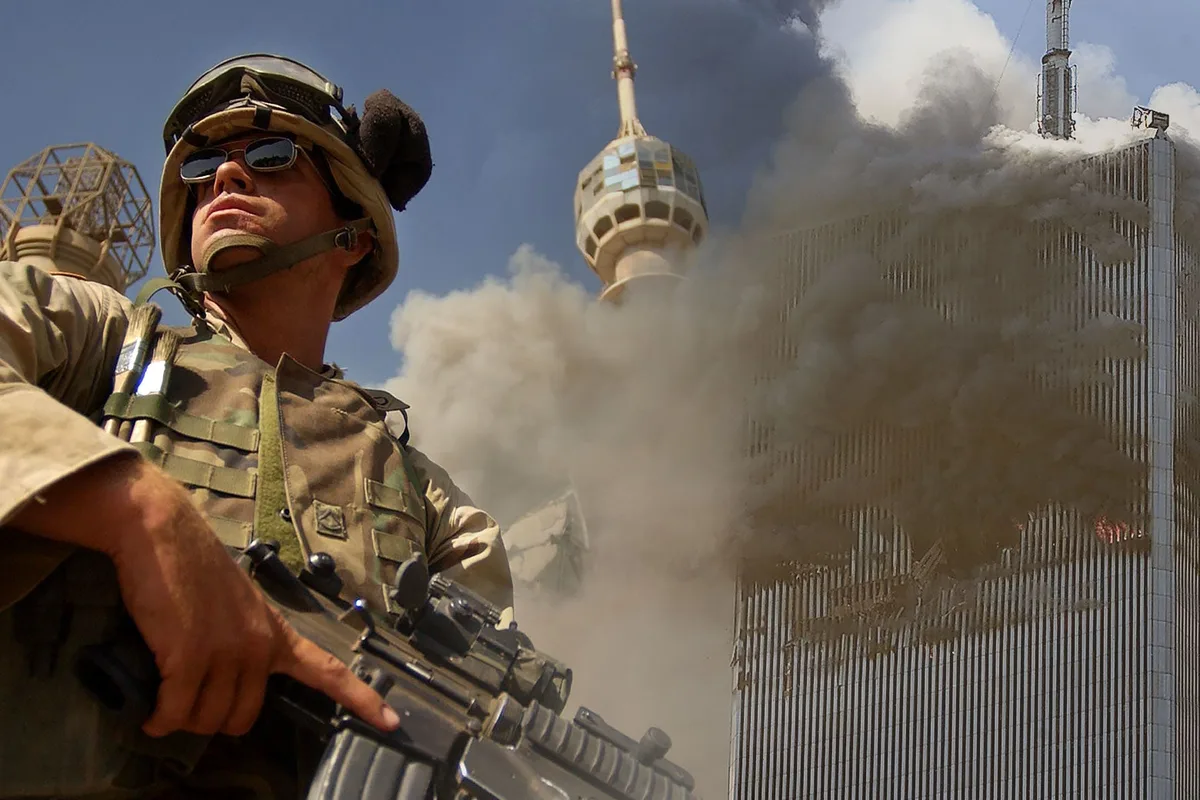
“Today, I mourn the 3K lives, 6K injuries, & infrastructural devastation in NYC, perpetrated ignorantly in the name of my faith,” El-Sayed posted on Sept. 11, 2021, 20 years after the attack. “Tomorrow, I’ll mourn the ~1M lives, millions of injuries, & infrastructural devastation in 3 countries, perpetrated ignorantly in the name of my country.”
This is, to put it mildly, not exactly a typical politician’s 9/11 tweet. Sept. 11, 2001 was a trauma for the United States, most particularly for those who died, who lost loved ones, or who feared for their lives on that day, but also for the many of us who woke up on a sunny Tuesday morning to an entirely new world—one in which the veil of safety seemingly guaranteed by our citizenship crumpled down onto the sidewalks of lower Manhattan. I watched the carnage from an NYU dorm room, having just moved to the city to start my freshman year of college. I will never forget the confusion, and then the sheer terror, of that day.
Mostly, though, I remember the immediate aftermath. New Yorkers famously went out to the bars that very night, refusing to sit scared in our apartments. Another vivid recollection is the silence: For days (or was it weeks?), the notoriously aggressive drivers of America’s biggest cities collectively stopped honking their horns. Everyone knew their fellow New Yorkers needed a bit of a break, and for a short period, the usual din of the city calmed to a whisper.
Eventually, the noise came back, and the national sense of shared shock and grief morphed into something uglier, hardier, and less focused. The U.S. invaded Afghanistan on the hunt of the mastermind of the attacks, a career terrorist who was being shielded by the Taliban. This seemed like a reasonable enough response at the time, but then the Bush administration turned its attention to Iraq, and we began hearing about weapons of mass destruction, Nigerien yellowcake, and the president’s unfinished business with Saddam Hussein (“ the guy who tried to kill my dad ”).
5News aggregated this summary from the outlet’s public feed. The full article, with all the context, is on slate.com — the content belongs to Slate.