How Trump’s War on the Left Will Come for the Center
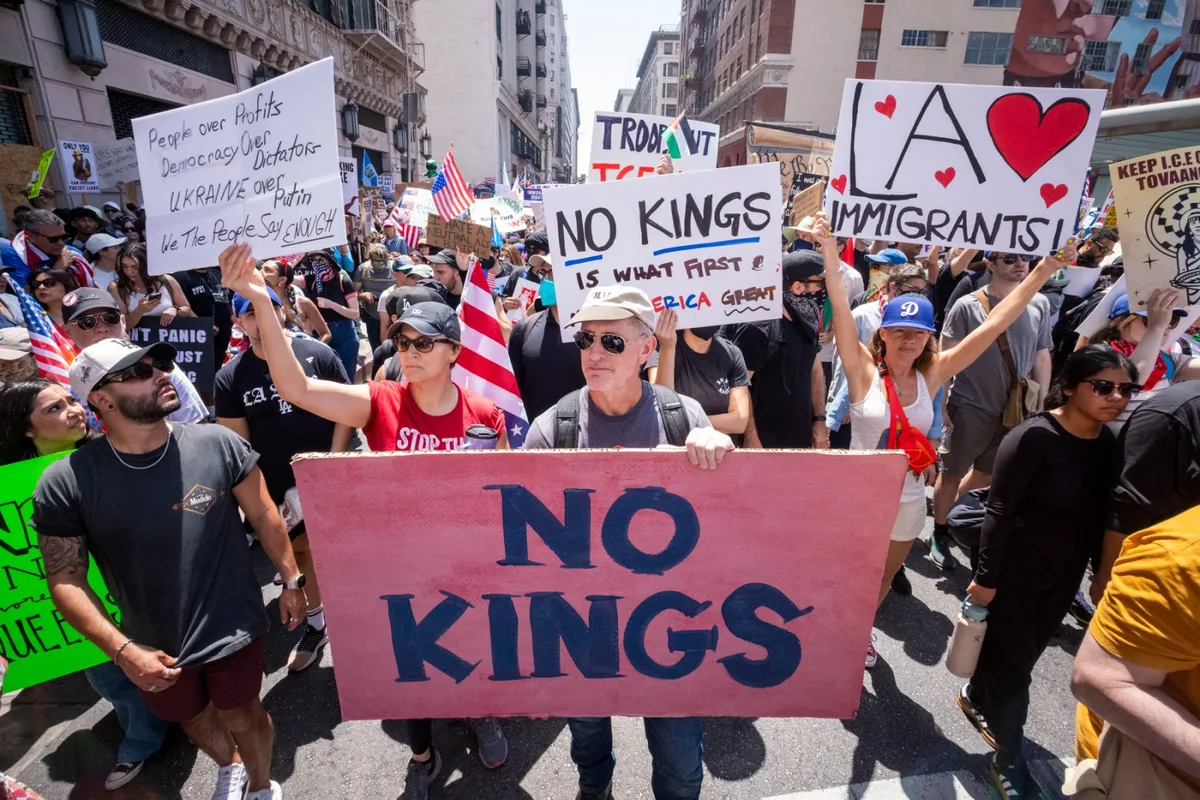
By and large, when my parents go to a protest , I don’t worry about them. Over the past few years, they’ve attended several of the large No Kings demonstrations in Fresno, California. They took me to my first protest there as well, in 2003, to demonstrate against the Iraq War. I remember chanting “No Blood for Oil” and getting honked at by chuds in lifted trucks. The cops, even back then, looked more bored than anything else. In most mid-size American cities, this is how the majority of protests go: They’re permitted, well-attended, and celebratory; comfortable spaces for mainstream liberals to express their frustrations with their government. People write letters to their congressman, set up phone banks, vote in primaries, donate to nonprofits, and maybe walk in the street a few times a year toting a homemade cardboard sign, all to feel like they’re participating in the political process.
There are other types of protest, which can often be spontaneous, combustible, and raw. These are the ones you see on the news. There are the ones that flood into freeways and shut down cities. There are also the ones where people get hurt, where the First Amendment runs up against a wall of plastic shields and steel batons and tear gas, where buildings get torched and cars smashed. The people who end up at the more chaotic protests, often, are from different demographics than the first: younger, angrier, more willing to put their bodies on the line, to feel like they’re fighting for something rather than just making their voices heard.
The truth is that, in America, there is room for many types of protest. We need spaces in which vast swathes of our society can feel like they’re contributing to a movement where they are seen and heard. And in some cases, we need the other kinds too: the five day work week, civil rights, and LGBT rights were hard-fought movements that combined peaceful protest, civil disobedience and other more direct action. Orderly, quiet disagreement often does not move the status quo. Editor’s picks The 250 Greatest Albums of the 21st Century So Far The 100 Best TV Episodes of All Time The 500 Greatest Albums of All Time 100 Best Movies of the 21st Century
But here’s what you have to understand: In Donald Trump ’s America, all types of protest are unacceptable. And if he gets his way, everyone involved in either of them could face the same fate. Trump is currently at war with the left. Antifa, communists, radical leftist agitators — call them what you will, he’s coming for them. But he’s also making plans to come for the center: attacking nonprofit groups, suing the press, and making every effort to criminalize the kind of peaceful resistance and political engagement that is a cornerstone of our democracy.
We’ve already seen how this starts. Earlier this week, I wrote about Autumn Hill , a defendant in the Prairieland ICE shooting case, who was convicted of providing support to terrorists and sentenced to 50 years in prison for merely participating in a protest where a police officer was shot.
5News aggregated this summary from the outlet’s public feed. The full article, with all the context, is on www.rollingstone.com — the content belongs to Rolling Stone.