‘Feminism Is the Consequence of the “Man Problem,” Not Its Cause’
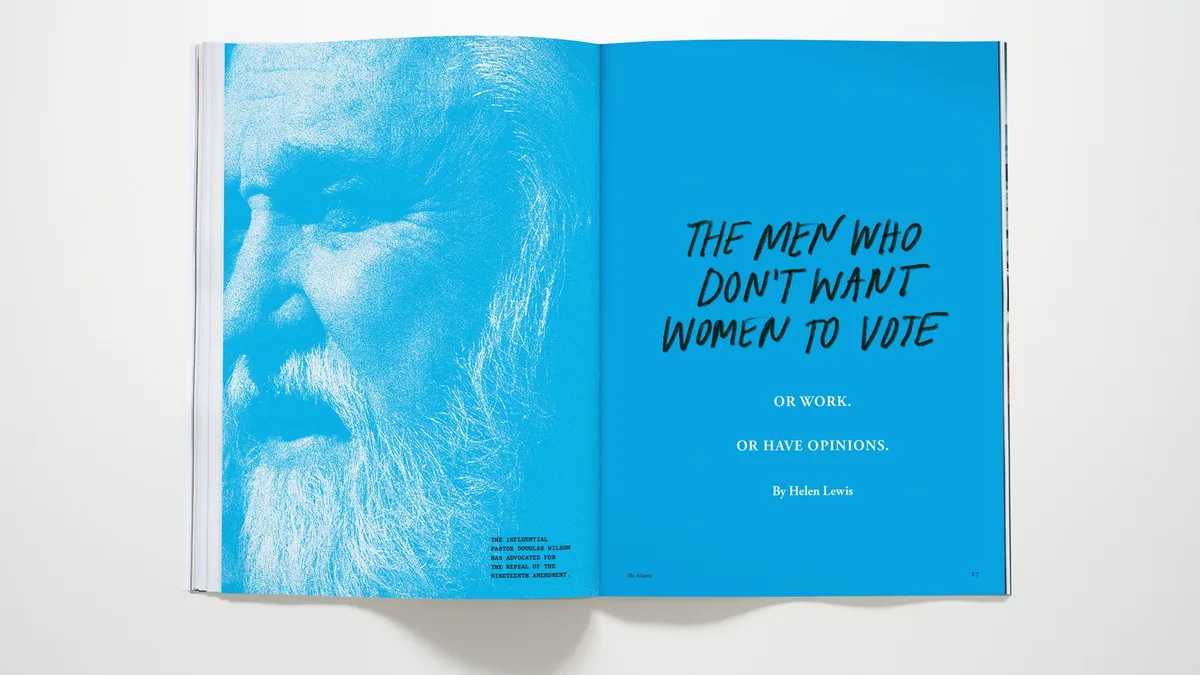
The Men Who Don’t Want Women to Vote A virulent form of misogyny has become the single most important force holding together the American right, Helen Lewis argued in the June issue .
Helen Lewis’s “The Men Who Don’t Want Women to Vote” is the most important thing I have read this year.
My husband has said that Kamala Harris lost the 2024 election because of the misogyny that exists in America; Lewis’s article proved him correct, with just a teaspoon of humor mixed into an otherwise very frightening topic.
Amy Crist Gettysburg, Pa.
Upon finishing “The Men Who Don’t Want Women to Vote,” I found myself equal parts stunned and galvanized.
Lewis has an extraordinary ability to illuminate what so many of us feel but struggle to articulate, and this article was no exception.
The MAGA movement contends that feminism is to blame for American decline.
But feminism didn’t emerge from nothing.
Feminism is the consequence of the “man problem” Lewis identifies, not its cause.
The Bible passage that anti-feminist commentators love to cite is from Ephesians: “Wives, submit to your husbands.” But that’s where they stop reading.
The verse goes on to say that a husband must provide for his wife, and love her as he loves his own body.
This is not a “do as I say or else” arrangement; it is a covenant of mutual care—her health and happiness are meant to be as important to him as his own, and vice versa.
When men forget the instruction to care for their wives as they care for themselves, women have no choice but to learn to care for themselves.
I was recently at the pharmacy, and the man ahead of me—trying to pick up a prescription for his sick wife—answered the pharmacist’s questions with “I don’t know; my wife takes care of that.” When a husband utters, “My wife takes care of that,” the word that means “everything.” It means knowing the passwords, the medications and dosages, the appointment schedules.
5News aggregated this summary from the outlet’s public feed. The full article, with all the context, is on www.theatlantic.com — the content belongs to The Atlantic.