NASAs Roman telescope is built to find what Hubble and Webb miss
Astronomers once stumbled on what appeared to be a black hole racing through space , a bizarre sight they only caught because the Hubble Space Telescope happened to be staring in the exact right place.
The discovery made for a juicy headline , but also served as a warning: If you're relying on serendipity alone to find the weirdest, most revealing objects in the universe, you're going to miss most of them.
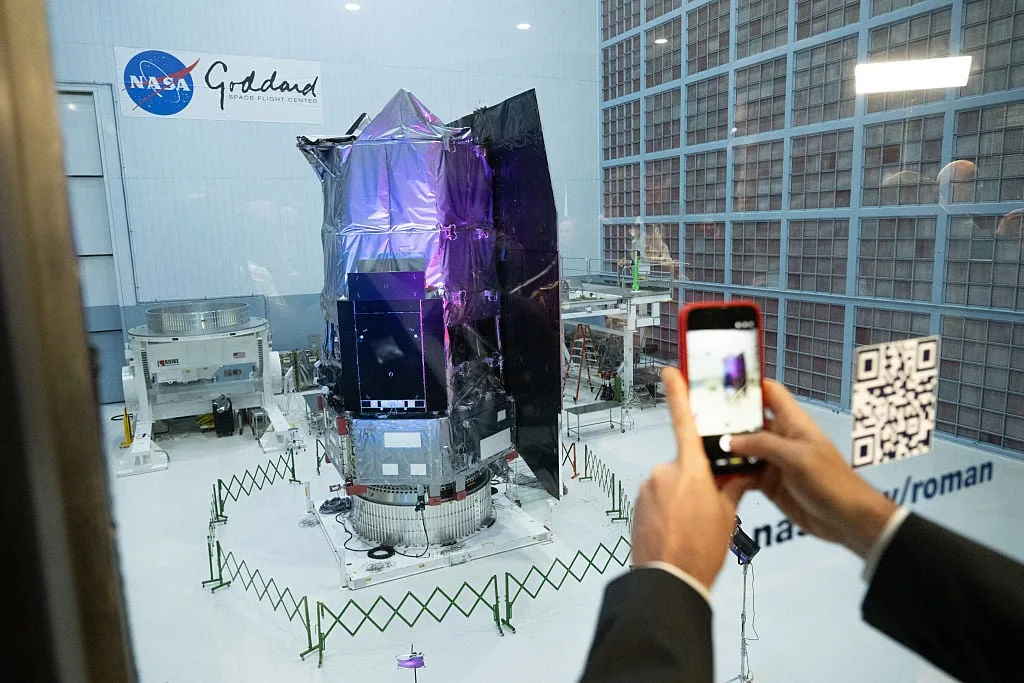
NASA 's Nancy Grace Roman Space Telescope , which could launch as early as Aug.
30 , is the agency's next flagship observatory and is designed to change those odds.
"It's extraordinarily lucky that Hubble was able to catch that," senior project scientist Julie McEnery told Mashable during a news conference in April.
"Roman would be able to find some things like that in space, because we're surveying such a large part of the sky, and then we can follow up with detailed measurements — with James Webb Space Telescope — now that we know where to look." Instead of looking deeply at tiny patches of sky, Roman is expected to scan huge areas quickly and find the rarest objects in the cosmos.
In practice, the new telescope's purpose is to act as a scout, mapping the universe rapidly, while Hubble, Webb , and other observatories zero in on the details.
SEE ALSO: Bright planets can blind the Webb telescope.
A fix is coming.
Why Roman looks wide instead of deep Roman's biggest advantage over Hubble is how much more sky it can see at once.
The new telescope will capture images with Hubble-like resolution in infrared light, but each picture will span at least 100 times more space.
Over its first five years, Roman is expected to image more than 50 times as much sky as Hubble has managed in three decades.
Roman will use that power to tackle some of the biggest open questions in cosmology.
It will map the distribution of galaxies and galaxy clusters in space and how their structures change over time.
5News aggregated this summary from the outlet’s public feed. The full article, with all the context, is on mashable.com — the content belongs to Mashable.