"The beginning of a new scientific paradigm": Zuckerberg's Biohub, U.S. and Google build virtual cell
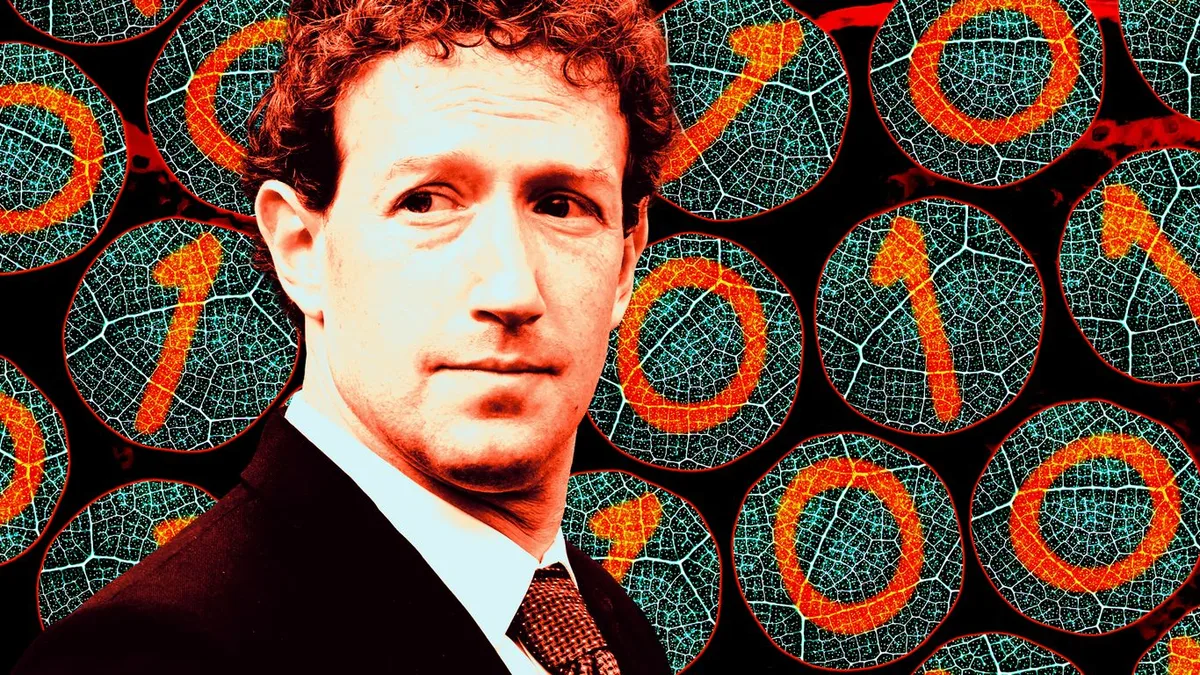
Mark Zuckerberg's Biohub is partnering with Google and the federal government in its ambitious effort to use AI for generating vast quantities of biological data that can predict how cells behave.
Why it matters: The ultimate goal is an AI model that lets scientists test potential experiments virtually, helping them identify the most promising ones before spending the time and money to perform them in the lab.
AI is capable of understanding proteins and other pieces of biology, but modeling an entire living cell is orders of magnitude more complex — and researchers don't yet have enough of the right data to do it.
Driving the news: Biohub, the Department of Energy, the National Institutes of Health, Google DeepMind, Isomorphic Labs, Meta and a collection of scientific organizations are collaborating to create and standardize data for what Biohub calls a "universal virtual cell." The big picture: The goal is to use AI to explore many more scientific questions in biology virtually, allowing scientists to reserve expensive lab work for experiments most likely to teach them something important.
"If we can put more and more reasoning and intelligence into every single question that we actually ask in the lab, the value of those empirical results will be far greater," Biohub head of science Alex Rives told Axios.
Much of AI's recent progress has come from combining better algorithms, more computing power and enormous amounts of data.
Biology presents an additional challenge: Much of the information AI needs doesn't exist yet and has to be painstakingly measured from the physical world.
"We're at the beginning of a new scientific paradigm with AI," Rives said.
Yes, but: Biology is harder than many other AI domains because researchers need what Rives calls "empirical AI" — models that learn from biological evidence and can accurately predict what happens in the physical world.
"The big challenge in biology is to bridge that gap between compute and the digital world and the real physical world of biology and life," Rives said.
"The way to do that is through data." Such models could eventually help scientists investigate fundamental questions such as how aging and regeneration work — or medical questions such as which molecular mechanisms are responsible for Alzheimer's disease.
How it works: The first phase will create a broad map of cellular biology, gathering different kinds of information about cells and how they respond to changes.
Further out, Rives envisions models that could examine an individual's disease and predict its molecular causes and the best way to intervene.
The intrigue: The commercial partners will have one year of exclusive access to the data they develop before it is shared publicly.
5News aggregated this summary from the outlet’s public feed. The full article, with all the context, is on www.axios.com — the content belongs to Axios.