Who really needs a cocktail robot?
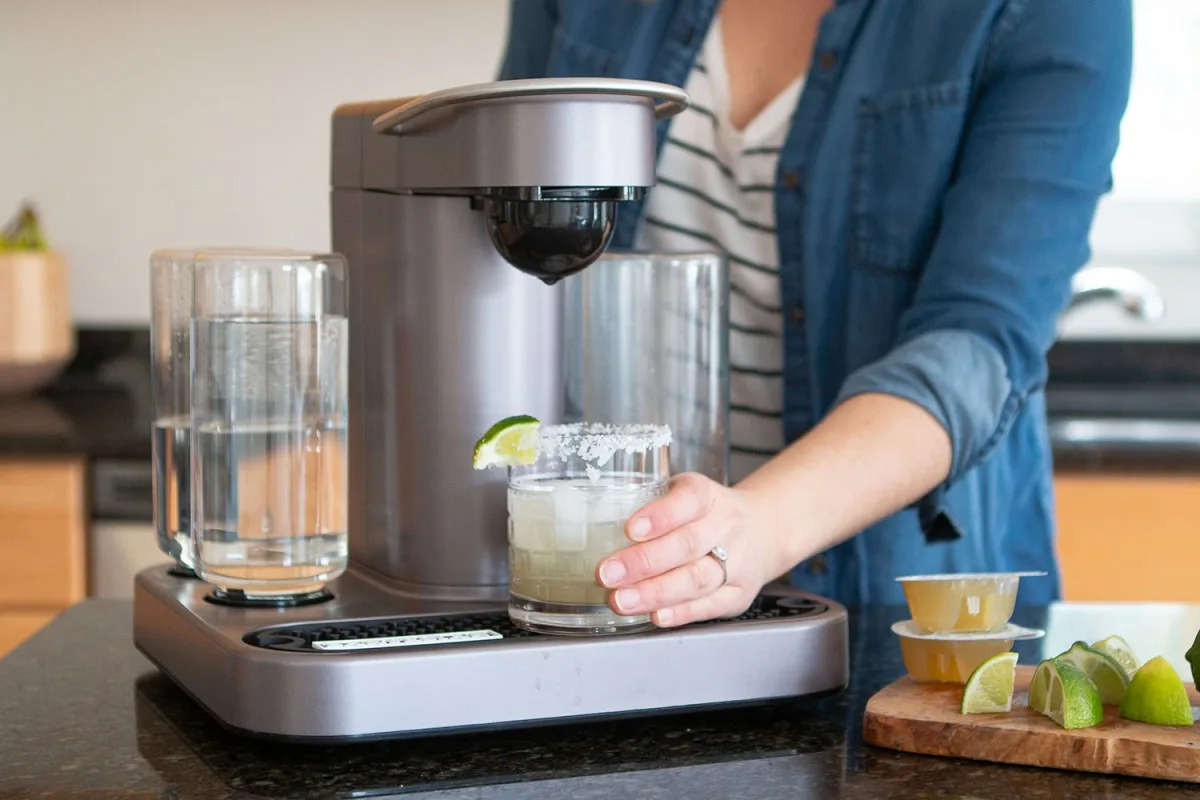
Bartesian’s cocktail makers would be best described like a Keurig or Nespresso machine, but for alcoholic drinks. The Bartesian Duet model that I tested certainly lives up to that description — it’s really easy to serve a bunch of different cocktails with the push of a button, plus your own liquor.
But as I sipped on my raspberry ginger gimlet, I couldn’t shake the nagging question: who is actually going to buy a $300 cocktail robot?
There’s nothing wrong with the product. And it does exactly what it says! In the sleekly designed machine, you add your spirits of choice (between one and four types of liquor, depending on what model you’re using) and plop in a Bartesian capsule with hyper-concentrated mixes for multi-ingredient drinks like espresso martinis, watermelon margaritas, mai tais, and cosmos. There’s a barcode on the capsule that your machine scans to determine what spirit (or spirits) you need in your drink, and then you can select how strong you want your drink to be, which modulates the amount of water the machine will use to dilute the concentrate. Then, you put the drink in the provided, high-quality cocktail shaker with some ice to cool it down before pouring it into your glass.
When I invited some friends over to test the Bartesian, we enjoyed the inherent novelty of trying out a product we’d never seen or used before. Once we all sat down with our various drinks, we tried to decide who actually makes up the target audience for such an odd product, which also requires the purchase of cocktail capsules at about $2.50 each.
The Bartesian is not for true cocktail lovers — the capsules don’t actually contain any alcohol, which means that if you’re making a drink like an aviation, you’re getting some sort of non-alcoholic approximation of ingredients like crème de violette and maraschino liqueur.
It’s no coincidence that my friends and I all liked the Bartesian’s lemon drop capsules the best, since the only alcoholic ingredient in the drink is the vodka that we bought ourselves to add to the machine. To be fair to Bartesian, it’s not like you’d recommend a Nespresso machine to your friend who owns a Fellow kettle and only buys single origin beans.
This cocktail robot is also not for anyone who is even remotely worried about the amount of counter space in their kitchen. It’s pretty big for something that you (hopefully?) aren’t using on a daily basis, and if anything, it would probably encourage me to start drinking more often just to justify the $300 expense. Plus, if you have counter space to spare, you probably have a lot of money. And if you have a lot of money and like cocktails, I’d say you are more likely to have a fully stocked bar with fancy liqueurs already. What will the other partners at your law firm say if you serve aviations that don’t use real crème de violette?
Even as someone who thinks Tito’s is top-shelf liquor (I am not that fancy), I could tell that something tasted a little bit artificial about most of these drinks. My friends and I all doctored up our drinks with some seltzer and lemon juice, which made them taste much better.
5News aggregated this summary from the outlet’s public feed. The full article, with all the context, is on techcrunch.com — the content belongs to TechCrunch.