Trump administration ends funding for Arctic climate report
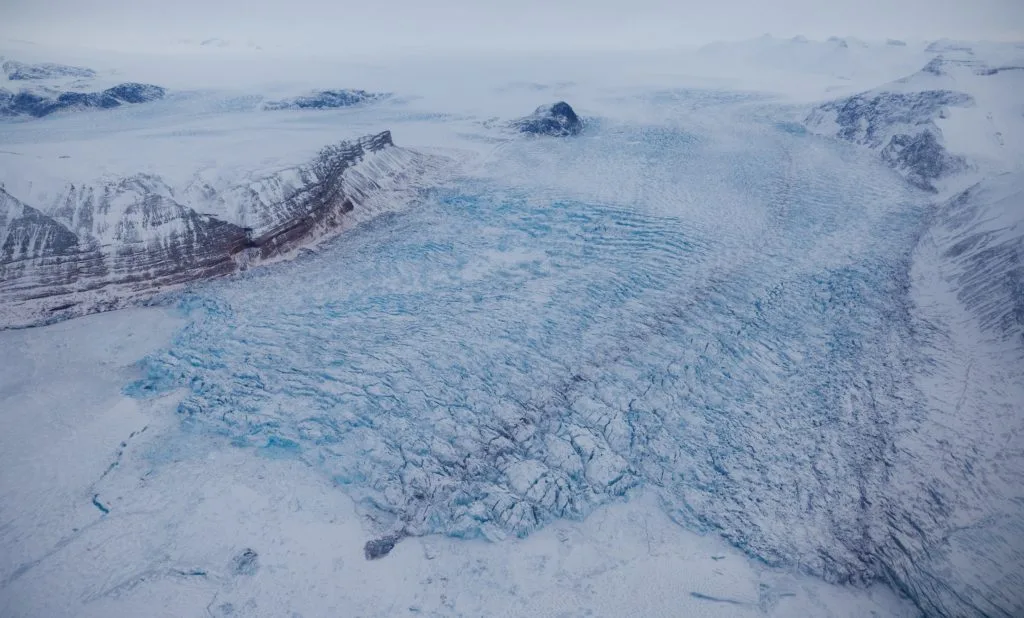
The Trump administration said it would stop funding the Arctic Report Card, the longstanding effort to collect research on how the fastest-warming place on Earth is changing. It's the latest in a series of moves by the administration to curtail scientific research into the impacts of climate change. William Brangham discussed more with glaciologist Twila Moon, the Arctic Report Card's editor.
Notice: Transcripts are machine and human generated and lightly edited for accuracy. They may contain errors.
This week, the Trump administration said it would stop funding the Arctic Report Card, a longstanding effort to synthesize the latest research about the fastest warming place on Earth.
Now scientists are scrambling to find a way to publish this major annual report anyway to continue to track how climate change is transforming the Arctic, impacting everything from glaciers to native communities to global fishing and shipping routes.
This decision is the latest in a series of moves by the administration to curtail scientific research into the impacts of climate change, which the administration argues is plagued with misinformation and alarmism.
For more on what this means, we are joined again by glaciologist Twila Moon. She's been a lead editor of the Arctic Report Card, and she's the deputy lead scientist for the National Snow and Ice Data Center at the University of Colorado Boulder. This conversation is part of our ongoing series Tipping Point.
The administration argues that the underlying research will continue, will not go away, just their support of the synthesis of it into this report. If that's the case, what does it matter if the report goes away?
Twila Moon, U.S. National Snow and Ice Data Center: Well, unfortunately, the simple existence of data does not mean that people are finding that data and being able to access it, use it, and understand what it means.
So the Arctic Report Card has played a really important role in bridging the gap between raw data, which is really difficult for most people to understand or work with, towards something that can serve nonscientists so that they can be making good decisions with proper, up-to-date environmental awareness.
Could we step back for a second and explain why we care about what's happening in the Arctic? Because, to many people in the Lower 48, they might think this is just a distant place that they will never go to, and who cares really what happens up there? Why is it going to impact me?
Changes that we see happening with permafrost or frozen ground, also changes with sea ice that forms on the surface of the Arctic Ocean, those changes actually themselves influence the weather we experience down here in the Lower 48.
But we can also see, because the Arctic is warming so quickly, we're seeing a lot of increase in geopolitical tensions, an increased attention to security and military activity in the Arctic, and that means that the Arctic has become a U.S.
5News aggregated this summary from the outlet’s public feed. The full article, with all the context, is on www.pbs.org — the content belongs to PBS NewsHour.