Inside the Ukrainian drone factories prototyping the free world’s next arsenal
I left my phone on overnight with the air raid alert active, expecting it to give me a blaring warning.
I woke up at 3:58 a.m. to a sound I had never heard in my life: the heavy, shuddering concussions of ballistic missiles and attack drones slamming into buildings near my hotel in Kyiv.
But ballistic missiles travel at many multiples of the speed of sound.
By the time the siren actually went off, the impacts had already struck their civilian targets.
In the shelter, I lay awake wondering what the night had cost the people I had come to meet.
People died in the city that night.
The reality of what Ukrainians have been living with for years hits you fast.
I went to Ukraine because I needed to see the fastest-moving combat innovation ecosystem in the world for myself.
As an investor and co-founder in the defense ecosystem, my work is centered on delivering critical tactical systems to protect the U.S. warfighter—a mission we’ve been on since even before Russia’s full-scale war against Ukraine began.
But you cannot truly grasp the pace of modern combat innovation from a boardroom thousands of miles away.
You have to see it on the ground.
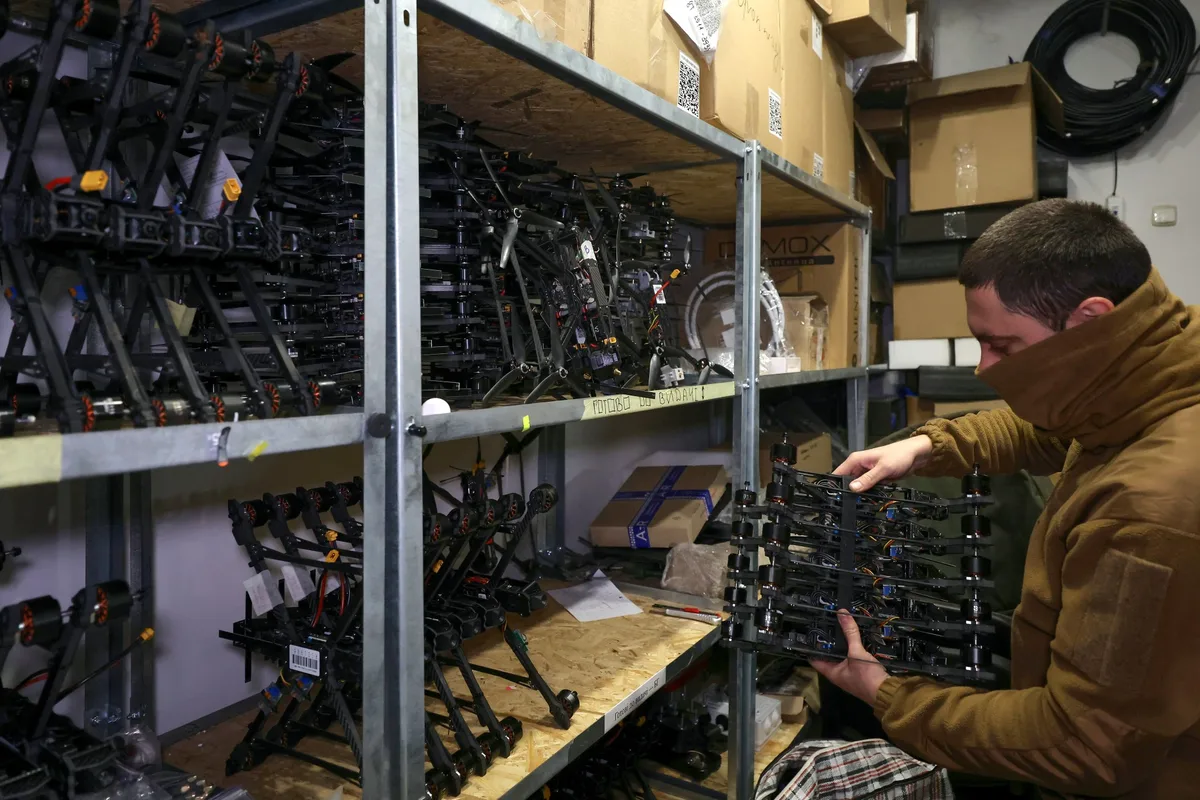
My first stop was General Cherry, a Ukrainian defense-tech company that develops and mass-produces FPV strike drones and interceptors, serving over 200 Ukrainian military units.
By 10:00 a.m. that morning in Kyiv, the General Cherry executives—most of whom I learned had slept straight through the attack—were at the factory pounding coffee and doing the exact opposite of what Russia wants them to do: building the future with relentless, defiant energy.
None of the defense tech ecosystem runs without the soldiers holding the line to the east, and everyone I met said some version of the same sentence: Thanks to the Armed Forces, we get to build.
5News aggregated this summary from the outlet’s public feed. The full article, with all the context, is on fortune.com — the content belongs to Fortune.