Committed Parents Can Only Overcome So Much
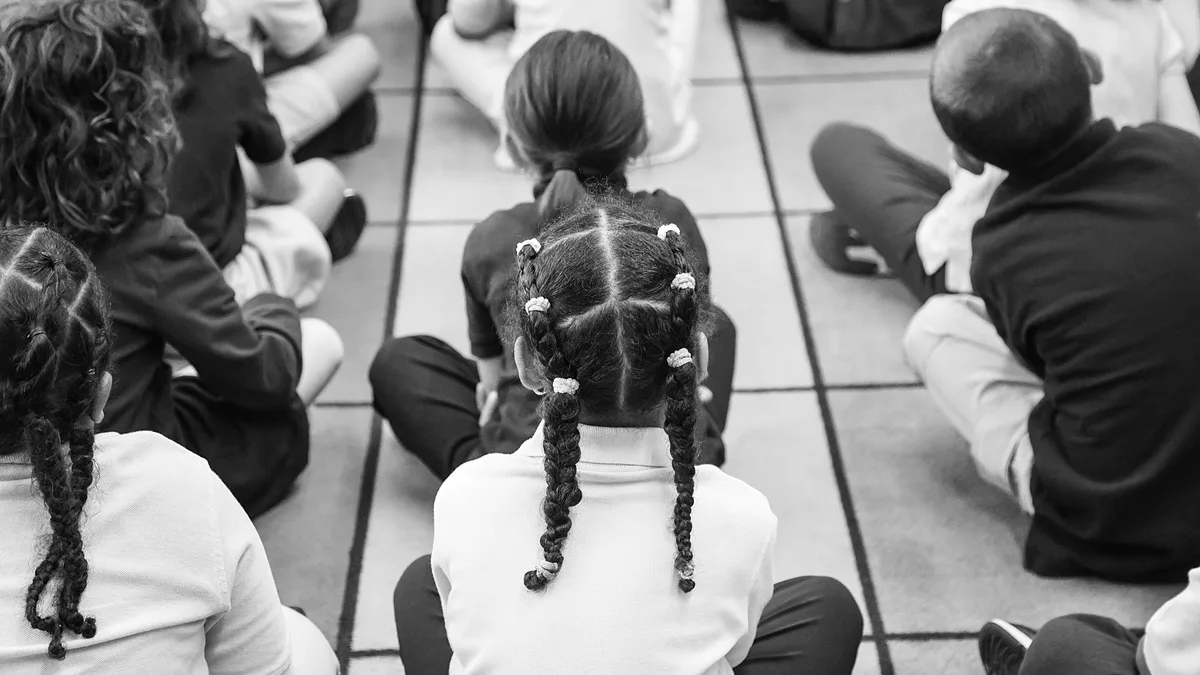
Every parent can empathize with the wrenching, humiliating experience of trying to do what’s best while only making things worse.
But very few could stomach discussing these failures publicly.
One recent exception is the New York Times Magazine writer Nikole Hannah-Jones, who this week published a self-excoriating essay titled: “In Fighting for Every Black Child, Did I Betray My Own?” In it, Hannah-Jones lays out the consequences of enrolling her daughter in troubled New York City neighborhood schools for the sake of “upending the status quo.” By the time her daughter, Najya, was ready for high school, she wanted to go to one that tested for admissions and was, despite the city’s demographics, majority white and Asian—“the type of public schools I had spent my career arguing against,” Hannah-Jones writes.
Toward the end of the article, her daughter makes a simple plea to her mother: “Sometimes I wish instead of always thinking about other kids, you would have thought about me.
I never really got the education I wanted.” Every parent tries to pass along a sense of right and wrong, of morality and virtue.
Just as a religious family might send a child to a parochial school, Hannah-Jones saw education as a way to transmit her social-justice values.
Her daughter would be a pioneer for equity in education, like the first Black students who integrated white schools in the civil-rights era.
The goal was laudable, but the failure to achieve it suggests that even committed parents cannot, on their own, overcome all of the factors that keep a troubled school from becoming an excellent one—a dearth of leadership, the commitment of its teachers, and the behavior of other students.
The most crucial misjudgment Hannah-Jones and her husband made was underestimating the difficulty of collective action.
By sticking to local schools in spite of their failings, Hannah-Jones believed she could help fix them from within.
Her perseverance and diligence and status as a celebrated education reporter would spur other parents into action and force administrators to address problems.
Almost from the outset, though, the family confronted a level of apathy that they could not overcome.
Hannah-Jones writes that in the first grade, her daughter, always bright, said she didn’t like school because of lunchroom chaos, in which students would fight unsupervised.
In the third grade, her daughter’s teacher frequently missed class.
5News aggregated this summary from the outlet’s public feed. The full article, with all the context, is on www.theatlantic.com — the content belongs to The Atlantic.