Blanche defends mail ballot changes, says election practices in multiple states are being probed
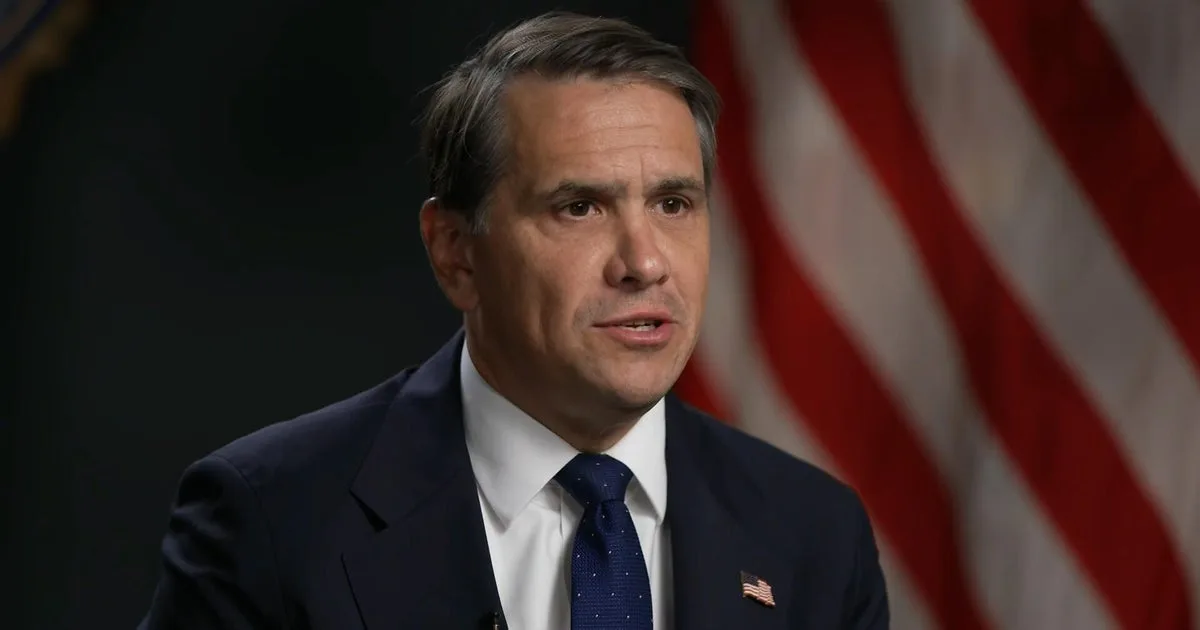
Attorney General Todd Blanche fiercely defended the Trump administration's push to impose tighter mail voting rules just before the midterm elections, telling CBS News in an exclusive interview that the Justice Department is examining election practices in multiple states.
When asked for evidence that the administration's new mail voting rules — which are on hold due to a series of court orders — would prevent fraud, the attorney general initially said that "there's a lot of evidence," arguing that it was inherently the case that "if you're using mail-in voting, the potential for fraud is greater than in-person voting with ID."
Pressed further on what evidence he had that mail voting presents a greater risk of fraud than in-person voting with identification, Blanche maintained there is "a lot of evidence." Asked what the evidence was, he responded, "Well, it's common sense."
The attorney general went on to say the government is looking at "multiple states," adding that the review extends far beyond the Justice Department.
The comments come as the administration faces several overlapping court fights over its election policies. A federal judge in Massachusetts issued a preliminary injunction earlier this month blocking the Postal Service from enforcing new rules for mail ballots, and a second federal judge blocked the policy on Sunday.
On Monday evening, the Supreme Court declined the administration's request to lift Massachusetts-based U.S. District Judge Indira Talwani's injunction, leaving the new restrictions blocked for the upcoming midterm elections. The court's order still falls short of resolving the legality of the rule, and the litigation will continue.
The rule, adopted Aug. 21, requires that states provide the Postal Service with lists of mail ballot recipients and issue USPS-approved ballot envelopes carrying unique barcodes. According to the new regulation, USPS could refuse to transmit ballots that fail to meet those requirements.
Documented election fraud, including mail-ballot fraud, does occur, but researchers have found it to be rare. For instance, a 2024 Stanford study of roughly 4.5 million voters in Washington state found only 14 ballots that might have been suspiciously cast after a voter's death — about 0.0003% — and determined that even those cases could include matching or clerical errors. A broader 2025 analysis of the 2016, 2018, 2020 and 2022 elections found roughly four identified cases of mail-ballot fraud for every 10 million mail ballots cast, resulting in an average rate of 0.000043%.
Over the past several months, the Justice Department has also told 29 states and D.C. to preserve 2024 election records, and is now suing for voter-registration data containing sensitive identifiers.
5News aggregated this summary from the outlet’s public feed. The full article, with all the context, is on www.cbsnews.com — the content belongs to CBS News Politics.