Cuba opened its economy on Washington’s orders. Rubio’s answer: more sanctions
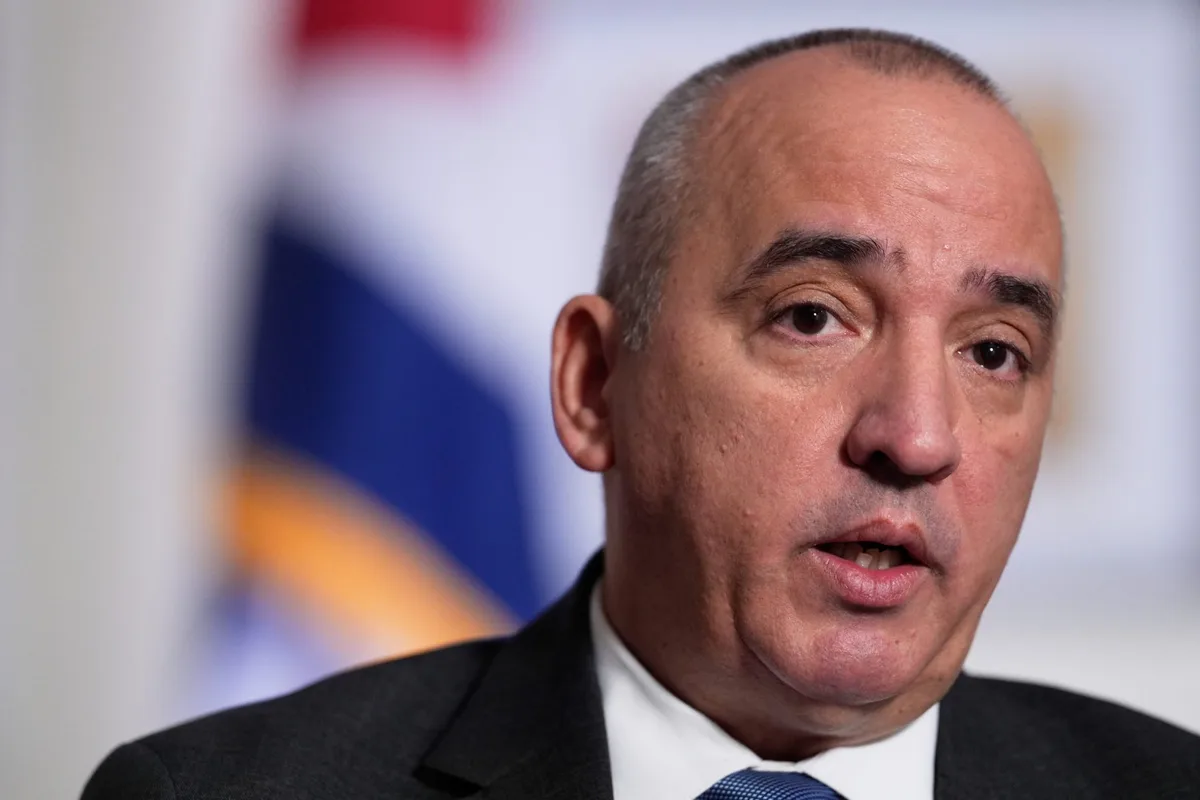
The United States has demanded that Cuba open up to private investment, and Cuba has passed sweeping reforms to encourage just that.
So Cuba’s U.N. ambassador says he wants to know why Washington keeps piling on sanctions that stymie the very economic opening it has sought for decades.
Ambassador Ernesto Soberón Guzmán, in an interview this week with The Associated Press, directed his question to U.S.
Secretary of State Marco Rubio, the main architect of the Trump administration’s Cuba policy: “What are you afraid of? If you are so convinced that the Cuban government is an incompetent government, why do you need to implement almost every two weeks new sanctions?” The U.S.
State Department responded to a request for comment with a quote from Rubio saying new sanctions will continue to be announced every couple of weeks to close off “escape valves that they’re trying to create in every mechanism.” Then on Thursday, the U.S. imposed more economic penalties on Cuban industries, targeting state-owned mining, metal and construction companies.
Cuba has been pushed to the brink by an oil blockade imposed by the United States in January on top of a decades-old embargo, coupled with the escalating sanctions.
The moves by President Donald Trump’s administration, meant to put pressure on the government by depriving it of funding, have worsened already debilitating blackouts , cut workers off from public transport, crippled infrastructure and deepened shortages in medicine and food in the Caribbean island nation.
Guzmán said the sanctions are the main obstacle to Cuba opening up its economy.
He said the impact of the U.S. measures — specifically the shortage of electricity and lack of fuel to run a business or travel — has turned off investors and tourists, a major source of Cuba’s income.
Some companies have pulled out of Cuba, including the Spanish hotel chain Meliá , which relied on tourist revenue and cited “significant operational, legal, economic and financial difficulties” in explaining its decision to leave. ”Literally, the United States has done everything imaginable to try to prevent foreign investors,” said William LeoGrande, a professor at American University and a leading expert on U.S.-Cuba relations. ”When they say, `Well, we want to see Cuba open up to foreign investment,’ they’re being disingenuous.
5News aggregated this summary from the outlet’s public feed. The full article, with all the context, is on fortune.com — the content belongs to Fortune.