A look at the history and beliefs behind Japan’s controversial shrine to the war dead
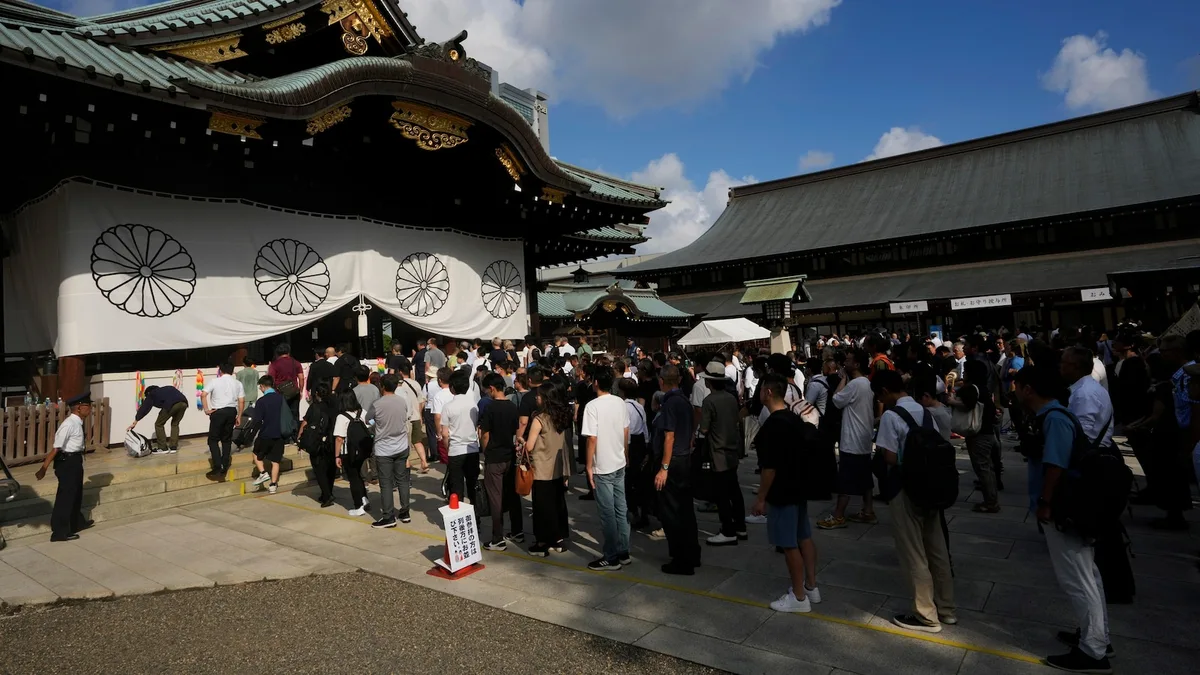
Yasukuni Shrine in Tokyo honors more than 2.4 million people who died serving Japan but remains one of the country’s most divisive memorial sites
Emperor Meiji first visited the site that would become one of Japan’s most controversial shrines in 1874. He vowed that the names of those who died for their country would live there forever.
More than 2.4 million people are now honored at Yasukuni, a memorial and Shinto shrine in central Tokyo . Among them are 14 war criminals who are also commemorated each Aug. 15, when Japan’s surrender ended World War II.
The shrine provides spiritual comfort for some who mourn relatives and others who visit to express gratitude. Yet for Asian countries that endured Japanese imperial rule and expansion, Yasukuni remains a symbol of Japan’s militarism .
Visits by Japanese leaders frequently draw criticism from China and South Korea , which see them as a sign of insufficient remorse for Japan’s wartime aggression.
Here’s a look at the history and religious background of a shrine that is both a sacred place of remembrance and a source of controversy.
Imperial rule was restored in Japan in the 19th century after the fall of a military government that ruled for more than 250 years. A year into the new imperial era, in 1869, Emperor Meiji ordered the construction of the shrine that would later be renamed Yasukuni.
The name derives from two Japanese characters that can be translated as “peaceful country,” and its purpose was to honor those who fell defending the imperial cause.
“Yasukuni Shrine was initially conceived as a way to send a message to the Japanese people,” said Akiko Takenaka, a professor of history at the University of Kentucky. “The message was about the emperor; the message was about a new Japan.”
In that Japan, Takenaka added, Meiji became the one who could bestow the highest honor on those who died fighting for the empire and men were expected to consider it an honor to sacrifice their lives for him.
Japan’s emperors have long been regarded as descendants of the sun goddess Amaterasu under Shinto beliefs . However, the notion of the emperor’s divine origins strengthened during the Meiji era, when the concept of State Shinto arose.
On one hand, that meant the government exercised control over the shrine’s practices and finances. Beyond that, the line between patriotism and religion blurred.
“The Meiji reformers believed that they were establishing an ideal nation in which the people and the sacred emperor maintained a spiritual union,” wrote Susumu Shimazono, a scholar specializing in religion and modern Japan, in the Japanese Journal of Religious Studies.
The separation of religion and state came after Japan’s surrender in WWII.
5News aggregated this summary from the outlet’s public feed. The full article, with all the context, is on abcnews.go.com — the content belongs to ABC News International.