Why Nepal's rare, deadly flood struck without warning
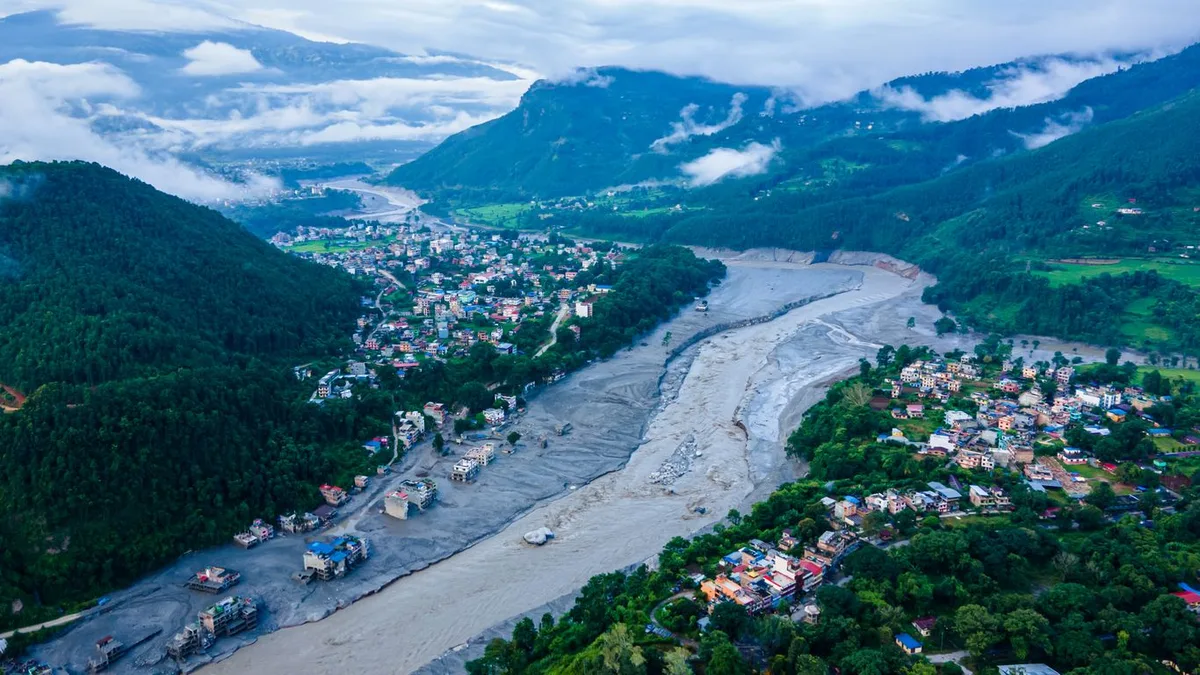
Thousands of people are missing and hundreds are dead after a flash flood in Nepal that struck with little warning earlier this week.
Why it matters: The flood is exposing the gaps in warning systems that are designed to watch out for extreme rain and rivers — not for sudden collapses high in the mountains during good weather.
Glacier-driven floods under clear skies — sometimes called "blue-sky floods" — can happen in the U.S. too, especially in Alaska and the Pacific Northwest, where sudden releases of glacial water can send floods and debris racing down mountain valleys.
This actually happened at Mount Rainier in Washington state in 2001, when debris flow from a glacier-related hazard caught people off guard during fair weather.
Driving the news: Nepali officials said Saturday nearly 3,000 people are missing from the Nepal-China region impacted by the floods that formed in the Himalayan mountains on Wednesday, per the Associated Press.
There have been nearly 700 deaths attributed to the disaster, too, AP reports.
Nepali authorities warned that there could soon be more water rushing through the valleys along the Chinese border, threatening the search for survivors.
What we're watching: As investigators assess what happened, researchers are questioning if more floods could hit the area or become more common in the years to come, and what that might mean for the globe at large.
How the rare "blue-sky flood" formed with little warning What they found: The U.S.
Geological Survey says that a section of a glacier and mountain debris collapsed on the north side of Lāngtāng Lirung, creating energy comparable to a magnitude- 5.2 earthquake (though no earthquake actually triggered it).
Investigators say satellite evidence indicates the ice-rock avalanche may have temporarily dammed the Lhende Khola near the Nepal-China border, forming a lake that subsequently burst.
The collapsed glacier flow then likely collected additional ice, water, rock and sediment, rapidly amplifying into a stronger mass that caused the widespread flooding, according to USGS.
The Trishuli River rose nine meters in 30 minutes during the flooding as well, adding to the disaster, per an analysis from the International Centre for Integrated Mountain Development .
Stunning stat: The flow traveled roughly 100 kilometers (about 62 miles) .
5News aggregated this summary from the outlet’s public feed. The full article, with all the context, is on www.axios.com — the content belongs to Axios.