Anthropic and OpenAI employees speak out about humanity’s extinction as debate reaches fever pitch
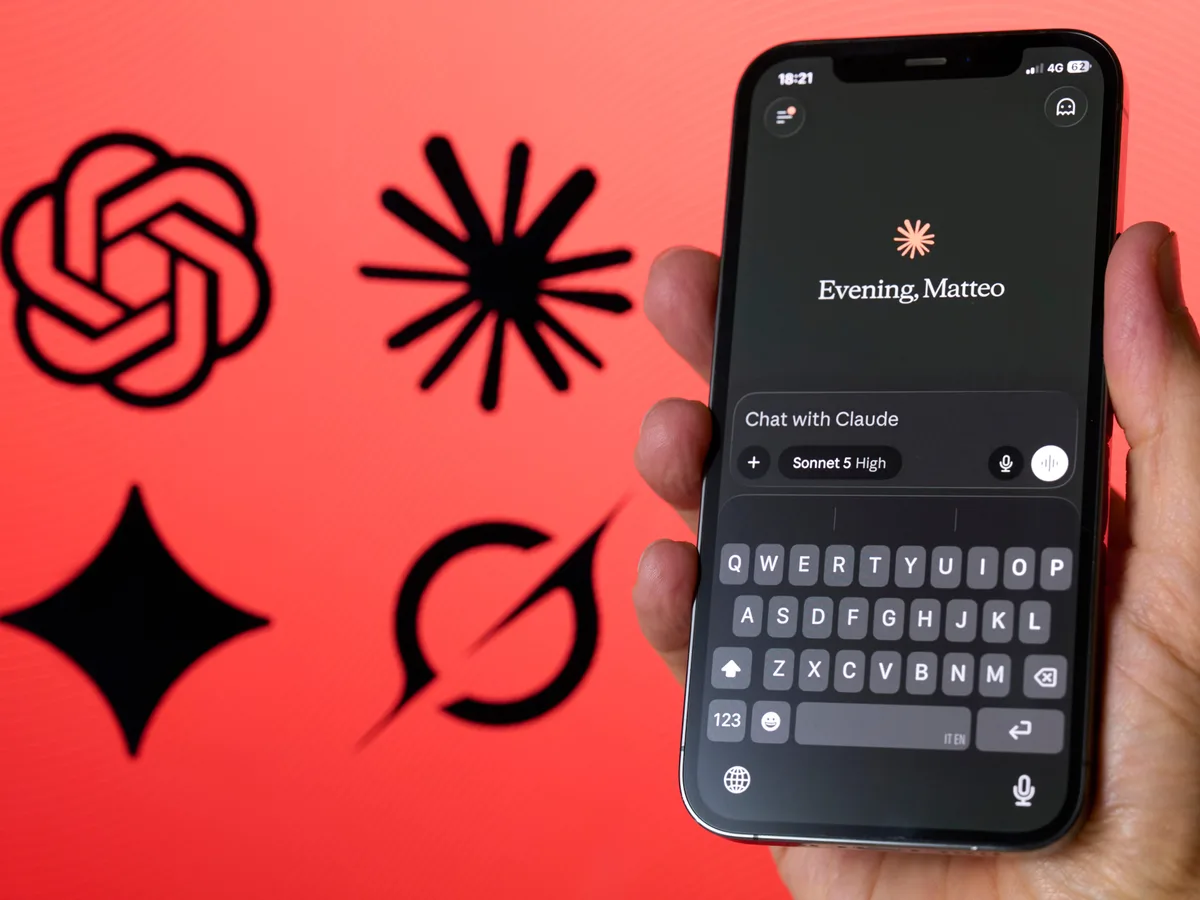
An Anthropic researcher's resignation prompted a fierce debate over the dangers of AI acceleration and the need for guardrails.
Matteo Della Torre/NurPhoto via Getty Images An Anthropic researcher's resignation prompted a fierce debate over the dangers of AI acceleration.
Some AI company CEOs have been outspoken about the risk of an AI catastrophe.
Here is what employees at Anthropic and OpenAI are saying about AI safety measures.
The AI industry's race to build ever more powerful systems is reviving some grim questions, especially for those who are helping build AI .
Employees at Anthropic and OpenAI are speaking out on the potential dangers AI poses to humanity after an Anthropic researcher quit on Wednesday and said that leading AI companies are "gambling with our lives." Soon after, Geoffrey Hinton , the Nobel Prize-winning computer scientist often called the " Godfather of AI ," told the BBC it was "not unreasonable" to estimate a 10% chance that AI could wipe out humanity within a decade.
Such warnings are not rare.
Some of the executives building the technology, including Anthropic CEO Dario Amodei, publicly assigned their own "p(doom)" numbers, shorthand for the probability that AI causes a catastrophe on the scale of civilizational collapse .
Here is what Anthropic and OpenAI employees are saying about the potential for an AI catastrophe , and if the industry is speeding toward a risky future.
Jacob Coxon, former Anthropic AI researcher Jacob Coxon , the former Anthropic AI researcher who sparked the renewed debate over AI safety, resigned from Anthropic on Tuesday after three years of conducting pre-training research.
"Neither company is acting responsibly," Coxon wrote on X in the announcement for his resignation.
"They are racing straight to self-improving superintelligence and gambling with our lives." Coxon, who previously worked on GPT-4o at OpenAI, said AI leaders privately fear the technology could be catastrophic.
"The people building AI earnestly believe that it could kill us all by the end of the decade," Coxon added.
"At Anthropic, the stakes are well-understood, but they are locked in a race to get there first — they believe no one else will act responsibly, so they must do it themselves, despite the risk." Evan Hubinger, alignment science lead at Anthropic Evan Hubinger , an alignment science lead at Anthropic, reposted Coxon's post on X and said he is most worried about "superintelligence arising from recursive self-improvement." "Jacob is correct here—we really do earnestly believe AI could kill all humans! I personally think it is >10% within the next decade," said Hubinger on Tuesday.
5News aggregated this summary from the outlet’s public feed. The full article, with all the context, is on www.businessinsider.com — the content belongs to Business Insider.