After my husband was diagnosed with colon cancer at 45, we changed our family diet. Here's what we eat — and don't eat — now.
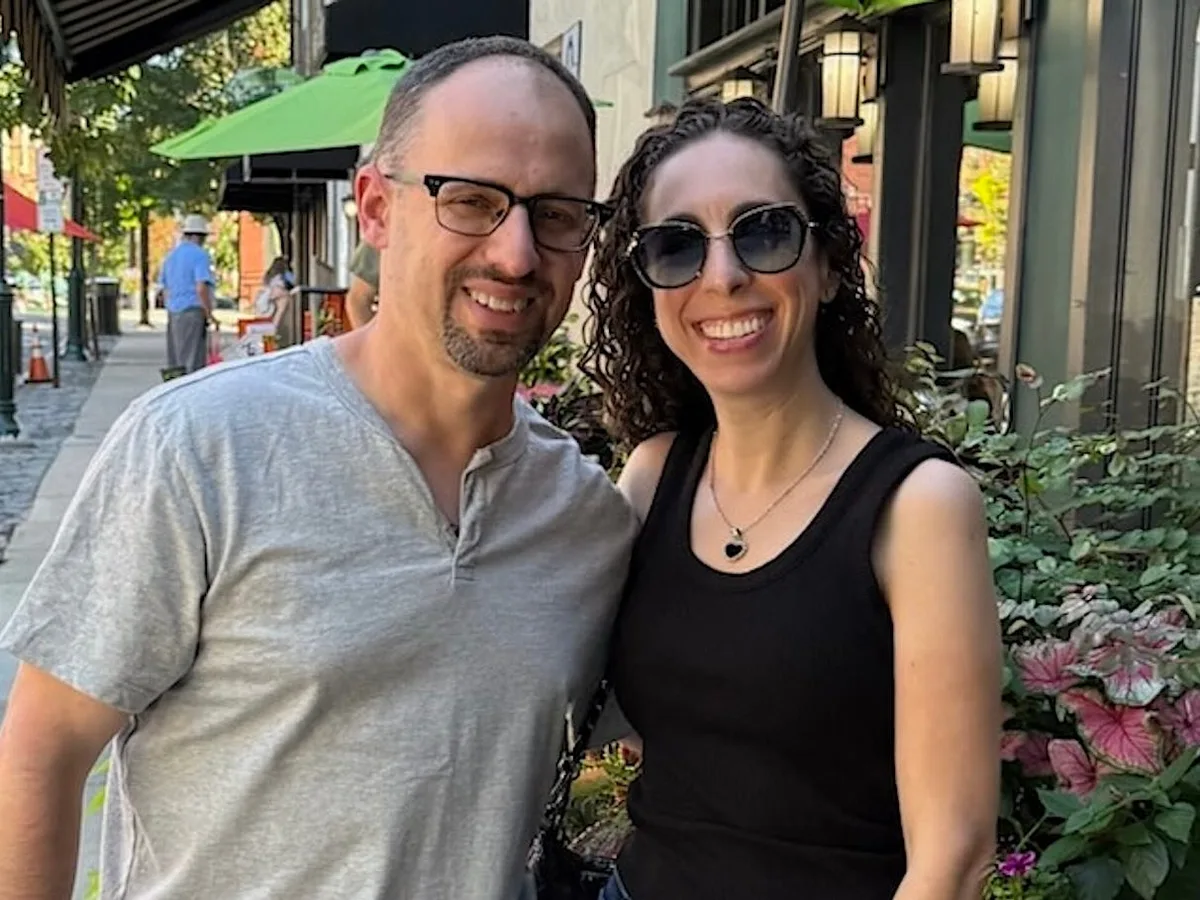
The author's husband was diagnosed with colon cancer at 45.
Courtesy of Lindsay Karp My husband, 45, is a doctor and encourages his patients to get routine colonoscopies on time.
When he went in for his own, he was surprised to be diagnosed with colon cancer.
He had no symptoms.
Now, we're changing our diets, and what our kids eat, as well.
When my husband, a doctor, went in for his first routine colonoscopy at 45 years old, he said nonchalantly, "I'll be done by noon.
Then we can grab lunch." He recommends that his patients be screened on time, so he was simply following his own advice.
He had no symptoms suggesting anything was wrong, so when they found a few polyps — the largest one measuring 55 millimeters — we were caught off guard.
A second procedure was necessary to remove the larger polyp, and when the biopsy came back showing cancer, our lives crumbled in an instant.
The right portion of his colon was removed, and three weeks later, our whirlwind nightmare began to settle.
Luckily, having his screening on time saved his life.
Now, we're focused on preventive care .
We're changing our diets, and what our kids eat, too An average person has about a 4% to 5% lifetime chance of developing colorectal cancer — but having one affected parent raises that risk to roughly 5% to 15%.
Someone with a first-degree relative who had colon cancer should have their first screening at 40 or 10 years younger than their family member was diagnosed, whichever comes sooner — for our kids, that means being screened at 35.
5News aggregated this summary from the outlet’s public feed. The full article, with all the context, is on www.businessinsider.com — the content belongs to Business Insider.