War knocked Dubai’s airport traffic down 31%. Its CEO says its global hub ambitions haven’t changed
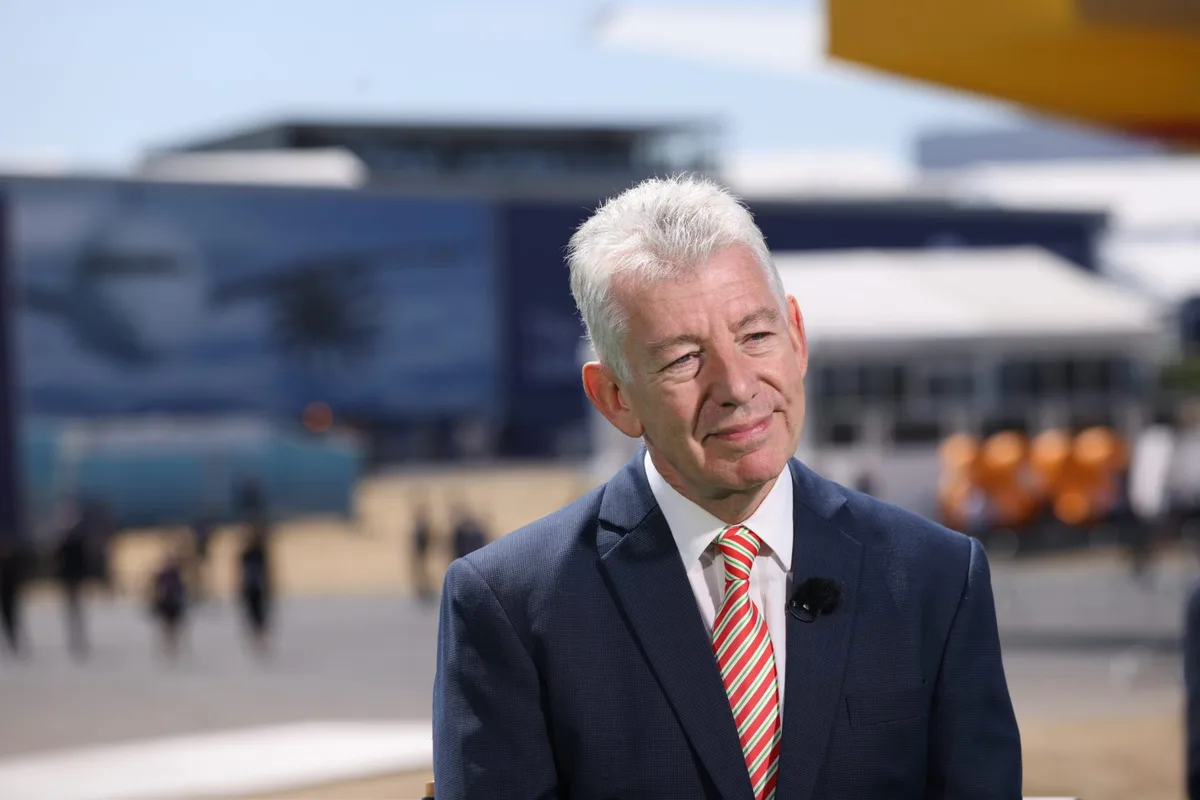
Dubai International Airport began 2026 with 8.7 million passengers in January, one of its busiest months ever.
Weeks later, the airport that ended 2025 as the world’s busiest for international passengers was responding to ballistic missile alerts as the Iran war upended aviation across the Gulf.
“How many CEOs have you interviewed that have been subjected to direct ballistic attack from an enemy to your infrastructure?” Dubai Airports CEO Paul Griffiths asked Fortune .
He said DXB received roughly 111 separate alerts of ballistic activity during the crisis.
In the first six months of 2026, Dubai International Airport handled 31.5 million passengers, down 31.3% from the same period last year.
Aircraft movements fell 32.1% to 150,600, while cargo volumes dropped 28.7% to 751,340 tons.
That followed a record 95.2 million passengers in 2025, the highest annual international traffic ever recorded by an airport.
But Dubai Airports says the recovery is now gathering pace, with monthly passenger traffic rising from 3.5 million in April to 4.5 million in May and 5 million in June.
Griffiths said overall traffic is now back to about 80% of last year’s level, while Emirates and flydubai are operating at roughly 90% of their 2025 levels.
“My confidence level is not misplaced that we should be back to 100% of our operation by about the end of the year,” he said, referring to international airlines resuming services.
Dubai Airports expects full-year traffic to finish “in the 70 millions” — well below last year’s record — and putting its previous ambition of crossing 100 million passengers this year out of reach.
The war has created an opening for competitors; previously, Gulf carriers accounted for roughly a third of traffic between Europe and Asia and about half of travel between Europe and Australia.
By April, Middle Eastern transfer traffic on Asia-Western Europe routes had fallen 47% year over year, according to Alton Aviation Consultancy.
Travelers chose alternative hubs including Seoul, Singapore, Hong Kong and Istanbul.
5News aggregated this summary from the outlet’s public feed. The full article, with all the context, is on fortune.com — the content belongs to Fortune.