Why "chipflation" is here to stay
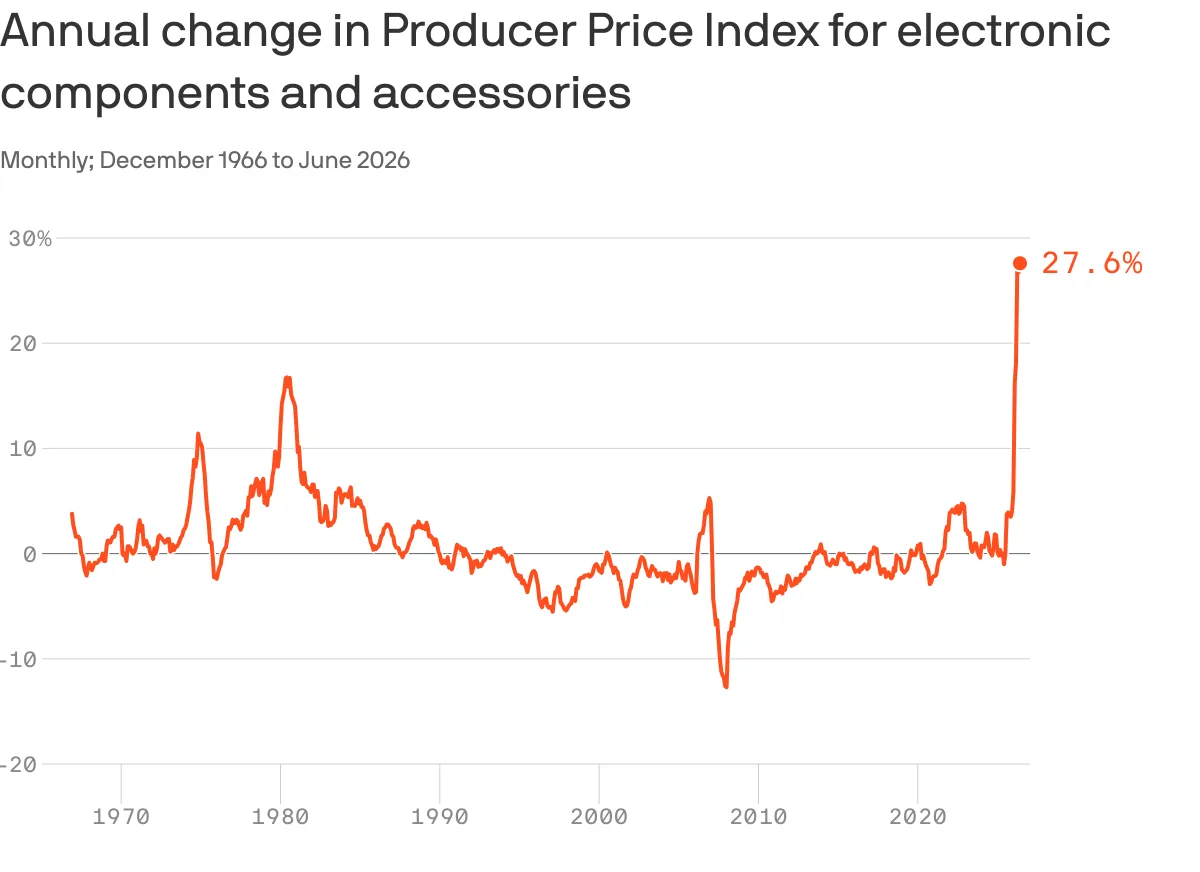
Data: U.S.
Bureau of Labor Statistics via FRED ; Chart: Emily Peck/Axios Memory chip prices are skyrocketing, thanks to AI demand, and there's no end in sight.
Why it matters: "Chipflation" is pushing up the prices for electronic goods like smartphones and laptops, as well as the costs for cloud storage and hardware — it also helps explain the eye-popping ascents in semiconductor stock prices.
While the overall effect on inflation may not be huge — other kinds of products get more weight in the government's measure of consumer prices — the scale of this boom is unprecedented.
By the numbers: The Producer Price Index for electronic components and accessories, which measures what companies pay for semiconductor chips and other electronics and accessories, has gone vertical this year.
The PPI for those components rose 27.6% in June from the same time last year — the largest increase in records that date back to 1966, easily eclipsing the surge in prices during the dawn of the PC era in 1980 and the supply crunch in chips during the pandemic.
And this category might understate what's happening because it includes some unrelated electronic inputs.
Follow the money: The AI hyperscalers (Meta, Microsoft, Alphabet, et al) are locking up memory supply years in advance with long-term agreements.
That's leaving traditional PC and phone makers competing for a shrinking pool of supply.
The latest: Apple is testing memory chips from Chinese memory chipmaker CXMT as it deals with skyrocketing costs, the Wall Street Journal reported Monday.
Apple would need White House approval to get around rules that typically prohibit such a tie-up.
The big picture: We've never lived through a moment when prices for electronics have been such an inflationary force.
Indeed, it's a reversal from a decades-long trend of the cost of computer memory becoming cheaper over time.
Prices for memory have risen more than sixfold over the past year, according to a Morgan Stanley note in June that appears to have been the first to coin the term "chipflation." Flashback: The price of a gigabyte of DRAM — the fast processing memory inside servers, PCs and phones — fell by around a factor of 10 every five years from 1957 to 2020, per the note.
5News aggregated this summary from the outlet’s public feed. The full article, with all the context, is on www.axios.com — the content belongs to Axios.